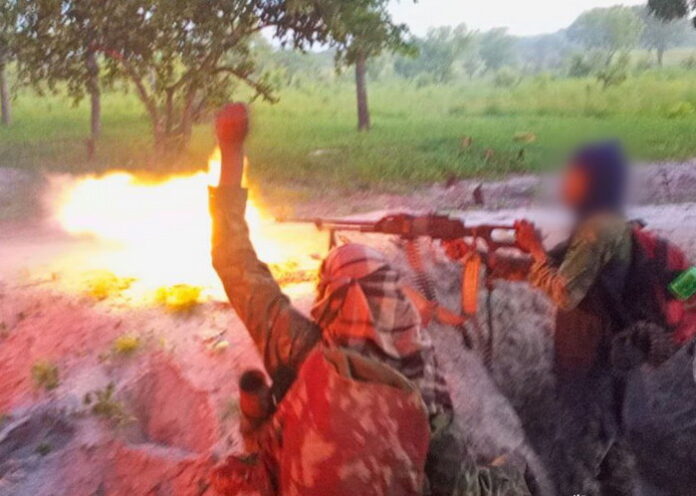

In a troubling sign of escalating instability, militants in northern Mozambique’s Cabo Delgado province have ramped up attacks following the departure of the Southern African Development Community (SADC) peacekeeping force in 2024.
On July 28, insurgents ambushed and killed 18 members of the Naparama community defense militia in the village of Melija, according to The Mozambique Times. Reports suggest the attackers were disguised in Mozambican army uniforms, a tactic that further complicates efforts to distinguish friend from foe in the conflict-ridden region.
The Islamic State group has since claimed responsibility for the ambush via its media channels. Their statement described the assault as targeting what they labeled “apostate militias” using a variety of weapons, while also claiming to have set dozens of homes ablaze and destroyed motorbikes belonging to the militia members.
This deadly ambush follows a bold assault carried out just four days earlier, on July 24, when militants temporarily seized control of the administrative post in Chiúre Velho, southern Cabo Delgado. The assailants torched critical infrastructure including a school, a health facility, and a police station. The group went as far as raising their flag above the police building, according to local reports.
READ MORE: Muslim World League Reaffirms Support for Syria Amid Security Threats
Smaller-scale attacks have also become more frequent. On July 22, five individuals were reportedly beheaded in Ancuabe district, allegedly as punishment for producing homemade alcohol — a grim reflection of the group’s growing influence and their harsh enforcement of extremist ideology.
The Africa Center for Strategic Studies (ACSS) highlights that the group behind the violence, known locally as al-Shabaab (Ahl al-Sunna wal-Jama’a or ASWJ), has shown remarkable persistence despite mounting military pressure. In March 2025, fighters exploited post-election unrest to strike at transportation corridors, raid informal gold mining sites, and launch fatal attacks in the Niassa Special Reserve.
Further violence was reported in May when ASWJ fighters clashed with Rwandan troops, seized weapons, and even attempted an offshore assault on a Russian-flagged ship near Tambuzi Island. In June 2025, the Mozambican military launched a significant offensive on ASWJ’s base in the dense Catupa Forest. However, the operation was reportedly unsuccessful, with militants repelling government forces.
While militant-linked fatalities have decreased sharply — from a peak of 2,076 in 2021 to 330 over the past year — the long-term outlook remains uncertain. The ACSS credits the 2021 deployment of SADC and Rwandan forces with initially curbing the threat. Yet with the SADC mission’s withdrawal in July 2024, concern is mounting that the fragile gains may soon be reversed.
Despite expanding its troop numbers to 4,000, Rwanda’s contingent has not succeeded in dismantling ASWJ. On the contrary, attacks on civilians — especially along major roads — have risen, highlighting a concerning trend of targeting soft infrastructure.
As violence continues to grip northern Mozambique, an estimated 461,000 people remain internally displaced, caught between dwindling government resources and the persistent threat of militant attacks.