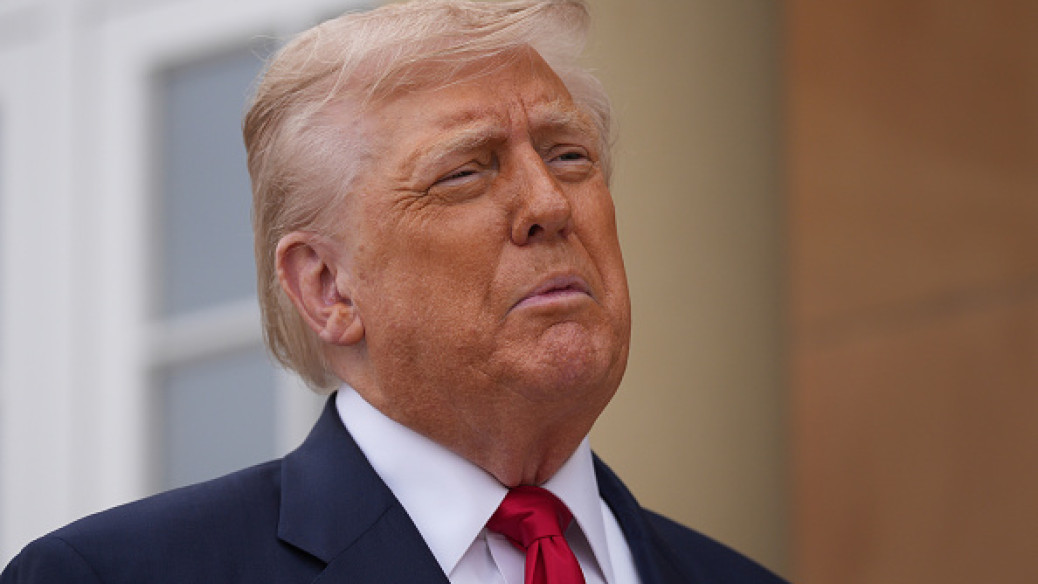

Washington, D.C. — Former U.S. President Donald Trump may lend his backing to a revived congressional initiative that seeks to formally designate the Muslim Brotherhood as a terrorist organization, according to White House Press Secretary Caroline Leavitt, who made the statement during a recent press briefing.
The latest effort gained momentum in mid-July when it was introduced as a bipartisan proposal by Republican Representative Mario Díaz-Canel and Democratic Representative Jared Moskowitz. This comes on the heels of years of advocacy by Republican Senator Ted Cruz, who has consistently pushed for such a classification since 2015 and has previously introduced similar legislation in the Senate.
Far-right political figures, including activist and Trump associate Laura Loomer, have thrown their support behind the initiative. However, human rights advocates warn the implications of such a move could be profound—particularly for civil and political movements throughout the Middle East and North Africa (MENA).
READ MORE: Top ISIS Commander Killed in U.S. Military Operation in Syria’s Aleppo
According to reporting by The New Arab in its Arabic edition, some American lawmakers are drawing connections between the Muslim Brotherhood and Hamas, the latter of which is already listed as a terrorist entity by the U.S. State Department. Proponents argue that the Brotherhood functions as a global Islamist network that allegedly provides logistical, financial, and ideological support to groups engaged in extremist violence, directly threatening U.S. national interests.
Yet, critics point out that thousands of individuals—especially in Egypt—have fled persecution over suspected ties to the Muslim Brotherhood. Many have sought asylum abroad, citing political repression and human rights abuses.
A Controversial Legacy
Founded in 1928 in Egypt by Hassan al-Banna, the Muslim Brotherhood is one of the most prominent and historically influential Islamist movements in the Arab world. The organization claims it operates as a peaceful, nonviolent actor focused on political engagement, educational reform, and providing social services to impoverished communities.
The Brotherhood has consistently framed itself as an advocate for democratic principles, civil society, and resistance against foreign occupation—especially in relation to its vocal support for Palestinians during recent conflicts in Gaza.
Despite these claims, the group has already been banned and designated as a terrorist organization in several countries, including Egypt, the United Arab Emirates, and Jordan.
Jordan’s Recent Crackdown
In early 2024, Jordan intensified its crackdown on the Brotherhood, accusing it of plotting activities against national security. Government spokesperson Mohammed al-Momani reported the arrest of 16 individuals allegedly tied to the movement. The Jordanian General Intelligence Department stated that these individuals had been under surveillance since 2021 and were allegedly involved in developing missiles, constructing drones, and stockpiling weapons and explosives.
In response, the Brotherhood denied any connection to the detained individuals, claiming their actions were not sanctioned by the group and were instead efforts to assist Palestinians in Gaza under siege.
Backlash from Rights Groups and Analysts
Opponents of the U.S. bill warn that a broad designation could carry unintended consequences. Experts argue that classifying the Muslim Brotherhood as a terrorist organization could stifle legitimate political dissent, criminalize peaceful activism, and embolden authoritarian regimes across the Arab world to justify harsher crackdowns on opposition parties.
Civil liberties groups and Middle East analysts also stress that such a policy might further destabilize already fragile regions by eliminating moderate Islamist actors from the political arena—leaving room for more radical elements to gain ground.
A Defining Foreign Policy Debate
As the debate continues, the potential designation remains a flashpoint in U.S. foreign policy, raising key questions about the role of political Islam, freedom of expression, and counterterrorism strategy in a rapidly shifting global landscape. Trump’s possible endorsement could reignite wider discussions on American involvement in Middle Eastern politics and its long-term consequences.