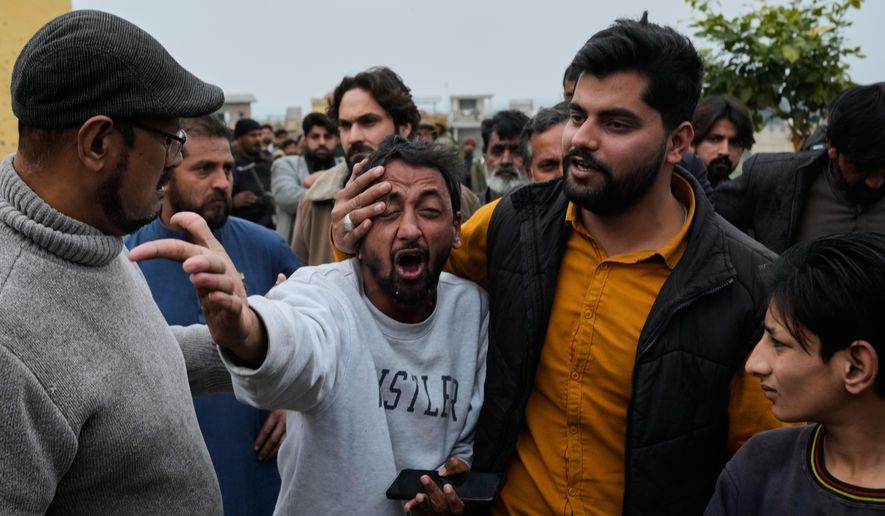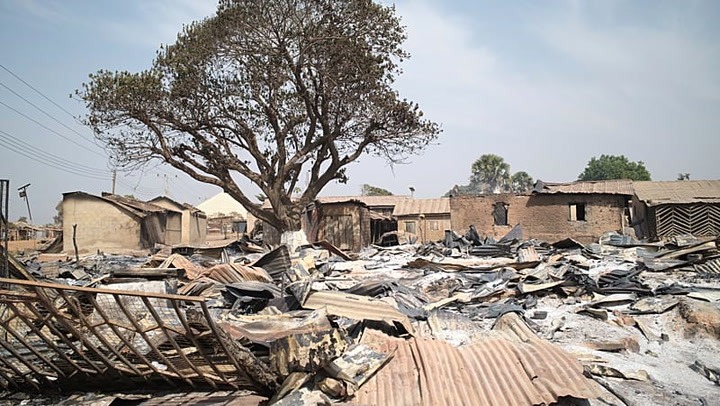

At least 162 people were killed when heavily armed extremists carried out a prolonged and coordinated assault on two rural communities in Nigeria’s Kwara State, residents and authorities confirmed. The attackers struck the neighbouring villages of Woro and Nuku, unleashing violence that lasted nearly ten hours.
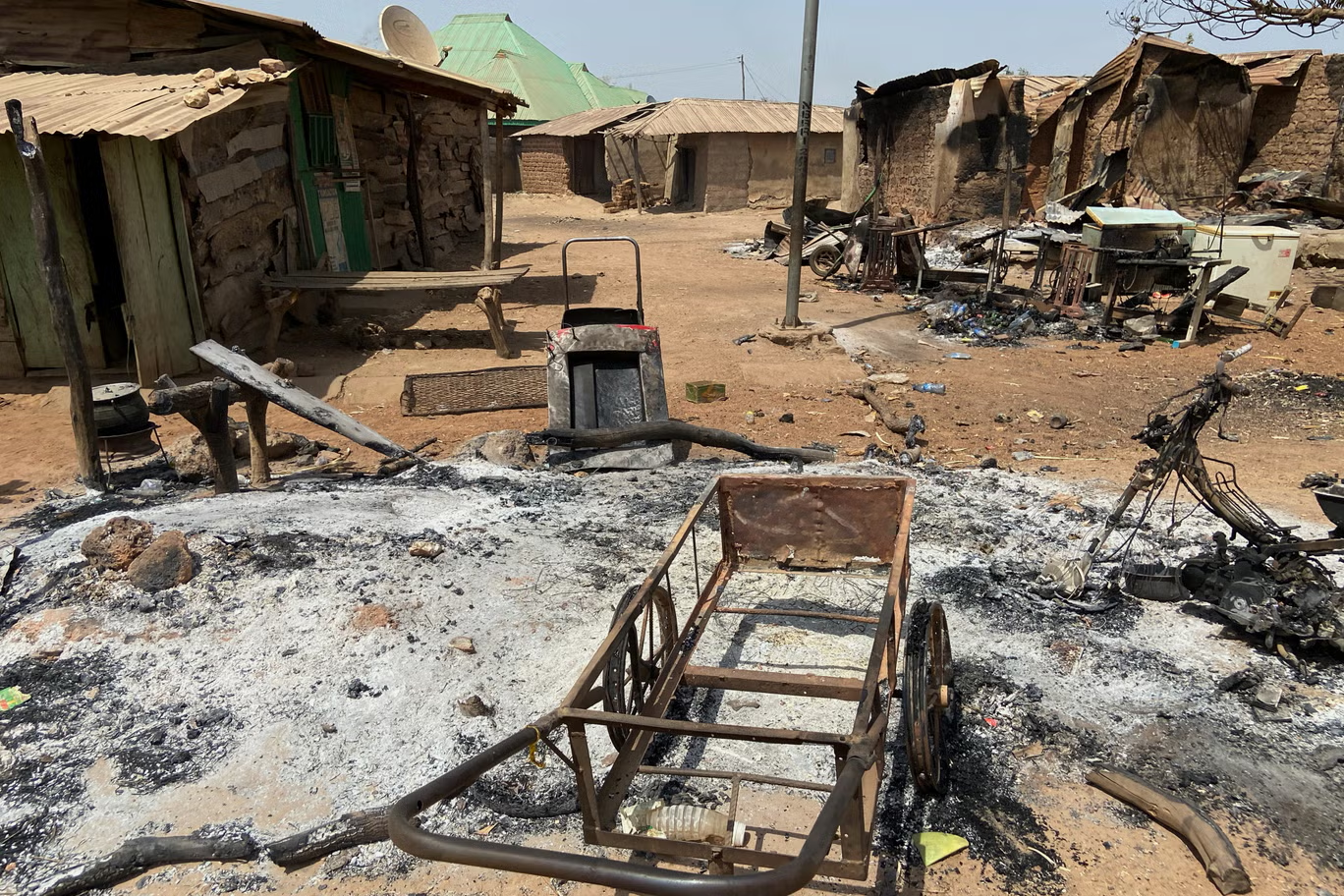
Survivors say the militants arrived on motorcycles and moved methodically from house to house, shooting residents and setting buildings on fire. Homes, shops, and farmlands were destroyed in what locals describe as an attack unlike anything they had previously witnessed.
According to villagers who spoke to the Associated Press, the attackers also entered a mosque, issued a call to prayer, and opened fire on worshippers who responded.
Warning Ignored, Violence Unleashed
Residents said the massacre occurred weeks after the villages received a written warning from the militants, threatening an attack if the community refused to accept their extremist teachings. Locals said they dismissed the threat, believing it would never materialize.
Instead, the assailants returned in force.
In what officials have described as the deadliest assault in the region in months, victims were reportedly rounded up, bound, and executed at close range. While authorities have confirmed 162 deaths, community members insist the actual number is significantly higher, with dozens still missing or abducted.
‘The Attack Came Without Warning’
Life had been calm in the farming communities before the violence erupted. The villages lie roughly 500 kilometres from Ilorin, the Kwara State capital, and residents depend largely on agriculture for survival.
Umar Bio Kabir, a 26-year-old schoolteacher, recalled playing football with friends shortly before the attack began.
“We saw them coming and ran,” he said. “Not everyone made it. God chose that I would survive.”
Residents say the killing continued from evening until dawn, with no sign of security forces during the ordeal.
“From when it started until morning, nobody came to help us,” said Iliyaus Ibrahim, a farmer who lost his brother. His pregnant sister-in-law and her two children were abducted during the attack.
Contacted by phone, Kwara State police spokesperson Adetoun Ejire-Adeyemi disputed claims that security forces were absent, saying officers were deployed to the area. She declined to provide further details.
Villages Left Nearly Empty
By Thursday, only about 20 men remained in Woro and Nuku, struggling to bury the dead. Survivors said they had already interred nearly 200 bodies, including remains burned beyond recognition.
Copyright 2026 The Associated Press. All rights reserved
Kabir described loading corpses into pickup trucks day after day.
“We are exhausted. There are not enough people left to bury the dead,” he said.
The harmattan wind carried ash and the smell of blood through the deserted villages, rattling zinc rooftops and amplifying the silence. Survivors packed their belongings onto motorcycles, taxis, and trucks, fleeing to nearby towns in search of safety.
READ MORE: Daghestan Imam Arrested Over Alleged Murder of Second Wife
Zakari Munir, who returned to help his brother escape, gestured toward the ruins and said quietly:
“Everyone who lived here has been killed.”
Security Crisis Spreads South
The attack has intensified fears that Nigeria’s long-running security crisis is spreading further south. Kwara State borders Benin Republic, raising concerns about cross-border instability.
For years, armed groups operated mainly in northern Nigeria. Analysts say increased military pressure and rivalry among factions have pushed them into new territories.
Nigeria is currently battling multiple armed groups, including Boko Haram, the Islamic State West Africa Province (ISWAP), and loosely organized criminal factions often referred to as bandits. In recent years, foreign-linked groups have also emerged.
In 2024, the Nigerian military confirmed the presence of the Lakurawa group from Niger. In 2025, Jama’at Nusrat al-Islam wal-Muslimin (JNIM) claimed its first attack on Nigerian soil—also in Kwara State.
The wider Sahel and West Africa region continues to face escalating threats from extremist organizations.
Government Response Under Scrutiny
According to United Nations data, several thousand people have died in Nigeria’s prolonged conflict. Security analysts argue that government responses remain insufficient, particularly in rural areas.
Following the massacre, the Nigerian government announced a new military operation in Kwara State aimed at containing further violence. President Bola Tinubu previously declared a state of emergency on security, promising to recruit thousands of additional police officers.
A Crisis Beyond Religion
Nigeria has recently drawn international attention after former U.S. President Donald Trump accused the country of failing to protect Christians from alleged genocide. Nigerian authorities rejected the claim, while experts warn that such narratives oversimplify a complex crisis.
In Woro and Nuku, the victims were predominantly Muslim, reportedly targeted for resisting extremist ideology rather than for their faith.
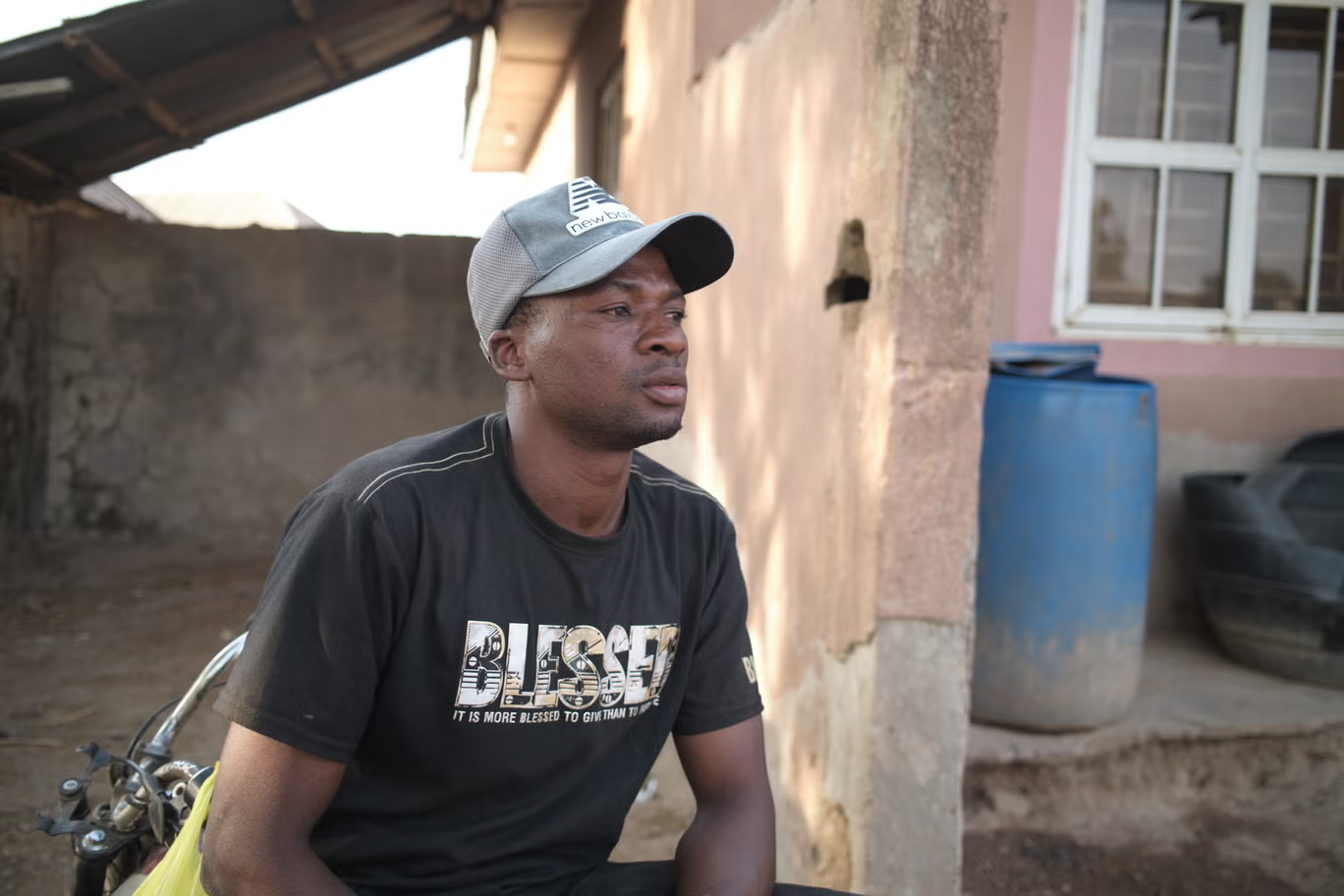
Copyright 2026 The Associated Press. All rights reserved
Nigeria maintains military cooperation with the United States, which conducted airstrikes against Islamic State-linked militants in December and has supplied arms to Nigerian forces.
Grief and Prayer After the Massacre
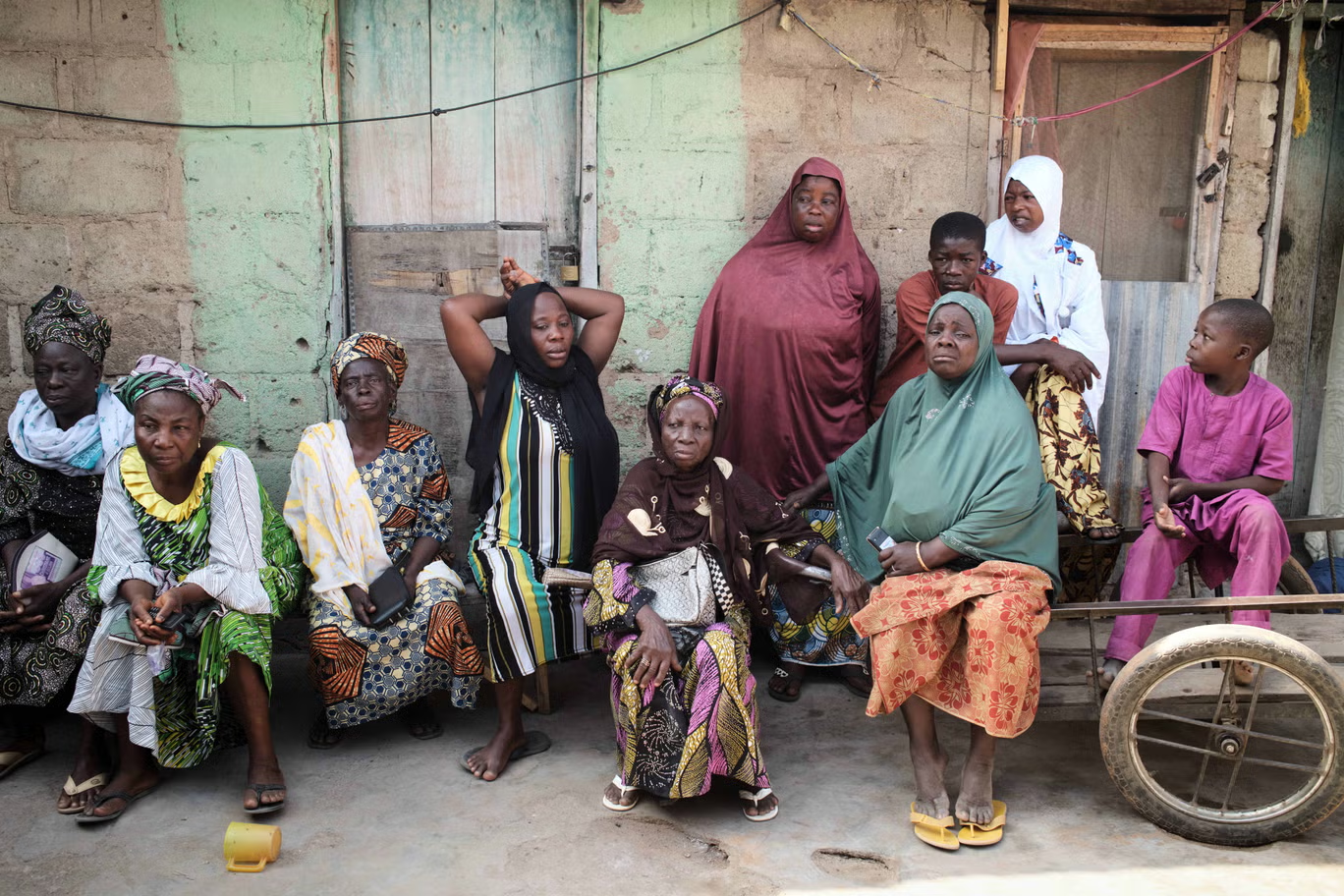
In Kaiama, survivors gathered for prayers days after the attack. Maryam Muhammed, 57, mourned her husband, who led the call to prayer at the village mosque and was killed during the assault. Their home was also destroyed.
Muhammed was briefly captured by the attackers before escaping amid the chaos. At dawn, she searched through burned and bloodied bodies until she found her husband.
“When I did not hear his voice at the mosque that morning,” she said, “I knew something was wrong.”