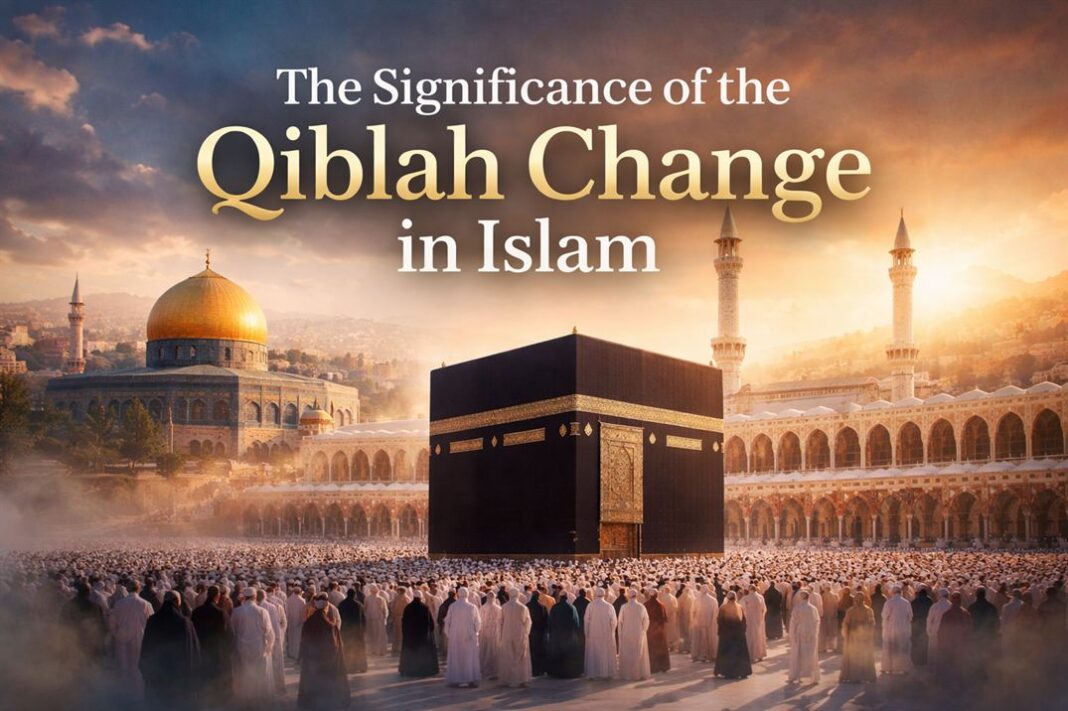

The change of the Qiblah stands as one of the most profound and transformative moments in Islamic history. It was not merely a shift in physical direction during prayer; rather, it symbolized a decisive turning point in the identity, independence, and spiritual orientation of the Muslim Ummah. The event marked a clear distinction between Islam and earlier religious traditions, reinforced absolute obedience to divine command, and established the Ka‘bah as the eternal center of Muslim worship.
For Muslims today, the change of the Qiblah is often mentioned briefly in religious study, yet its depth, wisdom, and implications extend far beyond a historical incident. It is a lesson in submission, unity, discipline, and unwavering trust in Allah’s decree.
This article explores the change of Qiblah comprehensively—its background, Quranic revelation, reactions of believers and skeptics, theological wisdom, and its enduring relevance for Muslims across generations.
Understanding the Concept of Qiblah in Islam
The word Qiblah linguistically means “direction.” In Islamic terminology, it refers to the sacred direction Muslims face during Ṣalāh (prayer). Facing the Qiblah is not a mere ritualistic requirement; it is an act of obedience that aligns the believer’s physical body with spiritual submission.
Islam emphasizes that Allah is not confined to any direction:
“To Allah belong the east and the west. Wherever you turn, there is the Face of Allah.” (Qur’an 2:115)
Yet, Allah in His wisdom ordained a unified direction to cultivate discipline, order, and communal unity among believers.
The Early Qiblah: Facing Jerusalem
Why Masjid al-Aqsa?
When Islam was first revealed, Muslims were commanded to face Masjid al-Aqsa in Jerusalem during prayer. This direction aligned Islam with the tradition of earlier prophets such as Ibrahim, Musa, and Isa (peace be upon them all).
Jerusalem held immense spiritual significance:
-
It was a center of monotheistic worship
-
It connected Islam to earlier divine revelations
-
It emphasized continuity rather than rupture
For approximately 16 to 17 months after the Hijrah to Madinah, Muslims prayed facing Masjid al-Aqsa.
The Prophet’s Deep Desire for the Ka‘bah
Although Jerusalem was the Qiblah by divine command, the heart of the Prophet ﷺ remained attached to the Ka‘bah in Makkah—built by Prophet Ibrahim (AS) as the first house of monotheistic worship.
READ MORE: The Kaaba: A Sacred Marvel at the Heart of Islam
The Qur’an captures the emotional state of the Prophet ﷺ beautifully:
“We have certainly seen the turning of your face, [O Muhammad], toward the heaven…” (Qur’an 2:144)
This verse reveals the Prophet’s silent longing—he did not demand or request verbally but awaited divine instruction with patience and humility.
The Divine Command: Change of Qiblah
The command came decisively:
“…So turn your face toward al-Masjid al-Haram.” (Qur’an 2:144)
The new Qiblah was Masjid al-Haram, home to the Ka‘bah, in Makkah.
This moment was revolutionary.
Immediate Obedience: A Test Passed
One of the most remarkable aspects of the Qiblah change was the instant obedience of the believers.
According to authentic narrations:
-
A group of Muslims were praying Fajr
-
Mid-prayer, news reached them of the new Qiblah
-
They physically turned while still in prayer
This masjid later became known as Masjid al-Qiblatayn (Mosque of the Two Qiblahs)—a living monument to submission without hesitation.
Reaction of Hypocrites and Disbelievers
While believers obeyed instantly, others mocked and questioned:
-
“What has turned them from their former Qiblah?” (Qur’an 2:142)
This reaction exposed what lay in hearts:
-
Believers saw obedience as worship
-
Hypocrites saw it as inconsistency
-
Jews of Madinah used it to argue and ridicule
Allah responded clearly that guidance is not about directions but obedience.
Establishing a Distinct Muslim Identity
The change of Qiblah formally established Islam as:
-
An independent faith
-
A continuation yet completion of monotheism
-
A separate Ummah with its own spiritual center
Facing Jerusalem had symbolized continuity; facing Makkah symbolized distinct identity.
The Ka‘bah: The Spiritual Axis of Islam
The Ka‘bah is not worshipped—it is oriented toward. It serves as:
-
A unifying focal point
-
A reminder of Ibrahim’s legacy
-
A symbol of Tawḥīd (Oneness of Allah)
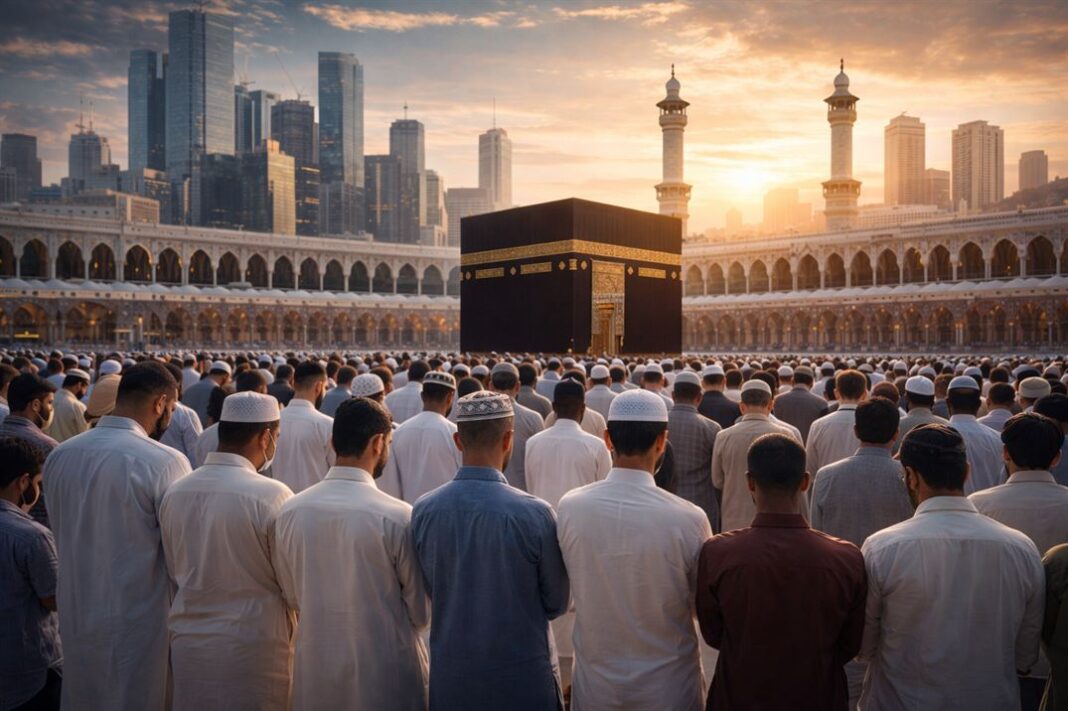
Every day, millions of Muslims across continents align themselves toward one point—demonstrating unparalleled unity.
Lessons from the Change of Qiblah
1. Absolute Obedience to Allah
Faith is not conditional upon understanding every command. True belief submits first, then seeks wisdom.
2. Unity Over Geography
Despite racial, cultural, and linguistic diversity, Muslims face one direction—physically and spiritually.
3. Tests Reveal True Faith
The change separated sincere believers from doubters, proving that faith is demonstrated through action.
4. Islam Honors History Without Being Bound by It
Islam respects previous prophets while affirming its finality and independence.
Qiblah and the Concept of Divine Wisdom
Allah states clearly:
“And never would Allah have caused you to lose your faith.” (Qur’an 2:143)
Prayers offered toward Jerusalem were fully accepted. This reassured believers that sincerity, not direction, earns divine acceptance.
READ MORE: Story Of Abraham: The City Of Mecca And Construction Of Kaaba
Legal and Jurisprudential Implications
The Qiblah change became a foundational precedent in Islamic jurisprudence:
-
Rulings can change by divine command
-
Past acts remain valid if done sincerely
-
Knowledge reaching a person late does not invalidate previous worship
Relevance of the Qiblah Today
In the modern world of confusion and divided loyalties, the Qiblah teaches Muslims:
-
Focus amid distractions
-
Unity amid division
-
Direction amid chaos
Facing the Ka‘bah five times daily is a reminder of purpose beyond material life.
Common Misconceptions About the Qiblah Change
Was Islam Confused or Inconsistent?
No. The change was deliberate, divinely planned, and wisdom-driven.
Did Allah “Change His Mind”?
Allah’s knowledge is eternal. The change was always decreed as a test and milestone.
Spiritual Symbolism of Turning
The physical turning toward Makkah symbolizes:
-
Turning away from ego
-
Turning toward submission
-
Turning toward divine unity
Every prayer becomes a reenactment of that historic obedience.
Conclusion: A Turning That Still Guides Hearts
The change of Qiblah was not a moment confined to the 2nd year of Hijrah—it is a living lesson repeated daily in every Muslim prayer.
It teaches that:
-
Faith is action
-
Obedience precedes understanding
-
Unity is strength
-
Allah alone defines direction
As Muslims align their bodies toward the Ka‘bah, they are called to align their hearts toward Allah—fully, sincerely, and without hesitation.
May Allah keep our hearts firm upon His guidance, just as He guided the first believers at the moment of the Qiblah change. Ameen.