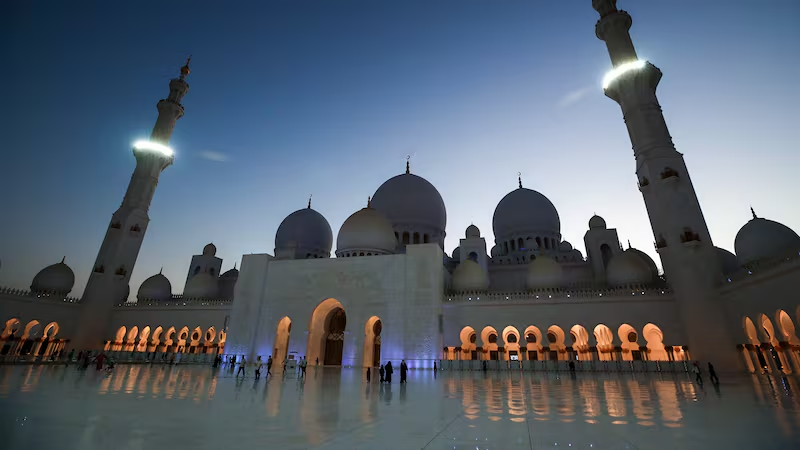

Ramadan is not just a month of fasting from dawn to sunset. It is a time of spiritual refinement, increased worship, self-discipline, and deep personal connection with Allah ﷻ. The life and practice (Sunnah) of Prophet Muhammad ﷺ serve as the perfect blueprint for Muslims seeking to maximize the blessings of this sacred month. Understanding and implementing the daily Ramadan routine of the Prophet ﷺ can transform the way we observe fasting and elevate our spiritual experience far beyond mere abstention from food and drink.
Through authentic sources of the Qur’an and Sunnah, this article explores in detail how the Prophet ﷺ structured his days and nights during Ramadan—his routines of worship, meals, prayer, social interaction, reflection, and rest. It offers both a descriptive account and practical guidance for Muslims today.
1. The Spiritual Significance of Ramadan
Before we outline the Prophet’s ﷺ routine, it’s important to understand why Ramadan holds such special importance.
1.1 Ramadan as a Sacred Time
Allah ﷻ tells us in the Qur’an:
“The month of Ramadan is that in which the Qur’an was revealed as guidance for mankind…”
— Surah Al-Baqarah 2:185
This verse emphasizes that Ramadan is not merely about fasting physically but about engaging deeply with the Qur’an—by reading, reflecting, and embodying its teachings.
1.2 The Purpose of Fasting
The Qur’an defines the wisdom behind fasting:
“O you who believe! Fasting is prescribed upon you as it was prescribed upon those before you, that you may become righteous.”
— Surah Al-Baqarah 2:183
Fasting breeds taqwa—God-consciousness—which must become the central goal of every believer.
2. Preparing for Ramadan (Before the Month Begins)
The month of Ramadan does not begin with the first day of fasting alone; it starts much earlier—spiritually and mentally.
2.1 Renewing Intentions
The Prophet ﷺ would prepare his heart for Ramadan with sincere intention (niyyah), seeking to renew his commitment to pleasing Allah and drawing closer to Him.
READ MORE: Ramadan for Beginners: A Complete Guide for New Muslims
2.2 Increasing Good Deeds
In the days leading up to Ramadan, the Prophet ﷺ would increase in voluntary prayers (nafl), remembrance (dhikr), and recitation of the Qur’an to begin the month already spiritually active.
2.3 Supplicating for Acceptance
The Prophet ﷺ would ask Allah to make him witness Ramadan and accept his worship, highlighting how essential it is to pray for spiritual readiness.
3. The Daily Ramadan Routine of the Prophet ﷺ
The Prophet’s ﷺ routine in Ramadan can be understood from the Sunnah—his actions and words recorded in the authentic collections of Hadith and Seerah (biography). We can break his daily routine into several phases:
-
Pre-dawn (Suhoor)
-
Daytime Fasting Hours
-
Spiritual Engagement
-
Night Worship (Tarawih & Qiyam)
-
Rest and Sleep
3.1 Pre-Dawn — Suhoor (The Prophet’s ﷺ Early Morning Meal)
Even before dawn, the Prophet ﷺ taught the importance of eating suhoor:
“Take suhoor, for in suhoor there is blessing.”
— Sahih Muslim
3.1.1 What Time Did the Prophet ﷺ Take Suhoor?
The Prophet ﷺ delayed suhoor until just before Fajr (dawn). This is a sunnah act (recommended practice) because it strengthens the believer for the long hours of fasting.
3.1.2 The Nature of Suhoor
Though the Prophet ﷺ kept his meals simple, he recommended wholesome foods like:
-
Dates and water
-
Barley bread
-
Milk
-
Fruits
This simplicity teaches moderation—neither overeating nor unhealthy habits.
3.1.3 The Intention (Niyyah)
The Prophet ﷺ emphasized that a fast is not valid without intention: “Actions are by intentions…” (Sahih Bukhari & Muslim). Thus, before fasting, one should renew the intention for Allah’s sake.
READ MORE: Powerful Duas for Each Day of Ramadan
3.2 Daytime — Living the Fast
Once fasting begins at Fajr, the Prophet ﷺ maintained a disciplined yet spiritually enriched routine.
3.2.1 Morning Prayer (Fajr)
After completing suhoor, the Prophet ﷺ would perform the Fajr prayer, often in congregation at the mosque. He emphasized starting the day with Allah’s remembrance and submission.
3.2.2 Increased Worship and Remembrance
Unlike other days of the year, the Prophet ﷺ increased his:
-
Qur’an recitation
-
Dhikr (remembrance of Allah)
-
Supplication (duʿā’)
-
Sending blessings upon the Prophet ﷺ (Salawat)
These acts were a consistent part of his daytime routine.
3.2.3 Charity and Generosity
The Prophet ﷺ was known to be even more generous in Ramadan than at other times. He encouraged giving charity, feeding the fasting people, and supporting the needy.
3.2.4 Avoiding Idle Talk and Anger
To preserve the sanctity of the fast, the Prophet ﷺ warned:
“Whoever does not give up lying and evil deeds, Allah has no need that he leaves his food and drink.”
— Sahih Bukhari
This means that the fast should refine one’s character—not simply restrict eating and drinking.
3.3 Breaking the Fast (Iftar)
3.3.1 The Time of Iftar
The Prophet ﷺ waited until sunset and then quickly broke his fast. Ayesha (may Allah be pleased with her) reported:
“The Prophet ﷺ would hasten to break the fast.”
— Sahih Bukhari
This teaches us not to delay breaking the fast unnecessarily.
3.3.2 What the Prophet ﷺ Broke His Fast With
The Prophet ﷺ commonly broke his fast with:
-
Fresh dates, or if unavailable,
-
Dried dates, or
-
Water
Then he would pray Maghrib before having his main meal.
3.3.3 The Blessings of Feeding a Fasting Person
The Prophet ﷺ said:
“The one who provides food for a fasting person to break his fast will have a reward like his, without it detracting from the reward of the fasting person.”
— Tirmidhi
This encourages hospitality and community care.
3.4 Night Worship — Tarawih, Tahajjud & Qiyam

Once the day’s fast was broken and the Maghrib prayer performed, the nights of Ramadan opened up to intensified worship.
3.4.1 Taraweeh Prayers
The Prophet ﷺ used to pray Taraweeh at night in Ramadan—but not in large, formal congregations as later generations did. He would pray in his house and encouraged others to do so.
3.4.2 Tahajjud and Late-Night Devotion
The Prophet ﷺ stayed up in prayer during the night, especially in the last ten nights of Ramadan. He made Qiyam al-Lail (night prayer) a central feature of his nightly routine.
3.4.3 Recitation of the Qur’an
The nights of Ramadan are deeply connected to the Qur’an, and the Prophet ﷺ used this time for profound recitation, reflection, and supplication.
3.5 The Last Ten Nights — Seeking the Night of Decree (Laylat al-Qadr)
3.5.1 Intensifying Worship
In the last ten nights, the Prophet ﷺ would:
-
Stay awake at night in worship (Iʿtikaf)
-
Increase supplications
-
Pray long portions of the Qur’an
-
Seek forgiveness (istighfār)
3.5.2 I’tikaf (Spiritual Retreat)
The Prophet ﷺ practiced I’tikaf—secluding himself in the mosque, focusing solely on worship, especially in the final ten nights. This teaches Muslims to withdraw from daily distractions and seek Allah’s pleasure with total devotion.
4. The Prophet’s ﷺ Meals in Ramadan
Unlike modern associations of Ramadan with heavy food and feasting, the Prophet ﷺ encouraged simplicity.
4.1 Moderation in Meals
His meals were simple, emphasizing health, nourishment, and gratitude.
4.2 Avoiding Extravagance
The Prophet ﷺ reminded Muslims that fasting is primarily a spiritual exercise. Overeating contradicts its essence.
READ MORE: Why Ramadan Feels Different Every Year – A Spiritual Reflection
5. Character and Behavior During Ramadan
True fasting begins in the heart before the stomach.
5.1 Controlling Anger
The Prophet ﷺ warned against anger:
“Fast and do not become angry.”
— Sahih Bukhari
Fasting should soften the heart and remove ill temper.
5.2 Forgiveness and Compassion
Ramadan is a time of mercy. The Prophet ﷺ would actively seek forgiveness, pardon those who wronged him, and show compassion.
6. Physical Rest and Sleep
The Prophet ﷺ understood the importance of rest to sustain worship and health.
6.1 Balanced Sleep
His sleep schedule allowed sufficient rest while preserving time for night prayers.
6.2 Strategic Portions
Sleep was balanced—after night prayer (Tarawih), before Suhoor, and brief rest periods during the day when necessary.
7. Family Involvement in Ramadan
The Prophet ﷺ engaged his family in Ramadan, teaching by example.
7.1 Collective Worship
He would pray with his family, encourage them to worship, and involve them in night prayers and Qur’anic recitation.
7.2 Teaching Children
Children were taught the importance of fasting, prayer, and good manners throughout the month.
8. Practical Ways to Implement the Prophet’s ﷺ Routine Today
Here are practical steps you can take to emulate the Prophet’s ﷺ Ramadan routine:
8.1 Begin Each Day with Intention and Suhoor
-
Wake up early before Fajr
-
Eat wholesome foods
-
Make sincere niyyah
8.2 Prioritize Prayer
-
Start with Fajr in congregation
-
Perform Dhuhr, Asr, Maghrib, Isha + Tarawih
8.3 Engage with the Qur’an
-
Set daily recitation goals
-
Reflect and apply meanings
8.4 Increase Supplication and Remembrance
-
Make dhikr part of your daily rhythm
-
Make duʿā’ after every prayer
8.5 Be Generous and Kind
-
Give charity
-
Feed fasting people
-
Support family and community
8.6 Control Anger and Negative Behavior
-
Practice patience
-
Seek forgiveness
8.7 Spend Time in Night Prayer
-
Rise after Isha for extra prayer
-
Use quiet moments for connection with Allah
8.8 Seek Laylat al-Qadr
-
Increase worship in last ten nights
-
Spend time in I’tikaf if possible
9. The Rewards of Following the Prophet’s ﷺ Ramadan Routine
Allah promises immense rewards for those who sincerely strive to follow the prophetic example in Ramadan:
-
Forgiveness of past sins
-
Acceptance of deeds
-
Elevation of status
-
Strengthened spiritual relationship with Allah
Conclusion
The Prophet Muhammad ﷺ provided Muslims with a perfect model of how to utilize Ramadan to achieve spiritual renewal and closeness to Allah. His daily routine in Ramadan was a blend of discipline, worship, moderation, compassion, and sincerity. By understanding and applying his practices in our daily lives, we not only honor his legacy but also open our hearts to the true blessings of this sacred month.
May Allah grant us the ability to follow the Sunnah, accept our fasts, and make us among those who witness the Night of Decree (Laylat al-Qadr). Ameen.