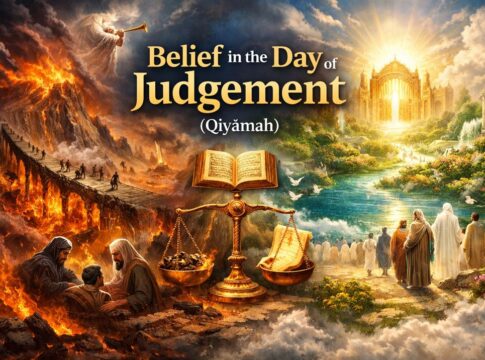

Belief in the Day of Judgement, known in Islam as Yawm al-Qiyāmah, is not merely a theological concept but the very axis upon which a Muslim’s worldview rotates. Without belief in the Hereafter, life becomes a random sequence of events with no ultimate justice, no final accountability, and no lasting consequence. Islam rejects such a worldview entirely. Instead, it teaches that this worldly life is a temporary testing ground, while the real and eternal life begins after death.
Allah ﷻ repeatedly reminds humanity that creation was not purposeless and that every soul will inevitably return to Him for judgment. This belief nurtures patience in hardship, restrains oppression, instills hope in the oppressed, and anchors morality even when no human authority is watching.
Allah ﷻ says:
﴿كُلُّ نَفْسٍ ذَائِقَةُ الْمَوْتِ ۖ وَإِنَّمَا تُوَفَّوْنَ أُجُورَكُمْ يَوْمَ الْقِيَامَةِ﴾
“Every soul shall taste death, and you will only be given your full recompense on the Day of Resurrection.”
(Surah Āl ‘Imrān 3:185)
Thus, belief in Qiyāmah is not fear-mongering; rather, it is the ultimate affirmation of divine justice, mercy, and wisdom.
The End of the World and the Trumpet of Isrāfīl
Only Allah ﷻ possesses knowledge of the exact time of the Last Hour. Not even the greatest of angels or prophets have been granted this knowledge. When Jibrīl (عليه السلام) asked the Prophet Muhammad ﷺ about the Hour, he replied:
«مَا الْمَسْؤُولُ عَنْهَا بِأَعْلَمَ مِنَ السَّائِلِ»
“The one being asked knows no more about it than the one asking.”
(Ṣaḥīḥ Muslim)
Angel Isrāfīl (عليه السلام) has been appointed to blow the Trumpet (Ṣūr). At Allah’s command, he will blow it twice. The first blast will bring absolute destruction to all living beings, while the second blast will resurrect every soul that ever lived.
Allah ﷻ describes the first blast:
﴿وَنُفِخَ فِي الصُّورِ فَصَعِقَ مَن فِي السَّمَاوَاتِ وَمَن فِي الْأَرْضِ إِلَّا مَن شَاءَ اللَّهُ﴾
“And the Trumpet will be blown, and whoever is in the heavens and the earth will fall dead, except whom Allah wills.”
(Surah Az-Zumar 39:68)
The universe will collapse in a manner beyond human imagination. Mountains will be crushed into dust, seas will erupt, stars will scatter, and the laws of physics will disintegrate. The Qur’an repeatedly emphasizes that this world is fragile and temporary, no matter how permanent it appears to its inhabitants.
Life After Death: The Realm of Barzakh
Death marks the beginning of the Hereafter, not its end. From the moment the soul departs the body, a person enters Barzakh, the intermediate realm between worldly life and resurrection. In this realm, the soul experiences either peace or torment depending on faith and deeds.
READ MORE: 5 Worrying Questions You’ll Be Asked On The Day Of Judgement
After burial, the deceased is visited by two angels, Munkar and Nakīr, who question the soul about its core beliefs. The Prophet ﷺ described this moment in vivid detail, emphasizing that the dead person hears the footsteps of those leaving the grave.
The questions are simple in wording but immense in consequence:
- Who is your Lord?
- What is your religion?
- Who is your Prophet?
The believer answers confidently because faith was lived, not merely spoken. Allah ﷻ grants firmness to the believing soul at this critical moment.
﴿يُثَبِّتُ اللَّهُ الَّذِينَ آمَنُوا بِالْقَوْلِ الثَّابِتِ فِي الْحَيَاةِ الدُّنْيَا وَفِي الْآخِرَةِ﴾
“Allah keeps firm those who believe with the firm word in worldly life and in the Hereafter.”
(Surah Ibrāhīm 14:27)
For the believer, the grave becomes spacious, illuminated, and comforting. For the disbeliever or hypocrite, it becomes constricted and filled with anguish. The grave is therefore the first station of the Hereafter, a preview of what is to come.
The Resurrection and the Gathering of Humanity
After Allah wills, Isrāfīl will blow the Trumpet a second time, and all souls will be resurrected. Bodies will be reassembled, and humanity will rise from graves as if waking from a deep sleep.
Allah ﷻ says:
﴿ثُمَّ نُفِخَ فِيهِ أُخْرَىٰ فَإِذَا هُمْ قِيَامٌ يَنظُرُونَ﴾
“Then it will be blown again, and suddenly they will be standing, looking on.”
(Surah Az-Zumar 39:68)
People will be gathered barefoot, naked, and uncircumcised. However, the terror of the Day will be so overwhelming that modesty or embarrassment will not cross anyone’s mind. The sun will be brought near, sweat will rise according to deeds, and fear will grip every heart.
The Great Intercession (Ash-Shafā‘ah al-‘Uẓmā)
As the suffering intensifies, humanity will seek relief. People will turn to the prophets, beginning with Ādam (عليه السلام), asking them to intercede with Allah to begin judgment. Each prophet will excuse himself, mentioning his own trials and responsibilities, until people finally come to Prophet Muhammad ﷺ.
He will prostrate before Allah and praise Him with words never spoken before. Allah will then grant him the Great Intercession, a privilege exclusive to him.
The Prophet ﷺ said:
«أَنَا سَيِّدُ وَلَدِ آدَمَ يَوْمَ الْقِيَامَةِ… وَأَنَا أَوَّلُ شَافِعٍ وَأَوَّلُ مُشَفَّعٍ»
“I will be the leader of the children of Adam on the Day of Resurrection… and I will be the first to intercede and the first whose intercession is accepted.”
(Ṣaḥīḥ Muslim)
This moment reflects Allah’s mercy upon creation and the unparalleled status of the Prophet ﷺ.
The Scales, the Records, and Divine Justice
Every action, intention, and word will be weighed with absolute justice. Nothing will be overlooked—not even a whispered thought or a hidden tear shed for Allah’s sake.
Allah ﷻ says:
﴿وَنَضَعُ الْمَوَازِينَ الْقِسْطَ لِيَوْمِ الْقِيَامَةِ فَلَا تُظْلَمُ نَفْسٌ شَيْئًا﴾
“We shall set up the scales of justice for the Day of Resurrection, so no soul will be wronged in the least.”
(Surah Al-Anbiyā’ 21:47)
People will receive their records of deeds. Those who receive them in their right hands will rejoice, while those who receive them in their left hands will despair. Limbs will testify, the earth will speak, and angels will bear witness.
The Five Questions Every Soul Must Answer
The Prophet ﷺ warned that no one will move forward on the Day of Judgment until answering five fundamental questions:
«لَا تَزُولُ قَدَمَا عَبْدٍ يَوْمَ الْقِيَامَةِ حَتَّىٰ يُسْأَلَ عَنْ خَمْسٍ…»
“The feet of a servant will not move on the Day of Resurrection until he is asked about five things…”
(Tirmidhī)
These questions concern one’s life, youth, wealth (earning and spending), and knowledge. They summarize the entire moral responsibility of human existence.
The Bridge of Ṣirāṭ: The Final Passage Over Hellfire
After the judgment has been passed, the records distributed, and intercessions granted, humanity will face one of the most terrifying and decisive moments of the Hereafter: crossing the Bridge of Ṣirāṭ. The Ṣirāṭ is a real bridge, created by Allah ﷻ, stretched across the surface of Hellfire (Jahannam). Every human being—believer and disbeliever alike—will be required to cross it.
READ MORE: Human Souls Journey After Death In Islam
The Prophet Muhammad ﷺ described the Ṣirāṭ as thinner than a hair and sharper than a sword. Beneath it rages the blazing Fire of Hell, while hooks and grappling spikes seize people according to their deeds. No human intellect can fully comprehend its nature, but its reality is affirmed unequivocally in the Qur’an and Sunnah.
Allah ﷻ says:
﴿وَإِن مِّنكُمْ إِلَّا وَارِدُهَا ۚ كَانَ عَلَىٰ رَبِّكَ حَتْمًا مَّقْضِيًّا ثُمَّ نُنَجِّي الَّذِينَ اتَّقَوا وَنَذَرُ الظَّالِمِينَ فِيهَا جِثِيًّا﴾
“There is none of you but will pass over it; this is with your Lord a decree that must be fulfilled. Then We shall save those who were righteous and leave the wrongdoers therein, on their knees.”
(Surah Maryam 19:71–72)
Scholars explain that “passing over it” refers to the crossing of the Ṣirāṭ. The speed and safety with which one crosses depend entirely upon one’s faith and deeds. Some will cross like lightning, others like a strong wind, some running, some walking, some crawling, and others will be seized and cast into Hellfire.
The Prophet ﷺ said:
«يَمُرُّ النَّاسُ عَلَى الصِّرَاطِ وَعَلَيْهِ خَطَاطِيفُ تَخْطَفُ النَّاسَ بِأَعْمَالِهِمْ»
“People will pass over the Ṣirāṭ, and upon it are hooks that seize people according to their deeds.”
(Ṣaḥīḥ Muslim)
This moment exposes the truth of every claim made in the world. Titles, lineage, wealth, and social status will be meaningless. Only sincerity, obedience, patience, and repentance will matter.
The Pond of Kawthar: The Eternal Drink of the Prophet ﷺ
For the believers who successfully cross the Ṣirāṭ, one of the greatest honors awaits them: drinking from the Ḥawḍ (Pond) of Kawthar, granted exclusively to Prophet Muhammad ﷺ. This pond is not symbolic; it is a real body of water whose size, beauty, and purity are beyond description.
The Prophet ﷺ said:
«حَوْضِي مَسِيرَةُ شَهْرٍ، مَاؤُهُ أَبْيَضُ مِنَ اللَّبَنِ، وَرِيحُهُ أَطْيَبُ مِنَ الْمِسْكِ»
“My pond is a month’s journey in length; its water is whiter than milk and its fragrance is better than musk.”
(Bukhārī & Muslim)
Whoever drinks from it will never experience thirst again, not in the Hereafter nor ever. This drink marks the end of suffering and the beginning of eternal peace for the believers.
However, the Prophet ﷺ also warned that some people who outwardly identified as Muslims would be driven away from the pond because they altered the religion after him.
He ﷺ said:
«فَيُقَالُ إِنَّكَ لَا تَدْرِي مَا أَحْدَثُوا بَعْدَكَ»
“It will be said to me: You do not know what they introduced after you.”
(Ṣaḥīḥ Muslim)
This is a severe warning against innovation, hypocrisy, and abandoning the authentic teachings of Islam.
Intercession (Shafā‘ah): Allah’s Mercy Manifested
Intercession on the Day of Judgement is real, but it occurs only by Allah’s permission. No one can intercede independently. Allah ﷻ controls who may intercede and for whom.
Allah ﷻ says:
﴿مَن ذَا الَّذِي يَشْفَعُ عِندَهُ إِلَّا بِإِذْنِهِ﴾
“Who is it that can intercede with Him except by His permission?”
(Surah Al-Baqarah 2:255)
Types of Intercession
There are several types of intercession affirmed in Islamic belief:
-
The Great Intercession – exclusive to Prophet Muhammad ﷺ to begin Judgment.
-
Intercession for entry into Paradise without punishment.
-
Intercession for sinners to be removed from Hellfire.
-
Intercession to raise the ranks of believers in Paradise.
Prophets, angels, martyrs, scholars, and righteous believers will all be granted limited intercession, but only for those whom Allah is pleased with.
The Prophet ﷺ said:
«شَفَاعَتِي لِأَهْلِ الْكَبَائِرِ مِنْ أُمَّتِي»
“My intercession is for the major sinners of my Ummah.”
(Tirmidhī)
This hadith is a source of immense hope, yet it must never be misunderstood as permission to sin. Intercession is a gift, not a guarantee.
Hellfire (Jahannam): Temporary Punishment vs Eternal Doom
Hellfire is a real creation of Allah ﷻ, prepared as a place of punishment for disbelief, oppression, and rebellion against divine commands. The Qur’an describes it in terrifying detail—not to cause despair, but to awaken conscience and accountability.
Allah ﷻ says:
﴿وَاتَّقُوا النَّارَ الَّتِي أُعِدَّتْ لِلْكَافِرِينَ﴾
“Fear the Fire prepared for the disbelievers.”
(Surah Āl ‘Imrān 3:131)
Eternal Punishment
Those who die upon shirk (associating partners with Allah) and disbelief without repentance will remain in Hellfire eternally.
Allah ﷻ says:
﴿إِنَّ اللَّهَ لَا يَغْفِرُ أَن يُشْرَكَ بِهِ وَيَغْفِرُ مَا دُونَ ذَٰلِكَ لِمَن يَشَاءُ﴾
“Indeed, Allah does not forgive association with Him, but He forgives what is less than that for whom He wills.”
(Surah An-Nisā’ 4:48)
Temporary Punishment for Sinful Believers
Muslims who die with faith but burdened by major sins may enter Hellfire temporarily. They will eventually be removed through Allah’s mercy and intercession.
The Prophet ﷺ said:
«يَخْرُجُ مِنَ النَّارِ مَنْ كَانَ فِي قَلْبِهِ مِثْقَالُ ذَرَّةٍ مِنْ إِيمَانٍ»
“Whoever has an atom’s weight of faith in his heart will be taken out of Hellfire.”
(Bukhārī & Muslim)
This distinction highlights the immense value of īmān, even when imperfect.
Paradise (Jannah): The Ultimate Reward
Paradise is not a metaphor. It is a real, eternal abode of pleasure, peace, and nearness to Allah ﷻ. No eye has seen it, no ear has heard of it, and no human mind can imagine its reality.
Allah ﷻ says:
﴿فَلَا تَعْلَمُ نَفْسٌ مَّا أُخْفِيَ لَهُم مِّن قُرَّةِ أَعْيُنٍ﴾
“No soul knows what joy has been hidden for them as a reward.”
(Surah As-Sajdah 32:17)
Levels of Jannah
Jannah has many levels, each corresponding to faith, sincerity, and deeds. The highest level is Al-Firdaws, beneath the Throne of Allah.
The Prophet ﷺ said:
«إِذَا سَأَلْتُمُ اللَّهَ الْجَنَّةَ فَاسْأَلُوهُ الْفِرْدَوْسَ»
“When you ask Allah for Paradise, ask Him for Al-Firdaws.”
(Bukhārī)
In Paradise, there is:
-
No death
-
No illness
-
No sorrow
-
No envy
-
No fatigue
The greatest reward of all is seeing Allah ﷻ.
Allah ﷻ says:
﴿وُجُوهٌ يَوْمَئِذٍ نَّاضِرَةٌ إِلَىٰ رَبِّهَا نَاظِرَةٌ﴾
“Faces on that Day will be radiant, looking at their Lord.”
(Surah Al-Qiyāmah 75:22–23)
How Belief in Qiyāmah Transforms a Believer’s Life

Belief in the Day of Judgement transforms how a Muslim lives, speaks, earns, forgives, and endures hardship. It creates internal accountability when no one is watching. It restrains injustice even when power allows it. It instills patience during oppression and humility during success.
A believer who truly believes in Qiyāmah understands that:
-
Every injustice will be addressed
-
Every tear shed for Allah is preserved
-
Every secret deed is recorded
-
Every hardship is temporary
This belief gives strength to the weak, dignity to the oppressed, and purpose to the struggling soul.
A Final Reminder: Prepare Before It Is Too Late
The Day of Judgement is not a distant myth. It is a promised reality closer than we imagine. Every breath brings us nearer to our meeting with Allah ﷻ.
Allah ﷻ says:
﴿اقْتَرَبَتِ السَّاعَةُ وَانشَقَّ الْقَمَرُ﴾
“The Hour has drawn near, and the moon has split.”
(Surah Al-Qamar 54:1)
The wise person prepares before death arrives, repents before regret becomes useless, and reforms before the records are sealed.
The Prophet ﷺ said:
«الْكَيِّسُ مَنْ دَانَ نَفْسَهُ وَعَمِلَ لِمَا بَعْدَ الْمَوْتِ»
“The intelligent person is the one who holds himself accountable and works for what comes after death.”
(Tirmidhī)
May Allah ﷻ grant us a good ending, an easy reckoning, shade under His Throne, a drink from the Pond of Kawthar, safe passage over the Ṣirāṭ, and entry into the highest levels of Jannah without punishment.
Āmīn.