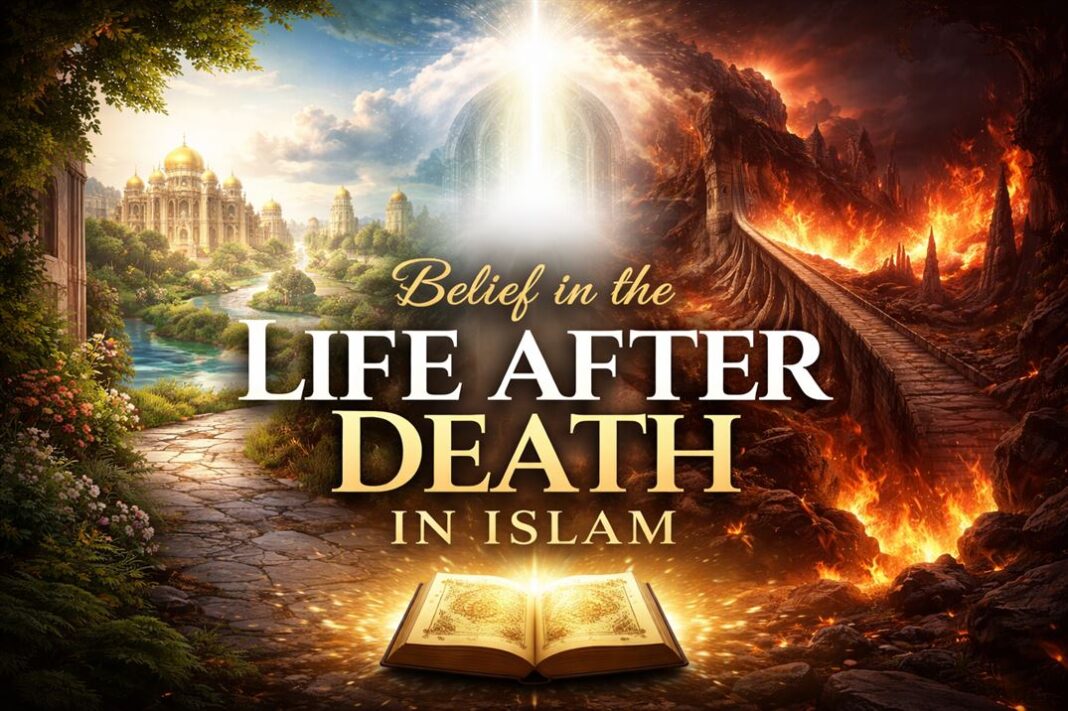

Belief in the life after death, known in Islam as Al-Ākhirah, is one of the most essential and defining aspects of Islamic faith. It is not a marginal belief, nor a philosophical idea open to interpretation; rather, it is a core pillar of Iman upon which a Muslim’s entire worldview rests. Without belief in the Hereafter, faith itself becomes incomplete, and religious practice loses its deeper meaning.
Islam teaches that this worldly life is temporary, deceptive, and fragile. It is a place of testing, not a place of permanent reward or punishment. The Hereafter, on the other hand, is eternal, absolute, and final. Every joy or hardship experienced in this life is only a preview compared to what awaits the human soul after death.
Allah ﷻ reminds mankind repeatedly in the Qur’an that death is unavoidable and that true success is not measured by wealth, power, or status in this world, but by one’s outcome in the next life.
﴿كُلُّ نَفْسٍ ذَائِقَةُ الْمَوْتِ﴾
“Every soul shall taste death.”
(Qur’an 3:185)
This verse alone establishes a universal truth: no one is exempt from death, regardless of belief, nationality, or position.
The Reality of Death in Islam
In Islam, death is not viewed as annihilation or the end of existence. Rather, it is a transition from one state of being to another. When a person dies, their soul separates from the body, but it does not cease to exist. Instead, it enters an intermediate realm known as Barzakh, where it remains until the Day of Resurrection.
READ MORE: Belief in His Messengers (Nabis)
The Prophet Muhammad ﷺ emphasized that the grave is not merely a physical pit in the ground, but the first stage of the Hereafter.
«الْقَبْرُ أَوَّلُ مَنَازِلِ الْآخِرَةِ»
“The grave is the first station of the Hereafter.”
(Ibn Mājah – Hasan)
For the righteous believer, the grave becomes a place of peace, light, and comfort. For the disbeliever or persistent sinner, it may become a place of constriction and distress. Thus, the journey toward the Hereafter begins immediately after death, not only on the Day of Judgment.
The Worldly Life as a Test
Islam repeatedly emphasizes that this life is a test, not a reward. Wealth and poverty, health and illness, ease and hardship—all are means by which Allah tests His servants.
Allah says:
﴿الَّذِي خَلَقَ الْمَوْتَ وَالْحَيَاةَ لِيَبْلُوَكُمْ أَيُّكُمْ أَحْسَنُ عَمَلًا﴾
“He who created death and life to test you as to which of you is best in deeds.”
(Qur’an 67:2)
Belief in the Afterlife gives meaning to this test. Without accountability beyond death, injustice would prevail and sacrifices for righteousness would appear pointless. The Hereafter ensures that no good deed goes unrewarded and no evil deed goes unaccounted for.
Events Leading to the Day of Resurrection
Before the Final Hour (Qiyāmah) occurs, Islam teaches that many signs will unfold. These include both minor signs, which have largely already appeared, and major signs, which will occur close to the end of time.
READ MORE: Why Islam Has Only Two Eids and No Other Celebrations
Among these signs are widespread corruption, moral decay, injustice, bloodshed, false prophets, and the weakening of religious commitment. These signs serve as reminders to humanity that the end of this world is approaching.
Allah says:
﴿اقْتَرَبَتِ السَّاعَةُ﴾
“The Hour has drawn near.”
(Qur’an 54:1)
The Blowing of the Trumpet (Ṣūr)
One of the most dramatic and decisive events of the Hereafter is the blowing of the Trumpet by Angel Isrāfīl (عليه السلام). According to Islamic belief, Isrāfīl has been holding the Trumpet since his creation, awaiting Allah’s command.
The Prophet ﷺ said:
«كَيْفَ أَنْعَمُ وَصَاحِبُ الْقَرْنِ قَدِ الْتَقَمَ الْقَرْنَ»
“How can I be at ease when the Angel of the Trumpet has already placed it to his lips?”
(Tirmidhī)
The First Blow: Total Destruction
The first blowing of the Trumpet will bring about the complete destruction of the universe. Everything that exists—living or non-living—will perish by Allah’s command.
﴿وَنُفِخَ فِي الصُّورِ فَصَعِقَ مَن فِي السَّمَاوَاتِ وَمَن فِي الْأَرْضِ﴾
“The Trumpet will be blown, and all who are in the heavens and the earth will fall dead.”
(Qur’an 39:68)
The Second Blow: Resurrection
After a period known only to Allah, the Trumpet will be blown again. This second blowing will mark the beginning of resurrection.
﴿ثُمَّ نُفِخَ فِيهِ أُخْرَىٰ فَإِذَا هُمْ قِيَامٌ يَنظُرُونَ﴾
“Then it will be blown again, and they will stand up, looking on.”
(Qur’an 39:68)
Every human being who ever lived—from Prophet Ādam (عليه السلام) to the last person born—will be brought back to life.
Physical and Spiritual Resurrection
Islam affirms bodily resurrection, not merely a spiritual one. This belief distinguishes Islam from philosophies that view the Afterlife as symbolic or metaphorical.
When disbelievers questioned how decayed bones could return to life, Allah answered clearly:
﴿قُلْ يُحْيِيهَا الَّذِي أَنشَأَهَا أَوَّلَ مَرَّةٍ﴾
“Say: He who created them the first time will give them life again.”
(Qur’an 36:79)
The same Creator who brought humanity into existence from nothing is fully capable of restoring them after death.
The Gathering in the Field of Resurrection (Maidān al-Ḥashr)
After resurrection, all of humanity will be gathered in a vast plain known as Maidān al-Ḥashr. On this Day, distinctions of race, status, wealth, and power will vanish completely.
The Prophet ﷺ said:
«يُحْشَرُ النَّاسُ يَوْمَ الْقِيَامَةِ حُفَاةً عُرَاةً غُرْلًا»
“The people will be gathered on the Day of Resurrection barefoot, naked, and uncircumcised.”
(Bukhārī & Muslim)
Despite this, no one will look at another due to the overwhelming fear and seriousness of the Day.
The Names of the Day of Judgment
The Qur’an refers to the Day of Judgment by many names, each reflecting a different aspect of its reality.

It is called Yawm al-Qiyāmah because people will stand before Allah. It is called Yawm al-Ḥisāb because deeds will be calculated. It is called Yawm ad-Dīn because ultimate judgment will be delivered.
﴿مَالِكِ يَوْمِ الدِّينِ﴾
“Master of the Day of Judgment.”
(Qur’an 1:4)
The Records of Deeds
Every human being will receive a written record of their deeds. Nothing will be omitted—not even intentions or private actions.
﴿فَمَن يَعْمَلْ مِثْقَالَ ذَرَّةٍ خَيْرًا يَرَهُ﴾
“Whoever does an atom’s weight of good will see it.”
(Qur’an 99:7)
Receiving the record in the right hand is a sign of success, while receiving it in the left hand or from behind signifies failure.
The Scale (Al-Mīzān)
Allah will establish a scale of perfect justice to weigh deeds.
﴿وَنَضَعُ الْمَوَازِينَ الْقِسْطَ لِيَوْمِ الْقِيَامَةِ﴾
“We shall set up the scales of justice for the Day of Resurrection.”
(Qur’an 21:47)
Even a single sincere act can outweigh mountains of sin.
Jannah (Paradise): The Eternal Abode of the Believers
Paradise is the ultimate reward for those who believe and live righteously. It is a place of eternal happiness, free from pain, sorrow, fear, and death.
Allah says:
﴿لَا يَمَسُّهُمْ فِيهَا نَصَبٌ وَلَا هُمْ مِّنْهَا بِمُخْرَجِينَ﴾
“No fatigue will touch them therein, nor will they ever be removed from it.”
(Qur’an 15:48)
The greatest reward in Paradise is not its rivers or palaces, but seeing Allah.
﴿وُجُوهٌ يَوْمَئِذٍ نَّاضِرَةٌ إِلَىٰ رَبِّهَا نَاظِرَةٌ﴾
“Faces on that Day will be radiant, looking at their Lord.”
(Qur’an 75:22–23)
Jahannam (Hellfire): A Place of Divine Justice
Hellfire is a reality affirmed by the Qur’an and Sunnah. It has seven gates and varying levels of punishment.
﴿لَهَا سَبْعَةُ أَبْوَابٍ﴾
“It has seven gates.”
(Qur’an 15:44)
Punishment differs according to disbelief, arrogance, oppression, and hypocrisy.
Will Muslims Remain in Hell Forever?
Muslims who die with faith will not remain in Hell eternally, even if punished temporarily.
The Prophet ﷺ said:
«مَنْ كَانَ فِي قَلْبِهِ مِثْقَالُ ذَرَّةٍ مِنْ إِيمَانٍ خَرَجَ مِنَ النَّارِ»
“Whoever has an atom’s weight of faith in his heart will be taken out of Hell.”
(Bukhārī & Muslim)
Conclusion: Preparing for the Eternal Life
Belief in life after death transforms how a Muslim lives. It instills patience during hardship, humility during success, and sincerity in worship.
﴿فَمَن زُحْزِحَ عَنِ النَّارِ وَأُدْخِلَ الْجَنَّةَ فَقَدْ فَازَ﴾
“Whoever is saved from the Fire and admitted to Paradise has truly succeeded.”
(Qur’an 3:185)