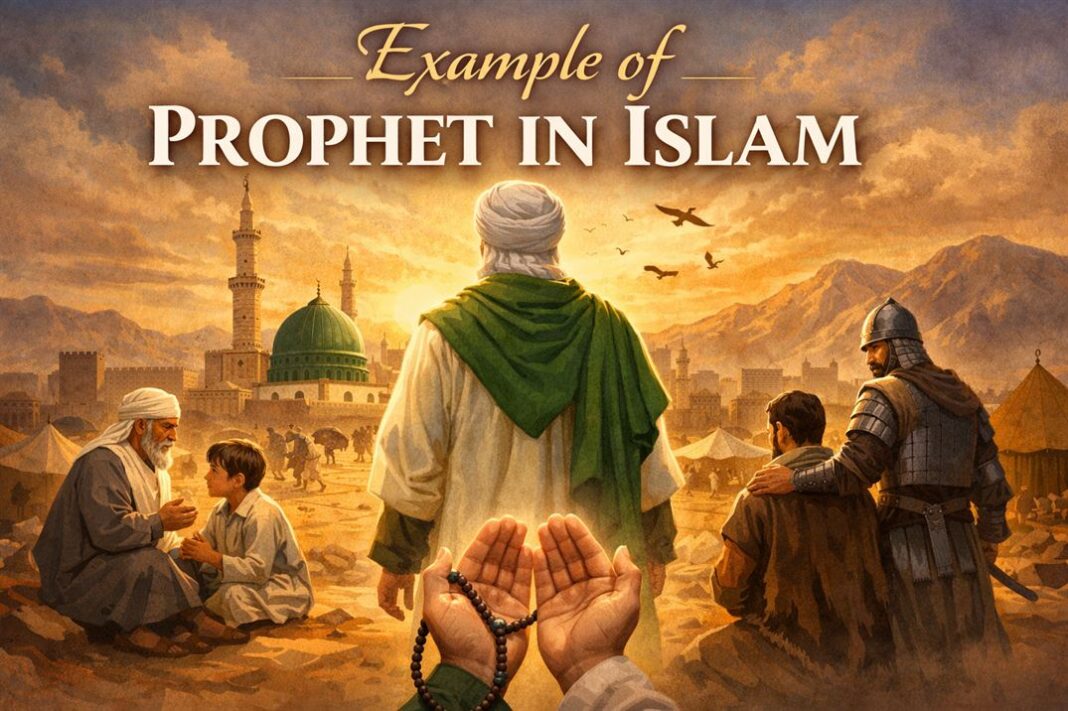

In Islam, the Prophet Muhammad ﷺ (peace and blessings be upon him) is not only the final messenger of Allāh but also the perfect model of conduct for humanity. His life exemplifies the highest ethical, moral, and spiritual standards. Muslims turn to him for guidance in every sphere of life—personal, social, economic, political, and spiritual. The Qurʾān commands believers to emulate him and to follow his Sunnah (traditions), as he is described as the best exemplar among all of creation.
This article explores the life and conduct of Prophet Muhammad ﷺ, demonstrating how his example serves as a comprehensive code of ethics for Muslims and a noble blueprint for all mankind.
What Does Islam Mean by “Example of the Prophet”?
In the Qurʾān, Allāh Almighty states:
“Indeed in the Messenger of Allāh (Muhammad ﷺ) you have a good example to follow…”
(Qurʾān, 33:21)
This verse solidifies the concept that the Prophet was sent not merely as a conveyor of divine revelation but as the living embodiment of its teachings. His behavior, choices, and character became manifestations of divine guidance.
READ MORE: Role of Prophet in Islam: Guidance, Mercy, and Leadership for Humanity
Islam considers the Prophet’s example (al-Sunnah) as the second foundational source of legislation and moral guidance after the Qurʾān. Through his sayings (ḥadīth), actions (fiʿl), approvals (taqrir), and descriptions (sīrah), Muslims derive lessons on how to lead a balanced, righteous, and purposeful life.
Why the Prophet’s Example Matters
1. Human Conduct Rooted in Divine Wisdom
The Prophet did not behave arbitrarily; every action he performed was aligned with divine wisdom. His choices reflect not only legal rulings but ethical standards grounded in mercy, justice, patience, and dignity.
2. Universal Guidance Across Time and Place
Although he lived in 7th-century Arabia, his lessons transcend time, culture, and geography. His example continues to be relevant for modern issues such as leadership, family life, social justice, conflict resolution, and religious tolerance.
3. A Model of Spiritual and Moral Excellence
His character was so eminent that the Qurʾān describes him as:
“A mercy to the worlds.”
(Qurʾān, 21:107)
This attribute is not limited to the spiritual realm alone but extends into social and interpersonal dealings.
Prophet Muhammad’s Early Life: Lessons in Resilience
The life of Prophet Muhammad ﷺ began with hardship. Orphaned at a young age, he faced emotional and financial challenges. Raised first by his grandfather and then by his uncle, his early years taught him resilience, humility, and empathy—qualities foundational for his later mission.
Honesty and Trustworthiness
Before prophethood, he was known as al-Amīn—the Trustworthy. His honesty earned him respect across tribes. This reputation illustrates the importance of integrity in personal conduct—a timeless principle in Islam.
Core Character Traits of the Prophet
The Prophet’s character reflects the Qurʾānic description of a true believer:
“And indeed, you (O Muhammad ﷺ) are of a great moral character.”
(Qurʾān, 68:4)
Let’s unpack the key traits that define his exemplary character:
1. Compassion and Mercy
The Prophet ﷺ was known for his mercy—even toward enemies and animals. A famous narration tells how he reprimanded a companion who had taken a cat by its tail, saying:
“Be kind to these creatures.”*
This shows how mercy was integral to his worldview.
2. Forgiveness and Forbearance
Despite enduring immense persecution, he forgave those who wronged him. When the people of Makkah surrendered and placed themselves at his mercy, he declared:
“No blame will there be upon you today…”
(Sīrah Ibn Hishām)
His example illustrates forgiveness as a means of healing and transformation.
3. Justice and Fairness
Justice was a hallmark of his leadership. He once said:
“Beware! Whoever is cruel and hard in dealing with people, the Almighty will be cruel and hard with him…”
(Al-Bukhārī)
Even during wars, he instructed commanders to uphold justice.
4. Humility and Modesty
Although entrusted with leadership, he lived modestly. He would sleep on the floor, mend his clothes with his own hands, and engage with all people regardless of status. His humility teaches that true leadership is service, not arrogance.
Prophet Muhammad’s Example in Worship and Spirituality

Worship in Islam is not limited to rituals alone; it encompasses sincerity, humility, and mindfulness. The Prophet’s example shows how worship transforms the heart.
1. The Prophet’s Prayer (Ṣalāh)
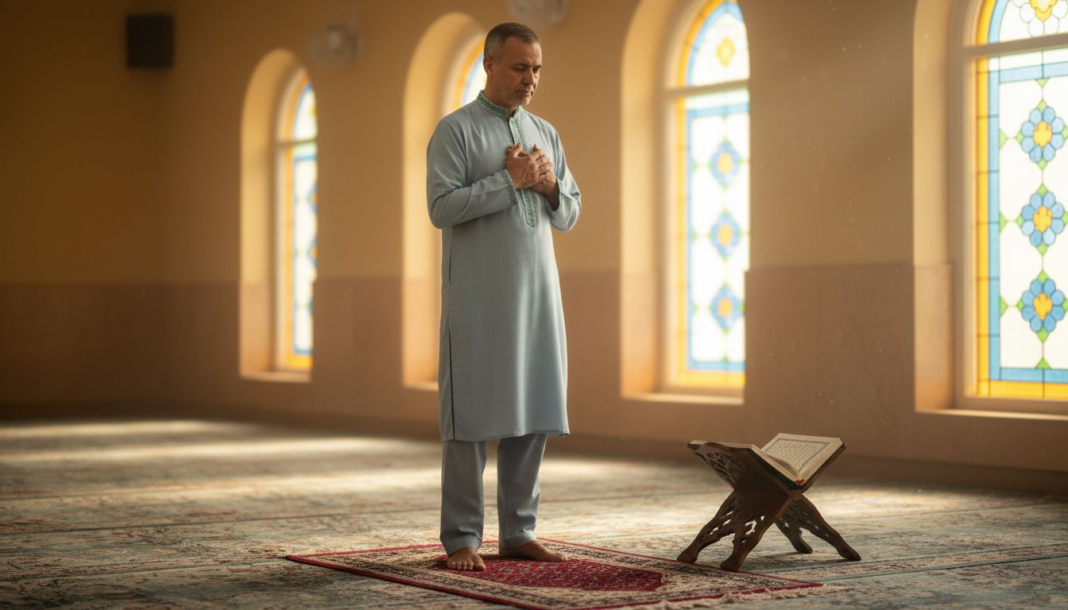
He prayed with full concentration, humility, and devotion. His physical postures reflected inner submission—an embodiment of servitude to Allāh.
He led prayers with punctuality, setting a rhythm that helped Muslims stay grounded in their relationship with God.
2. Remembrance (Dhikr) and Supplication (Duʿāʾ)
The Prophet constantly engaged in dhikr and encouraged his followers to do the same. His supplications covered various aspects of life: protection, knowledge, healing, gratitude, and reliance on Allāh.
3. Fasting Beyond Ramadan
Although Ramadan fasting was obligatory, the Prophet also practiced voluntary fasting, especially on Mondays and Thursdays, teaching that extra acts of worship nourish the soul.
Family Life: The Prophet as Husband and Father
Prophet Muhammad’s family relationships epitomize harmony, kindness, and mutual respect.
1. As a Husband
He was loving and gentle with his wives. He helped in household tasks and showed affection openly. The Prophet once kissed his grandson while leading prayer—demonstrating that love and worship are not contradictory.
His conduct with his wives teaches:
-
Mutual respect and dignity
-
Shared responsibility
-
Patience and compassion
2. As a Father and Grandfather
He raised his children with tenderness and firm moral guidance. His interactions with grandchildren combined joy, kindness, and discipline. This emphasizes Islam’s encouragement of strong family bonds.
Social Conduct: Egalitarian and Inclusive
Islam encourages social cohesion, and the Prophet exemplified this through his actions.
1. Brotherhood Beyond Race and Status
He abolished racial and tribal superiority. At the famous Farewell Pilgrimage, he declared:
“An Arab has no superiority over a non-Arab…”
(Muslim)
This principle lays the foundation for equality in Islam.
2. Kindness to Neighbors and Strangers
The Prophet emphasized neighborly rights:
“He is not a believer whose neighbor is not secure from his harm.”
(Al-Bukhārī)
He even instructed that neighbors be given charity before giving to one’s own family, highlighting generosity.
3. Treatment of Women and the Vulnerable
He uplifted the status of women at a time when their rights were neglected. His teachings on dowry, inheritance, kindness, and consultation revolutionized gender relations in society.
Leadership and Governance: The Prophet’s Political Example
Prophet Muhammad’s leadership transcended personal piety; he led a state, administered justice, and resolved conflicts with wisdom.
1. Shūrā (Consultation)
He practiced consultation, encouraging companions to voice opinions before decisions were made. This reflects Islam’s principle of participatory leadership.
2. Justice and Accountability
Even leaders were not above the law. When a woman complained against a governor, the Prophet held the governor accountable—illustrating that justice takes precedence over power.
3. Treaties and Diplomacy
The Treaty of Ḥudaybiyyah is a profound example of patience and strategic diplomacy. Although initially seen as unfavorable by some, its outcome strengthened the Muslim community through stability and trust.
Economic Conduct and Ethics
The Prophet’s example also extends to economic dealings:
1. Prohibition of Exploitation
He forbade interest (ribā), fraud, hoarding, and exploitation. Business transactions were to be conducted with honesty and transparency.
2. Charity and Social Responsibility
Zakah (obligatory charity) and voluntary charity were emphasized as means of redistributing wealth and supporting the vulnerable.
3. Contentment and Simplicity
Despite leadership, he lived simply. He taught that contentment is protection against greed.
Prophet’s Example in Times of Hardship
Life inevitably includes trials. The Prophet’s responses to hardship provide guidance for resilience and faith.
1. Patience (Ṣabr)
Even during persecution in Makkah and battles in Medina, he demonstrated patience without despair. His trust in Allāh never faltered.
2. Gratitude in Ease
He thanked Allāh for blessings, not only in hardship. Gratitude balanced his spirituality.
3. Communal Support
He united his community through collective prayer, charity, and shared responsibility—a model for enduring difficult times together.
Ethics in Warfare and Conflict
The Prophet’s conduct during wars was structured by moral constraints:
1. Prohibition against harming non-combatants
He set rules protecting women, children, and the elderly.
2. Respect for Agreements
Even with adversaries, treaties were to be honored unless broken first.
3. Compassion for Prisoners
Captives were treated humanely; ransom was not their only fate.
Prophetic Example and Modern Life
The relevance of the Prophet’s example in modern contexts cannot be overstated. From corporate ethics to family relations, from leadership principles to conflict resolution, his life offers practical solutions grounded in moral integrity.
1. Leadership in the Workplace
Leaders can emulate his fairness, consultation, and accountability.
2. Family Well-Being
His model encourages emotional intelligence, mutual respect, and nurturing relationships.
3. Social Justice and Community Service
His emphasis on welfare, equality, and compassion aligns with modern human rights values.
Conclusion: The Prophet ﷺ — A Timeless Example
The Prophet Muhammad ﷺ represents the culmination of divine guidance for humanity. His life is not a historical curiosity; it is a living framework for ethical conduct, righteous living, and spiritual fulfillment. Muslims revere him not merely as a historical figure but as a timeless guide whose example addresses the deepest needs of the human heart and society.
To emulate him is not to imitate superficially but to internalize his values, actions, and intentions—transforming personal character and collective life.
If this article has benefited you, consider sharing it with others. To learn more about the life and teachings of Prophet Muhammad ﷺ, browse the related posts on Islam Religion Guardian.