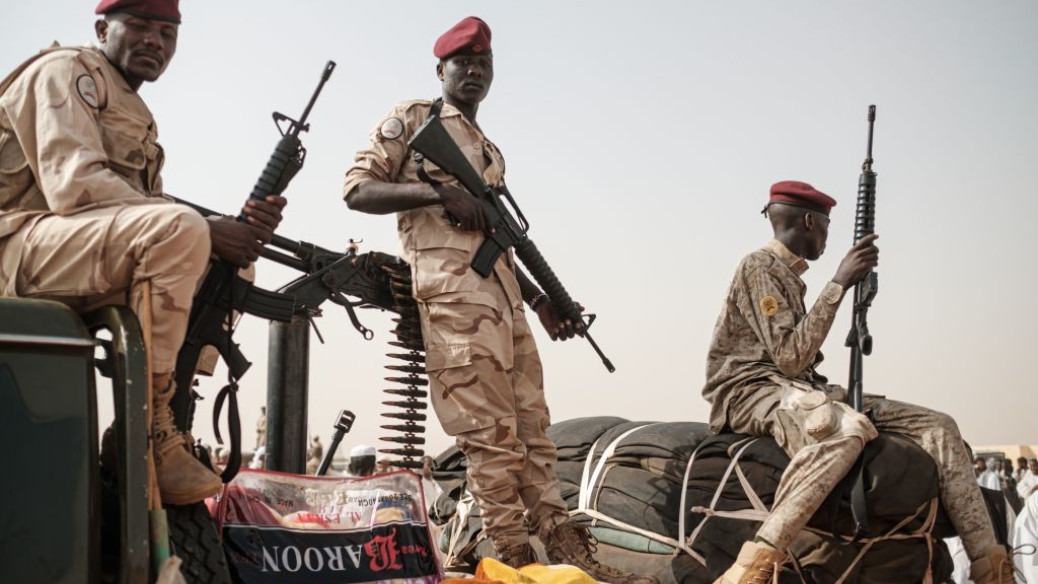

Financial analysts and banking professionals are raising serious concerns over Sudan’s deepening economic divide following the launch of unlicensed digital banking platforms operating in parts of Darfur controlled by the Rapid Support Forces (RSF).
According to experts, these platforms function outside Sudan’s legal and regulatory framework, offering no transparency on user liability while failing to comply with domestic banking laws or international standards related to anti-money laundering and counter-terrorism financing.
New App Sparks Nationwide Debate
In January 2026, a group of local businessmen introduced a digital financial platform known as Al-Mustaqbal for Banking and Financial Services in RSF-administered areas of Darfur. The move immediately triggered debate over whether Sudan is sliding toward two parallel financial systems—one overseen by the Central Bank and another operating independently in conflict zones.
READ MORE: U.S. Puts ISIS Prison Escape in Syria at Around 200 Fighters
Sudan’s Central Bank has previously described such arrangements as illegal, warning that they threaten the country’s financial unity and monetary sovereignty.
Central Bank Issues Official Warning
On 28 January 2026, the Central Bank of Sudan issued a formal statement cautioning the public against the spread of unauthorized electronic financial applications in South Darfur. The bank confirmed that the entity behind Al-Mustaqbal holds no licence to conduct banking or financial services anywhere in Sudan.
The statement emphasized that the Central Bank remains the sole authority legally empowered to grant banking licences. Any engagement with unlicensed platforms, it said, constitutes a direct violation of Sudanese law, including the 2014 Anti-Money Laundering and Counter-Terrorism Financing Act.
The bank also warned of significant risks to users, such as the absence of legal protection in cases of fraud, data breaches, or lost account credentials, as well as the lack of guarantees for deposited or transferred funds.
Currency Crisis and Forced Acceptance
Despite official warnings, some traders in Darfur view the new app as a temporary solution to a worsening liquidity crisis. Years of conflict have crippled formal banking services, leaving businesses unable to move funds or pay suppliers.
Mortada Ibrahim, a trader in South Darfur, said electronic banking has shifted from a convenience into what he described as “a security-based tool of exclusion” since the war began.
The region is also grappling with a currency shortage. After the Sudanese government replaced the 1,000-pound and 500-pound notes last year, Darfur continued to rely heavily on old paper currency—much of it unnumbered. Although no longer officially recognized by the government, these notes have been imposed as legal tender in RSF-controlled areas, forcing traders to accept them.
Lack of Oversight Raises Global Concerns
Banking expert Ahmed Abdallah warned that operating a financial platform without regulatory approval violates Financial Action Task Force (FATF) standards designed to prevent money laundering and terrorism financing.
He explained that licensed banks must meet strict compliance requirements to protect deposits and ensure transaction security. In contrast, dealings through unregulated platforms expose users to theft, loss, and exploitation, with no legal recourse available.
Banking Restrictions Deepen Liquidity Crisis
With formal banks largely shut down across Darfur, many citizens and large traders depend on Bankak, the mobile app operated by the Bank of Khartoum. However, RSF authorities reportedly subject users to close surveillance.
In several cases, state employees were detained after being accused of receiving salaries from the central government in Port Sudan through the app. These measures have intensified the region’s liquidity shortage and further disrupted commercial activity.
Emergence of a “Dual Economy”
International assessments cited by TRT Africa suggest that Darfur’s financial developments may represent early signs of a “dual economy” in Sudan. In such a scenario, separate regions operate parallel financial systems—handling customs revenues, salaries, and payments beyond the authority of the Central Bank.
This trend has heightened fears of what analysts describe as “fragmented financial sovereignty”, where national monetary control weakens in favor of localized systems shaped by armed actors.
Experts Divided on Long-Term Viability
Banking specialist Najm al-Din al-Tayeb told Al-Araby Al-Jadeed that creating a new financial institution without issuing a recognized currency makes liquidity management nearly impossible. Even if a local currency were introduced, he said, it would likely be rejected in other parts of Sudan—Darfur’s primary export market—exposing the region to potential economic isolation.
Meanwhile, banking affairs analyst Ahmed Khalil argued that the emergence of alternative financial services reflects public necessity rather than political intent. In the absence of functioning banks, he said, people are seeking any means available to sustain trade and daily life.
He added that restoring stability in Darfur—particularly in sectors such as livestock and gum arabic exports—requires organized and lawful financial systems capable of supporting businesses and easing civilian hardship.