

Balancing the demands of fasting, worship, and daily responsibilities during Ramadan can feel overwhelming for Muslims across the world. This sacred month holds incredible opportunities for spiritual growth and improved wellbeing when approached with thoughtful preparation. From strengthening your connection with Allah to adopting healthier habits, discover practical steps and authentic guidance that address both the spiritual and physical challenges unique to Ramadan. Comprehensive spiritual preparation ensures your fast transforms your inner self and deepens your faith.
Table of Contents
- Step 1: Prepare Your Mind And Body For Fasting
- Step 2: Set Your Intentions And Understand The Rules
- Step 3: Plan Nutritious Meals For Suhoor And Iftar
- Step 4: Perform Daily Fasting With Patience And Consistency
- Step 5: Reflect And Verify Your Ramadan Progress
Quick Summary
| Key Point | Explanation |
|---|---|
| 1. Prepare spiritually for Ramadan | Focus on deepening your connection with Allah through prayer, Qur’an recitation, and self-awareness. |
| 2. Set clear intentions for fasting | Define your niyyah to transform your fasting into an authentic spiritual journey with personal growth goals. |
| 3. Plan balanced meals for energy | Strategically prepare nutritious suhoor and iftar meals that support hydration, energy, and digestion. |
| 4. Maintain patience and consistency | Develop a supportive routine and embrace challenges as opportunities for spiritual growth throughout fasting. |
| 5. Reflect on your Ramadan experiences | Journal daily to assess spiritual progress, challenges, and personal growth for deeper transformation. |
Step 1: Prepare your mind and body for fasting
Preparing for Ramadan requires a holistic approach that engages your spiritual, mental, and physical dimensions. This preparation helps you maximize the profound spiritual experience of fasting while maintaining your overall health and wellness.
To begin your Ramadan journey, focus on three key areas of readiness. Comprehensive spiritual preparation involves strengthening your connection with Allah through intentional practices:
- Improve your salah (prayer) consistency
- Increase Qur’an recitation and reflection
- Practice mindful meditation and self-awareness
- Set clear spiritual intentions for the month
Mentally, you’ll want to develop discipline and reduce potential distractions. This means creating a structured routine that supports your fasting goals. Learn the fiqh (Islamic jurisprudence) of fasting rules, understand the spiritual significance of each practice, and cultivate a mindset of patience and perseverance.
Fasting is not just about abstaining from food, but about transforming your inner self and drawing closer to Allah.
Physically, gradual preparation is key. Start adjusting your sleep schedule and eating habits weeks before Ramadan begins. This helps your metabolism adapt and minimizes potential fatigue during fasting hours. Scientific research shows that strategic fasting can activate metabolic switches and improve overall health outcomes.
Here’s a comparison of the three dimensions of Ramadan preparation and their distinct benefits:
| Preparation Area | Primary Focus | Main Benefit |
|---|---|---|
| Spiritual | Strengthen faith and devotion | Deepened spiritual connection |
| Mental | Build discipline and focus | Improved resilience and mindfulness |
| Physical | Adjust habits and nutrition | Enhanced energy and wellness |
Pro tip: Begin reducing caffeine and sugar intake gradually two weeks before Ramadan to minimize potential withdrawal symptoms and ease your body’s transition.
Step 2: Set your intentions and understand the rules
Setting clear intentions transforms your Ramadan fasting from a mere physical practice to a deeply spiritual journey. This step is crucial for understanding the profound meaning behind your worship and ensuring your fast is spiritually authentic and meaningful.
Setting sincere intentions requires more than just a mental decision. Niyyah (intention) is a spiritual commitment that turns routine actions into acts of devotion. To prepare, familiarize yourself with the comprehensive fasting guidelines:
- Understand complete fasting rules
- Learn about physical and spiritual requirements
- Recognize exemptions and compassionate guidelines
- Align your intention with spiritual growth
Ramadan fasting involves more than physical abstinence. Comprehensive fasting rules include abstaining from:
- Food and drink from dawn to sunset
- Smoking
- Intimate relations
- Negative behaviors
The true essence of fasting is developing taqwa (God-consciousness) and transforming your inner self.
Know the specific exemptions that demonstrate Islam’s compassionate approach. Individuals such as pregnant women, travelers, elderly persons, and those with medical conditions have alternative worship options. The goal is not hardship but spiritual enhancement and personal growth.
Pro tip: Write down your specific spiritual intentions for Ramadan and review them daily to maintain focus and motivation throughout the month.
Step 3: Plan nutritious meals for suhoor and iftar
Preparing thoughtful, nourishing meals during Ramadan is crucial for maintaining energy and supporting your spiritual journey. Your meal planning strategy will directly impact how well you sustain yourself through long fasting hours and support your overall wellness.
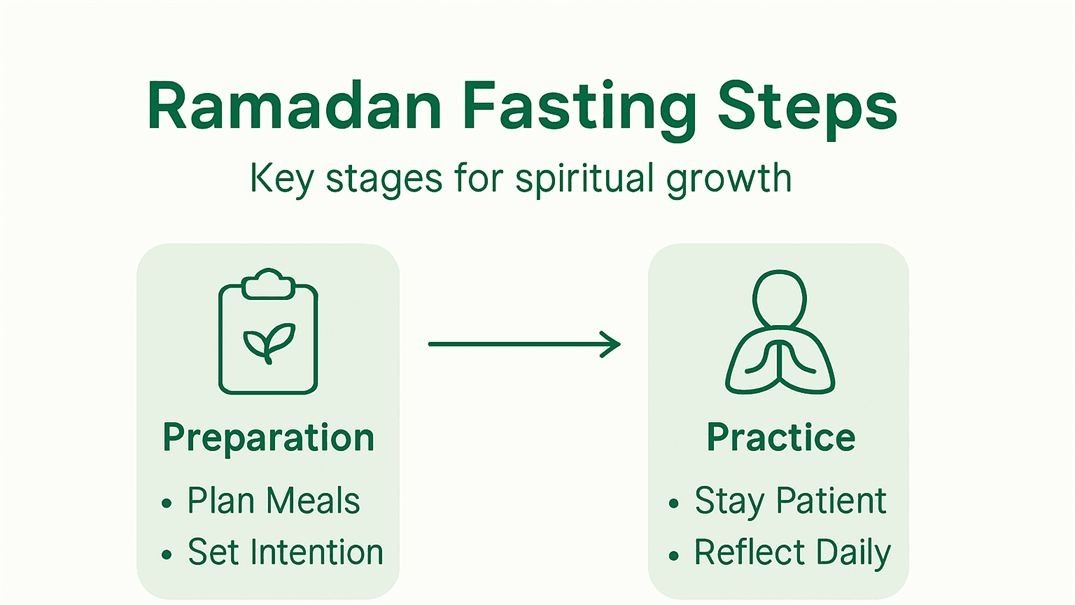
Effective Ramadan meal prep requires understanding the unique nutritional demands of suhoor and iftar. These two meals are your primary sources of sustenance during the month, so strategic planning is essential.
For suhoor (pre-dawn meal), focus on foods that provide sustained energy:
- Complex carbohydrates like whole grain oats
- Lean proteins such as eggs or Greek yogurt
- Healthy fats from nuts and seeds
- Hydration-supporting fruits
At iftar (breaking the fast), follow a gentle approach:
- Start with dates and water
- Begin with light, easily digestible foods
- Progress to balanced main dishes
- Avoid excessive fried or heavy meals
Your meal choices are not just about nutrition, but about maintaining spiritual focus and physical strength.
Consider batch cooking and meal prepping to reduce daily stress. This approach allows you to have nutritious meals ready, giving you more time for worship and reflection during Ramadan.
This summary highlights foods and meal planning strategies to support fasting energy and nutrition:
| Meal Time | Best Foods | Nutrition Strategy |
|---|---|---|
| Suhoor | Whole grains, lean protein, fruits | Prolonged energy and hydration |
| Iftar | Dates, light starters, balanced mains | Gentle digestion and replenishment |
| Batch Cooking | Multi-meal portions, labeled containers | Minimized stress, more worship time |
Pro tip: Prepare and portion your meals in advance, storing them in clearly labeled containers to streamline your daily meal preparation.
Step 4: Perform daily fasting with patience and consistency
Fasting during Ramadan is more than a physical challenge – it’s a profound spiritual journey that tests your resilience, discipline, and commitment to personal growth. Your ability to maintain patience and consistency will transform this month from a simple ritual into a transformative experience.

Fasting in Ramadan represents a spiritual journey that demands unwavering dedication and inner strength. Understanding the deeper purpose helps you navigate the challenges with grace and purpose.
Key strategies for maintaining consistency include:
- Establish a supportive routine
- Practice mindful self-reflection
- Connect with your spiritual intentions
- Embrace challenges as opportunities for growth
During challenging moments, remember these practical approaches:
- Take slow, deep breaths
- Redirect negative thoughts
- Focus on your spiritual goals
- Remind yourself of the broader purpose
Fasting is not just about abstaining from food, but about cultivating inner discipline and strengthening your connection with Allah.
Recognize that some days will be more difficult than others. Some moments might feel overwhelming, but each challenge is an opportunity to develop spiritual resilience and deepen your faith.
Pro tip: Keep a small journal to track your daily spiritual insights and emotional experiences during Ramadan, helping you maintain perspective and motivation.
Step 5: Reflect and verify your Ramadan progress
Reflecting on your Ramadan journey transforms a month of fasting into a profound opportunity for personal spiritual transformation. This final step helps you consolidate your experiences, celebrate your growth, and identify areas for continued development.
Daily journaling supports spiritual growth by creating a structured approach to self-assessment and accountability. Meaningful reflection goes beyond simply tracking your actions – it’s about understanding your inner journey.
Key reflection strategies include:
- Assess your spiritual progress
- Review your daily worship practices
- Identify personal growth moments
- Note challenges and lessons learned
Consider documenting your reflections through:
- Dedicated spiritual journal
- Personal prayer and meditation
- Conversations with trusted mentors
- Quiet self-examination
Reflection is not about judgment, but about understanding your spiritual path with compassion and wisdom.
Personal growth through mindful assessment allows you to recognize your achievements and set intentions for continued spiritual development. Look beyond surface-level accomplishments and explore the deeper transformations in your heart and character.
Pro tip: Create a sacred, quiet space for your reflection time, free from digital distractions, where you can genuinely connect with your inner spiritual experience.
Deepen Your Ramadan Experience with Trusted Islamic Guidance
Fasting in Ramadan is a powerful spiritual journey that challenges your patience, discipline, and devotion. If you seek to fully understand the rules, set meaningful intentions, and nurture your soul and body wisely through this sacred month, discovering authentic knowledge is essential. This article highlighted key pain points like establishing consistent worship, mastering fasting regulations, and maintaining physical energy for spiritual growth. At Islam Religion Guardian, we empower you with accurate and authentic Islamic content designed to support your Ramadan goals and enhance your connection with Allah.
Begin transforming your fasting from routine to revelation today. Explore comprehensive resources that deepen your understanding of Islam’s teachings and practical advice on fasting. Visit our main site at Islam Religion Guardian to access articles on spiritual readiness, fasting rules, and nutrition planning for Ramadan. Let us guide your steps toward a truly fulfilling and enlightened month of fasting.
Frequently Asked Questions
How can I prepare spiritually for Ramadan fasting?
To prepare spiritually for Ramadan fasting, strengthen your connection with Allah through improved prayer, increased Qur’an recitation, and setting clear intentions for the month. Spend time in mindful meditation to enhance your self-awareness and commitment.
What are the essential rules I need to know for Ramadan fasting?
The essential rules for Ramadan fasting include abstaining from food and drink from dawn to sunset, avoiding smoking and intimate relations, and steering clear of negative behaviors. Familiarize yourself with these guidelines to ensure a spiritually enriching experience throughout the month.
How should I plan my meals for suhoor and iftar?
Plan your suhoor and iftar meals by focusing on nutritious foods that sustain energy during fasting hours. For suhoor, include complex carbohydrates and lean proteins, while for iftar, start with dates and water, followed by light, easily digestible foods to avoid digestive discomfort.
What techniques can help me maintain patience while fasting?
To maintain patience while fasting, establish a supportive daily routine and practice mindful self-reflection. Focus on your spiritual intentions and view challenges as opportunities for personal growth, which can enhance your overall fasting experience.
How can I effectively reflect on my progress during Ramadan?
Effectively reflect on your progress during Ramadan by documenting your spiritual journey in a journal. Assess your daily worship practices, note personal growth moments, and identify challenges to gain insights and set intentions for continued spiritual development after Ramadan.