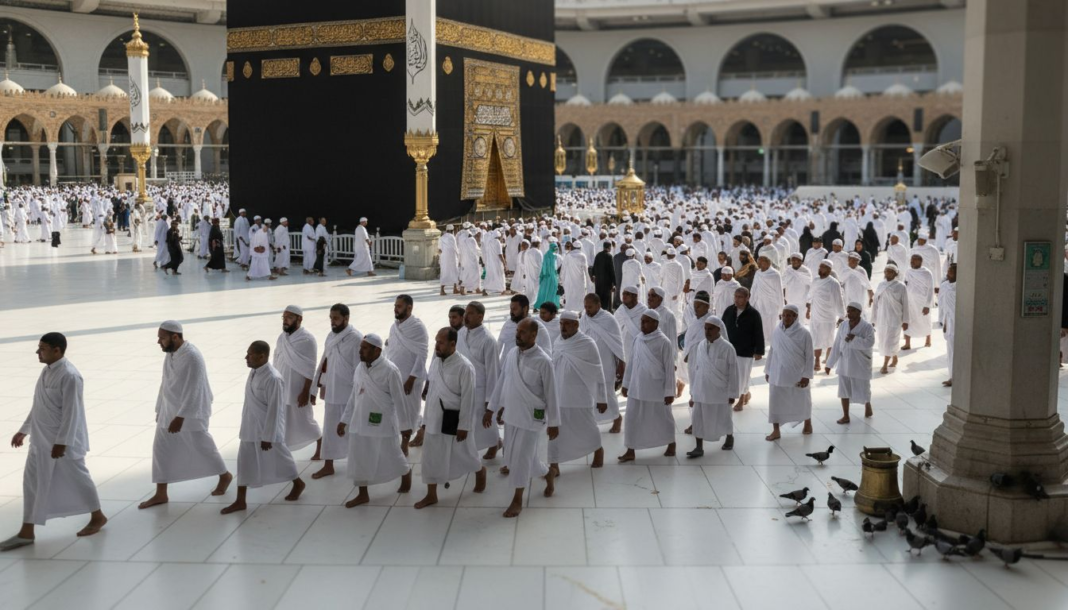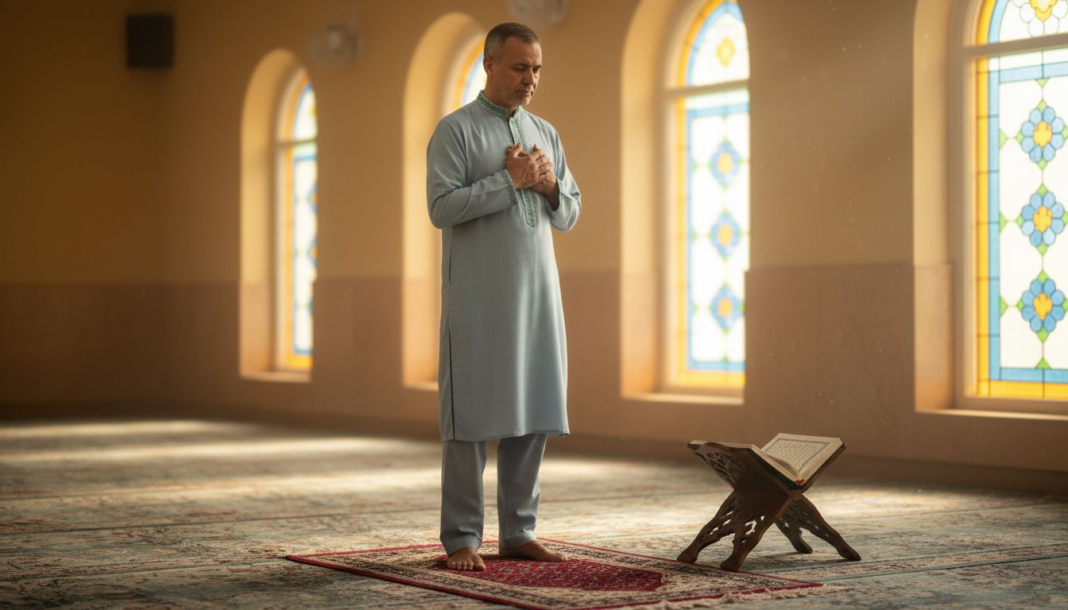

Facing prayer for the first time as a new Muslim can feel both inspiring and overwhelming. Learning the sequential steps, from performing proper ablution (wudu) to locating the direction of the Qibla toward the sacred Kaaba in Mecca, is essential for fulfilling this spiritual obligation and connecting with the worldwide Muslim community. This straightforward guide will walk you through each core part of Islamic prayer, helping you build confidence and deepen your relationship with Allah.
Table of Contents
- Step 1: Prepare With Proper Ablution And Clean Environment
- Step 2: Select And Face The Correct Qibla Direction
- Step 3: Recite Opening Intentions And Begin The Prayer
- Step 4: Perform Each Movement And Recitation Accurately
- Step 5: Verify Completion And Reflect On The Prayer
Quick Summary
| Key Point | Explanation |
|---|---|
| 1. Complete Ablution Is Essential | Physical and spiritual purification prepares you for prayer, ensuring cleanliness in body and mind before connecting with Allah. |
| 2. Accurately Face the Qibla | Aligning your position toward the Kaaba is crucial for spiritual connection; use technology or local resources for accurate orientation. |
| 3. State Your Intentions Clearly | Declaring your intentions before prayer focuses your mind and heart, transforming physical actions into sincere acts of worship. |
| 4. Master Movements and Recitations | Each prayer movement symbolizes devotion; practice ensures accurate recitation and enhances spiritual engagement during worship. |
| 5. Reflect After Completing Prayer | Personal reflection at the end of prayer fosters spiritual growth, allowing you to internalize your worship experience and maintain inner peace. |
Step 1: Prepare with Proper Ablution and Clean Environment
Preparing for Islamic prayer involves establishing a clean physical and spiritual environment through a precise ritual known as ablution (wudu). Your goal is to purify yourself physically and mentally before connecting with Allah.
Begin by ensuring you have access to clean water and a suitable space for performing ablution. According to Islamic legal guidelines, the process requires careful attention to specific body parts and cleansing techniques. Here are the essential steps:
- Select a clean area with access to running water
- Remove any physical barriers like jewelry or watches
- Ensure your clothing and immediate environment are free from impurities
The ablution process involves washing specific body parts systematically:
- Wash your hands thoroughly up to the wrists
- Rinse your mouth gently with clean water
- Cleanse your nose by sniffing water and expelling it
- Wash your face from hairline to chin, ear to ear
- Clean your arms from elbows to fingertips
- Wipe your head with wet hands
- Wash your feet completely up to the ankles
Remember: Ablution is not just a physical act but a spiritual preparation that connects you with divine consciousness.
Ensure water reaches all skin surfaces, removing any obstacles like thick makeup or barriers that might prevent water from touching the skin directly. Pay special attention to areas like eyebrows, behind ears, and between fingers to guarantee thorough cleansing.
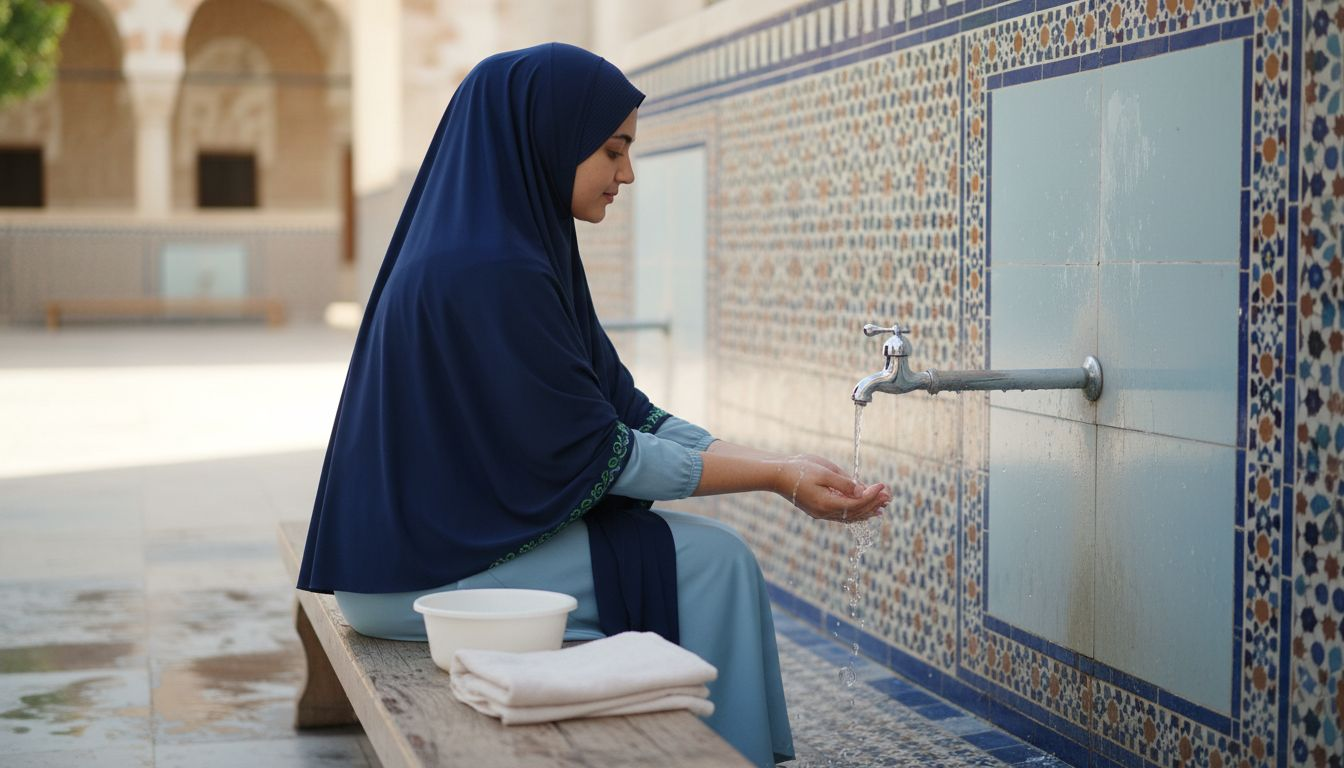
Pro tip: Keep a small towel nearby to gently pat yourself dry after completing ablution, maintaining both physical cleanliness and ritual purity.
Step 2: Select and Face the Correct Qibla Direction
Determining the precise direction of the Qibla is a fundamental aspect of performing Islamic prayer, ensuring you align your body toward the sacred Kaaba in Mecca. Your goal is to orient yourself as accurately as possible, even when geographical challenges exist.
Islamic prayer guidelines require precise orientation, but also offer flexibility for those in distant locations. Understanding how to identify the Qibla involves several practical methods:
- Use smartphone compass applications
- Consult local mosque alignment
- Reference online Qibla direction calculators
- Utilize geographic coordinate systems
When determining your Qibla direction, consider these key strategies:
- Identify your current geographic location
- Calculate the precise angle toward Mecca
- Verify the direction using multiple reference points
- Confirm alignment before beginning prayer
Accurate Qibla orientation represents more than physical positioning—it symbolizes spiritual connection and intentional worship.
Islamic legal perspectives emphasize that while exact orientation is ideal, what matters most is your sincere intention and reasonable effort to face Mecca. If you cannot determine the precise direction, consulting local Islamic authorities or using reliable technological resources is acceptable.
Important considerations include understanding that slight variations are permissible, especially for individuals in distant geographical locations. The key is demonstrating genuine effort and maintaining a spiritual mindset during your alignment.
Here is a comparison of traditional versus technological methods for determining Qibla direction:
| Method | Reliability | Required Tools | Ideal For |
|---|---|---|---|
| Traditional (mosque alignment, local landmarks) | High if reference is trusted | Compass or local knowledge | Fixed locations, frequent users |
| Technological (app, online calculator) | Very high with GPS | Smartphone, internet | Travelers, new locations |
Pro tip: Keep a small compass or digital Qibla app on your phone to help you quickly and accurately determine the correct prayer direction in any location.
Step 3: Recite Opening Intentions and Begin the Prayer
Beginning your Islamic prayer requires a deliberate, mindful approach that connects your spiritual intention with physical action. Your goal is to establish a profound connection with Allah through a focused and sincere initiation of prayer.
The opening of prayer, known as Niyyah (intention), is a crucial spiritual moment where you mentally declare your purpose and commitment. Here are the key components of starting your prayer:
- Stand straight facing the Qibla
- Clear your mind of worldly distractions
- Raise your hands to ear level
- Silently make your intention
The step-by-step process for beginning prayer involves:
- Position yourself correctly with feet shoulder-width apart
- Raise hands near your ears
- Recite the opening takbir (Allahu Akbar)
- Fold hands over your chest or abdomen
- Begin the first recitation
Your intention transforms a physical movement into a profound spiritual act of worship.
While no universal research source was provided, traditional Islamic teachings emphasize the importance of mental clarity and sincere intention. Each movement should be performed with deliberate consciousness, understanding that prayer is more than a physical ritual—it’s a direct communication with the divine.
Important spiritual considerations include maintaining mental focus, performing each action with reverence, and approaching prayer as a moment of personal connection with Allah.
Pro tip: Practice your opening prayer movements in front of a mirror to ensure proper posture and develop muscle memory for a more fluid, focused prayer experience.
Step 4: Perform Each Movement and Recitation Accurately
Mastering the precise movements and recitations of Islamic prayer requires dedication, practice, and a deep understanding of each physical and spiritual component. Your goal is to transform each gesture into a meaningful act of worship that connects you intimately with divine guidance.
The prayer movements, known as Rak’ah, involve a series of deliberate, sequential actions that symbolize humility and submission. Here are the critical elements of performing prayer movements:
- Maintain perfect body alignment
- Move slowly and purposefully
- Pause briefly between each movement
- Recite appropriate verses at each stage
The comprehensive prayer sequence involves these key steps:
- Stand upright in the starting position
- Bow forward with hands on knees
- Prostrate with forehead touching the ground
- Sit briefly between prostrations
- Complete the full prayer cycle
Every movement in prayer is an expression of spiritual devotion, transforming physical actions into a profound connection with Allah.
Each position requires specific recitations and postures. For instance, during the Ruku (bowing), you should recite praise, and during Sujood (prostration), you express ultimate humility by touching your forehead to the ground.
Important spiritual considerations include maintaining tranquility, performing movements with precise intention, and understanding that each gesture carries deep spiritual significance beyond its physical form.
Pro tip: Practice each prayer movement slowly in front of a mirror, focusing on precise body alignment and smooth transitions to develop muscle memory and enhance your spiritual connection.
Step 5: Verify Completion and Reflect on the Prayer
The final stage of prayer is not merely a physical conclusion but a profound spiritual moment of introspection and connection with Allah. Your goal is to complete the prayer with mindfulness, gratitude, and inner peace.
The concluding phase of prayer involves several important spiritual and practical elements:
- Sit in the final sitting position
- Recite closing supplications
- Perform the final salutations
- Take a moment for personal reflection
The comprehensive prayer conclusion includes these essential steps:
- Sit comfortably in the final sitting position
- Recite the Tashahhud (testimony of faith)
- Offer salutations to Prophet Muhammad
- Turn head first right, then left
- Conclude with personal prayer (Dua)
Prayer is a conversation with Allah—the conclusion is as important as the beginning.
The Tasleem (final greeting) marks the official end of prayer, where you turn your head to the right and left, saying “Assalamu Alaikum Wa Rahmatullah” (Peace and mercy of Allah be upon you). This gesture symbolizes completing your spiritual communication and returning to the physical world.
Important spiritual considerations include maintaining a sense of tranquility, reflecting on your prayer’s quality, and understanding that the moments after prayer are opportunities for personal spiritual growth and connection.
Pro tip: Spend a few quiet moments after prayer in silent reflection, allowing yourself to internalize the spiritual experience and carry its peace into your daily activities.
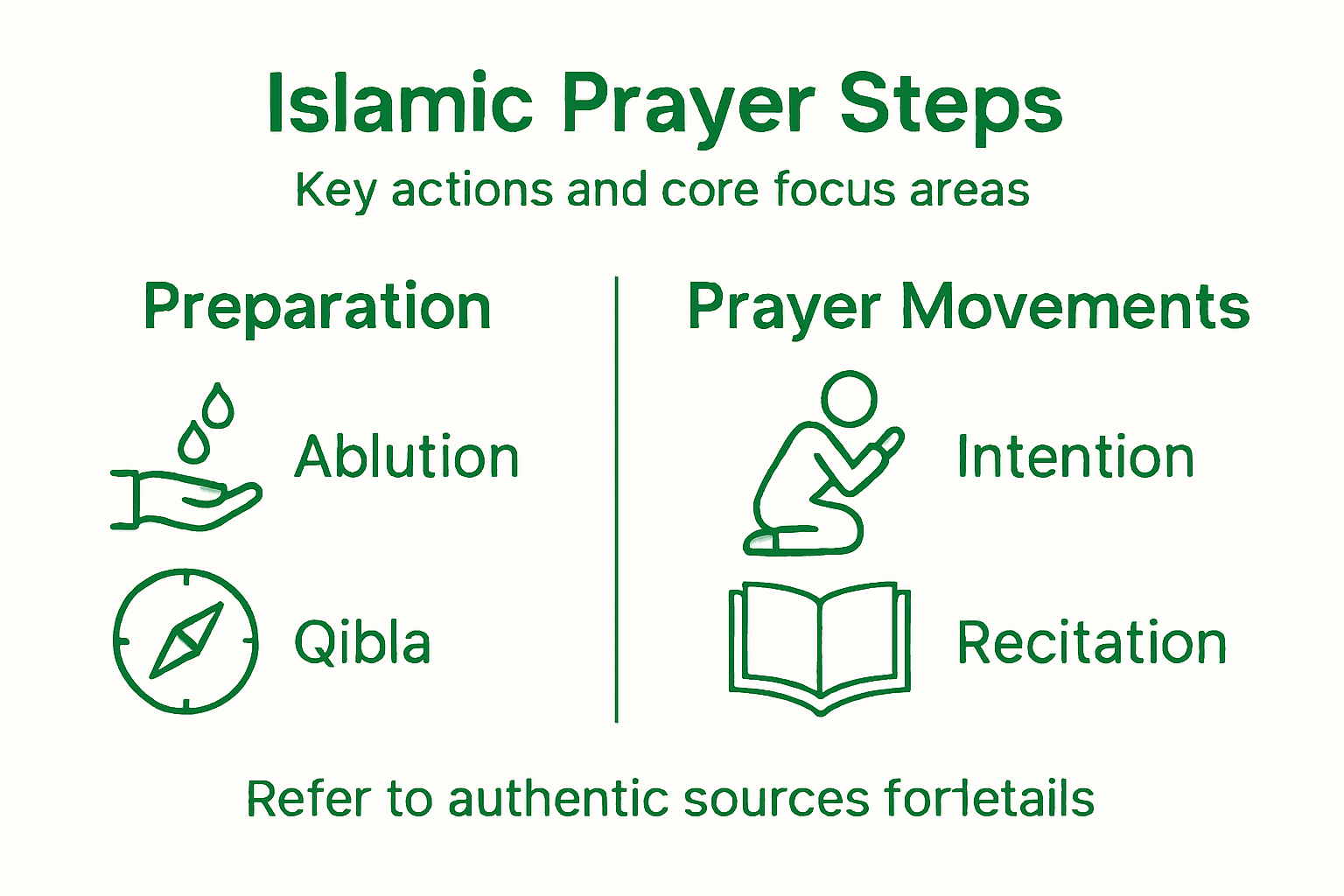
Here’s a concise summary of each prayer step and its main focus:
| Step | Primary Action | Core Focus | Spiritual Impact |
|---|---|---|---|
| 1 | Complete ablution | Physical and mental purification | Readiness for worship |
| 2 | Face Qibla direction | Correct alignment | Unity with Muslim community |
| 3 | State intentions | Mindful preparation | Sincerity in worship |
| 4 | Perform movements | Accurate recitations and postures | Humility before Allah |
| 5 | Complete and reflect | Closing supplications | Personal spiritual growth |
Enhance Your Islamic Prayer Journey with Expert Guidance
Mastering the Islamic prayer process can feel overwhelming when trying to perfect ablution, find the correct Qibla direction, or maintain focus during each movement and recitation. This article breaks down key challenges like achieving ritual purity, aligning your prayer physically and spiritually, and cultivating sincere intention. If you have sought clear and authentic steps to improve your prayer practice, addressing pain points such as accurate ablution, precise Qibla orientation, and meaningful reflection, your journey can now deepen with trusted support.

Discover a wealth of accurate and authentic Islamic knowledge designed to empower your faith and understanding at Islam Religion Guardian. Let us help you strengthen your connection to Allah through detailed resources that clarify every aspect of prayer and Islamic principles. Begin your transformative spiritual path today by exploring our comprehensive guides on Mastering Islamic Prayer and embrace a more confident, knowledgeable worship experience.
Frequently Asked Questions
What are the steps to prepare for Islamic prayer?
To prepare for Islamic prayer, start with proper ablution, ensuring both physical and mental cleanliness. Follow the specific steps of washing your hands, face, and feet, and clear your mind before moving on to face the Qibla direction.
How do I determine the correct Qibla direction for prayer?
To find the correct Qibla direction, you can use a smartphone compass, reference local mosque alignments, or consult online Qibla direction calculators. Make sure to verify your orientation from multiple sources to ensure accuracy before you begin your prayer.
What should I recite when starting my Islamic prayer?
At the start of your Islamic prayer, you should silently make your intention (Niyyah), raise your hands, and recite the opening takbir (Allahu Akbar). This moment establishes your focus and commitment to worship, enhancing your spiritual connection.
How do I accurately perform the movements during prayer?
Accurately performing the movements during prayer involves maintaining proper body alignment, moving thoughtfully, and reciting the appropriate verses at each movement. Practice each movement intentionally to develop muscle memory and enhance your focus on worship.
What should I do after completing my Islamic prayer?
After completing your Islamic prayer, sit in the final position, recite closing supplications, and take a moment for personal reflection. This quiet time allows you to internalize the spiritual experience and carry its peace into your daily life.