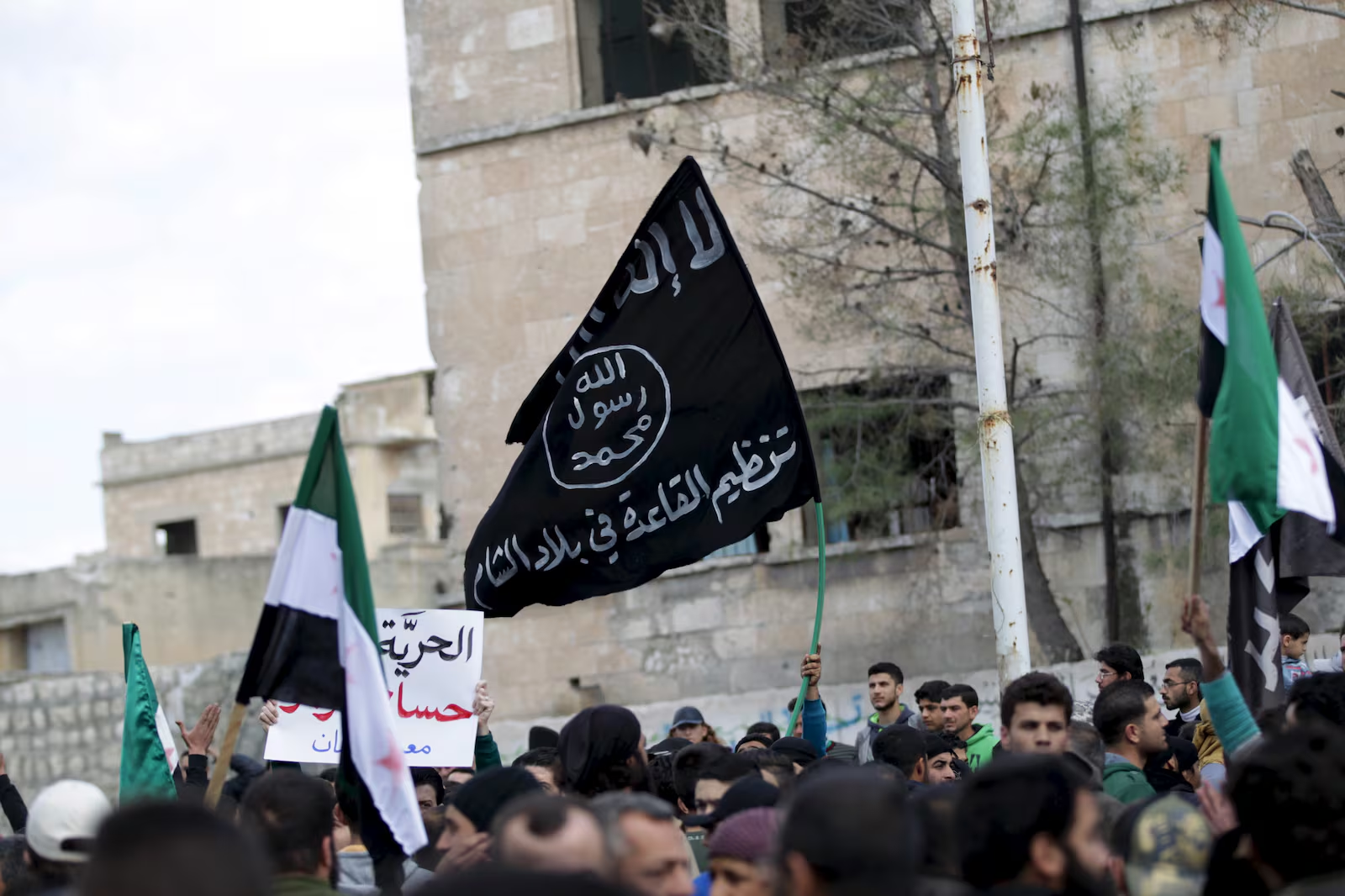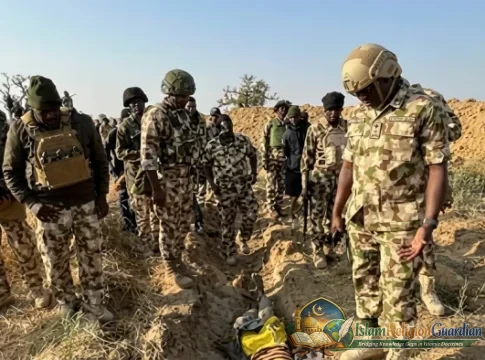

Islamist militant activity is rapidly increasing across Nigeria and its border regions with Niger and Benin, even as the United States steps up security involvement. A new assessment by the Armed Conflict Location & Event Data Project (ACLED) reveals a serious deterioration in regional security conditions.
According to the report, violent incidents linked to extremist factions connected to al-Qaeda and Islamic State surged by 90 percent between 2024 and 2025 in the Niger–Benin–Nigeria tri-border region. Fatalities during the same period more than doubled, exceeding 1,000 deaths.
Expanding Militant Footprint in West Africa
The findings highlight the growing reach of jihadist groups across West Africa. What began over a decade ago as an insurgency in northeastern Nigeria has gradually expanded westward into neighboring countries.
ACLED reports that extremist elements have extended operations into northern Benin, particularly in the Alibori and Borgou departments, as well as Niger’s Dosso region. Within Nigeria, militant activity has intensified in Sokoto, Kebbi, Niger, and Kwara states. Analysts describe this trend as a continued geographic spread marked by increasing lethality and heightened risks to civilian populations.
Nigeria has been battling Islamist insurgents for more than 15 years, primarily Boko Haram and the Islamic State West Africa Province (ISWAP). Security experts warn that cells linked to al-Qaeda and Islamic State affiliates are becoming more active in northwestern and central Nigeria, taking advantage of dense forest terrain and limited government presence.
READ MORE: Masked Gunman Opens Fire on Utah Imam During Ramadan
The regional jihadist environment has also grown more complex with the emergence of groups such as Jama’at Nusrat al-Islam wal-Muslimin (JNIM) and the Islamic State in the Sahel Province (ISSP). Weak border controls and limited state authority have allowed these organizations to establish supply corridors, recruitment pipelines, and operational bases for cross-border attacks.
US Intervention and Policy Measures
The surge in violence continues despite increased US engagement. In December 2025, American forces reportedly carried out targeted airstrikes in northwestern Nigeria and deployed personnel to assist in training Nigerian security forces confronting extremist threats.
Earlier, in October 2025, President Donald Trump redesignated Nigeria as a Country of Particular Concern (CPC) over issues related to religious violence. The designation brings heightened diplomatic scrutiny and the possibility of sanctions.
However, conflict analysts suggest that militant groups are adapting quickly. ACLED notes growing communication and coordination among jihadist factions operating in the tri-border area. Rivalries and competitive escalation — often referred to as “outbidding” — may be contributing to the rise in violent incidents.
Regional Political Instability Complicates Response
Security coordination across West Africa has weakened in recent years. Military-led governments in Mali, Burkina Faso, and Niger have distanced themselves from traditional regional security alliances, limiting intelligence sharing and joint counterterrorism operations.
Political instability throughout the Sahel has further aggravated the situation. Recent coups in Mali, Burkina Faso, and Niger were justified by their leaders as necessary responses to the inability of previous governments to contain jihadist violence. In Benin, a failed coup attempt in December cited rising insecurity as a major grievance.
Mounting Pressure on Nigeria’s Security Forces
Nigeria’s military and law enforcement agencies face mounting challenges. In addition to insurgency, they are contending with widespread banditry, kidnapping-for-ransom operations, and communal clashes across various regions of the country.
READ MORE: Kebbi Mosque Attack: Six Worshippers Killed
Although authorities report intermittent tactical successes against extremist factions, humanitarian organizations warn that civilian populations remain extremely vulnerable. Thousands have been displaced internally, while others have fled across borders seeking safety.
A Growing Regional Crisis
The ACLED report concludes that the combination of rising fatalities, expanding territorial reach, and increasingly coordinated militant activity signals a potential regional security crisis. Without sustained and effective countermeasures, the threat may extend further beyond Nigeria’s borders, despite international intervention efforts.
The situation underscores the urgent need for strengthened regional cooperation, improved governance, and comprehensive security reforms to prevent further destabilization across West Africa.