
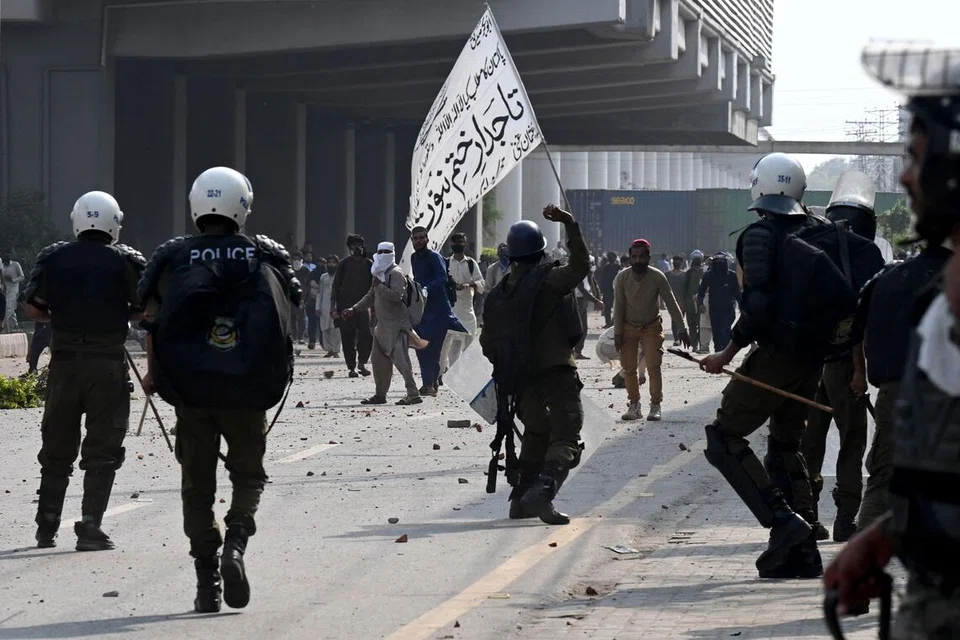

ISLAMABAD — The Pakistani government has imposed a fresh ban on the Islamist political group Tehreek-e-Labbaik Pakistan (TLP), just one week after violent street clashes between its supporters and police left five people dead.
According to an official statement issued on October 23, the federal cabinet unanimously approved the ban, citing the group’s involvement in “terrorist and violent activities.” The decision marks the second time in four years that the controversial party has been outlawed.
Background of the Clashes
The unrest erupted when TLP followers launched an anti-Israel demonstration, coinciding with global tensions over the war in Gaza. The protest occurred ahead of a peace announcement expected from the United States regarding a possible ceasefire deal.
During the march, confrontations between protesters and law enforcement turned deadly, prompting the government to take swift action against the group.
TLP Rejects the Government’s Decision
In a statement, the TLP leadership strongly condemned the move, describing the ban as “unconstitutional, illegal, and dictatorial.” The party maintains that its demonstrations are peaceful and rooted in defending Islamic values.
A History of Controversy and Political Influence
Founded in 2015, Tehreek-e-Labbaik Pakistan emerged from a movement that began after the 2011 killing of Punjab Governor Salman Taseer, who was assassinated by his own bodyguard for allegedly criticizing Pakistan’s blasphemy laws.
TLP formally entered the political arena in 2016 and gained significant traction in the 2018 general elections, securing over two million votes and becoming the fourth-largest party in terms of popular support.
The group is known for organizing large-scale demonstrations on religious and political issues, including the publication of caricatures of Prophet Muhammad (PBUH) in the French magazine Charlie Hebdo and international conflicts such as the Gaza crisis.
Previous Ban and Reinstatement
In 2021, the then government of Prime Minister Imran Khan banned the party after violent nationwide protests. However, the prohibition was lifted within six months after the TLP agreed to cease violent demonstrations and return to peaceful political activity.
Blasphemy Laws and Rising Tensions
Blasphemy remains a capital offense in Pakistan, punishable by death. However, human rights organizations have repeatedly criticized the law, arguing that it is often abused to target minorities or settle personal disputes.
Several incidents of mob lynching have been recorded over unverified allegations of blasphemy, highlighting the deep sensitivities surrounding religion and free speech in the country.
The recent ban on TLP underscores Pakistan’s ongoing struggle to balance freedom of religion, political expression, and national security, as the government seeks to curb extremism without provoking further unrest.
(Source: Reuters)


