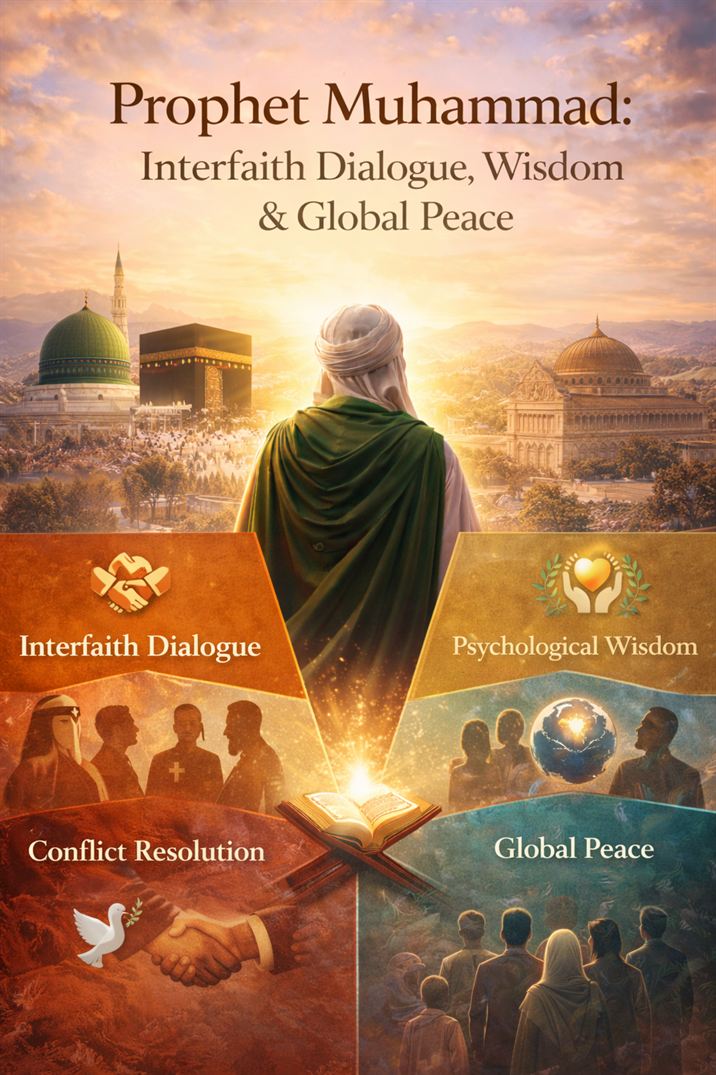

Prophet Muhammad: Interfaith Dialogue, Wisdom & Global Peace — The life and teachings of Prophet Muhammad continue to offer guidance on the most pressing challenges of our modern world. From interfaith relations to psychological resilience, from ethical conflict resolution to fostering global peace, Muhammad’s example remains deeply relevant—centuries after his passing.
This article explores four key dimensions of his legacy:
1. Muhammad and Interfaith Dialogue
Building Bridges, Not Walls
Prophet Muhammad lived in a multicultural and multireligious society in Madinah. Instead of imposing Islam on others, he:
-
Drafted the Constitution of Madinah, which guaranteed:
-
Freedom of belief
-
Protection for Jews and other non-Muslims
-
Equal responsibility in political and social matters
-
-
Maintained alliances with Christian tribes
-
Hosted delegations respectfully, listening to their beliefs without forcing change
READ MORE: Is Prophet Muhammad ﷺ Mentioned in the Bible? Hidden Biblical Prophecies Revealed
Lessons for Today
In a world increasingly divided by religion, Muhammad’s example teaches that:
-
Respectful dialogue is more effective than confrontation
-
Differences can coexist under principles of justice and shared morality
-
Peaceful negotiation and mutual understanding create stronger societies
Interfaith engagement is not simply tolerance—it is active collaboration for common good.
2. Psychological Wisdom in the Seerah
The Seerah—the biography of Prophet Muhammad—is not only spiritual guidance; it is a treasure trove of psychological insights applicable today.
Emotional Intelligence
Muhammad demonstrated mastery over emotional responses:
-
Controlled anger in the face of insult
-
Showed empathy for the vulnerable
-
Balanced personal feelings with communal responsibility
Stress Management
He faced exile, persecution, and loss but cultivated resilience through:
-
Prayer and reflection
-
Seeking counsel and support
-
Focusing on purpose rather than immediate comfort
Social Psychology
Muhammad understood human behavior:
-
He motivated followers with moral vision
-
Addressed tribal and societal biases
-
Fostered trust through consistent ethical conduct
Modern psychology recognizes these techniques as fundamental to leadership, counseling, and conflict resolution.
READ MORE: Misconceptions vs Reality — Separating Truth from Myth About Prophet Muhammad (ﷺ)
3. The Prophet’s Approach to Conflict Resolution
Conflict is inevitable, yet Muhammad’s approach remains timeless:
Principles He Emphasized
-
Justice and Fairness: Decisions must be unbiased and principled.
-
Negotiation Before Force: He exhausted dialogue before any military engagement.
-
Ethical Conduct in War: Civilians, religious sites, and nature were never to be harmed.
-
Forgiveness as Strategy: Post-conflict reconciliation was often preferred to revenge.
Case Study: The Conquest of Makkah
When Muhammad returned to Makkah after years of persecution:
-
He could have sought revenge
-
Instead, he granted amnesty to all
-
Resulted in peaceful integration of former enemies
This model of ethical conflict resolution is applicable in family disputes, organizational leadership, and international diplomacy.
4. Why Studying Muhammad Is Essential for Global Peace
Understanding Muhammad is not only a religious pursuit—it is a strategic imperative for global harmony.
Lessons in Governance and Justice
Muhammad’s life shows that peaceful societies require ethical governance, fair legal frameworks, and protection of human dignity.
Countering Extremism
By studying his teachings:
-
Misrepresentations that fuel violence can be corrected
-
Extremist narratives can be challenged with historical evidence
-
Interfaith understanding is promoted
Personal Transformation for Peace
Global peace is built by individuals embodying ethical principles. Muhammad’s guidance on patience, forgiveness, and moral integrity equips people to:
-
Resist radicalization
-
Build cohesive communities
-
Lead by example in everyday life
Conclusion: A Timeless Blueprint
Prophet Muhammad’s teachings offer:
-
Interfaith respect: collaboration without coercion
-
Psychological resilience: emotional and social intelligence
-
Conflict resolution: ethical negotiation and reconciliation
-
Global peace: fostering justice, understanding, and integrity
In a fractured world, his life serves as a timeless blueprint—not just for Muslims, but for humanity.
Studying Muhammad is more than historical interest—it is a path toward constructive dialogue, personal growth, and a more peaceful global society.
Practical Lessons from Prophet Muhammad for Leadership, Environment, Compassion, and Daily Ethics
The legacy of Prophet Muhammad continues to guide humanity, not just in spiritual matters but also in practical, everyday life. His teachings offer actionable guidance for leaders, policymakers, environmentalists, philanthropists, and individuals striving for ethical living.
We explores four key areas of practical application:
1. Practical Lessons from Muhammad for Leadership in Business and Politics
Prophet Muhammad was not only a spiritual leader but also an astute strategist and ethical administrator. His leadership principles remain relevant for modern business and political contexts.
Ethical Decision-Making
Muhammad demonstrated that leadership begins with integrity:
-
Decisions were made based on fairness and moral principles
-
Personal interest never overrode collective welfare
-
Accountability was enforced, even on himself
Lesson for today: Leaders must prioritize ethical conduct over short-term gain or personal power.
Consultation and Inclusion
He regularly engaged in shura (consultation):
-
Listened to advisors, companions, and community members
-
Incorporated diverse perspectives before making decisions
-
Built consensus rather than imposing unilateral authority
Lesson for today: Inclusive leadership fosters trust, innovation, and long-term stability.

Responsibility and Servant Leadership
Muhammad modeled servant leadership:
-
Walked alongside his people, not above them
-
Shared hardships and hardships of his followers
-
Focused on serving the community rather than personal glory
In modern business or politics, servant leadership ensures respect, loyalty, and sustainable success.
2. Prophet Muhammad’s Guidance on Environmental Stewardship
Even in the 7th century, Prophet Muhammad emphasized the importance of protecting the environment—long before modern ecological discourse emerged.
Principles He Taught
-
Avoiding Waste: He advised moderation in consumption of food, water, and resources.
-
Respect for Nature: He prohibited unnecessary destruction of trees, crops, or animals, even during conflict.
-
Sustainability: He encouraged planting trees and caring for animals as acts of ongoing charity.
Modern Relevance
-
In a world facing climate change and resource depletion, these principles remind us that ethical stewardship of the Earth is a moral obligation.
-
Corporate responsibility, sustainable development, and urban planning can draw inspiration from his example.
3. The Role of Compassion and Charity in Modern Societies
One of the most celebrated aspects of Prophet Muhammad’s life is his emphasis on compassion, generosity, and social justice.
Charity as a Social Duty
-
He established zakat (obligatory charity) to redistribute wealth and alleviate poverty
-
Encouraged voluntary acts of kindness to neighbors, travelers, and the vulnerable
Lesson for today: Social equity and communal well-being begin with intentional acts of giving and support.
Compassion Beyond Financial Aid
Muhammad’s compassion extended to:
-
Orphans and widows
-
Animals and nature
-
Enemies and former adversaries
This principle encourages modern societies to foster inclusive policies, empathy-driven education, and ethical social programs.
4. How to Apply the Prophet’s Ethics in Daily Life
Prophet Muhammad’s teachings are not abstract—they can be integrated into daily personal and professional life.
Practical Applications
-
Honesty in Transactions: Maintain truthfulness in business and personal dealings.
-
Patience and Emotional Control: Respond to provocation with calm and measured actions.
-
Justice in Relationships: Treat family, friends, employees, and colleagues fairly.
-
Continuous Learning: Seek knowledge consistently to improve self and community.
-
Service to Others: Engage in voluntary work, mentorship, and community development.
Why This Matters
Applying these ethical principles creates:
-
Stronger families and communities
-
Trustworthy leaders and organizations
-
Peaceful societies
-
Sustainable and compassionate living
In essence, Prophet Muhammad’s life is both a moral compass and a practical guide for building better individuals, communities, and nations.
Conclusion: The Timeless Relevance of Prophet Muhammad
From leadership and governance to environmental stewardship, compassion, charity, and daily ethics, Prophet Muhammad’s guidance remains profoundly relevant. His example transcends time and geography, offering actionable lessons for personal development, social responsibility, and global harmony.
Studying his life is not simply an academic exercise—it is a path toward ethical excellence, societal progress, and enduring peace.