
Saif al-Islam Qaddafi, the son of Libya’s former ruler Muammar Qaddafi, was laid to rest on Sunday in the city of Bani Walid, where he was buried beside his brother. His burial followed his assassination last Tuesday evening, 3 February, in Zintan, where he had reportedly been living in hiding.
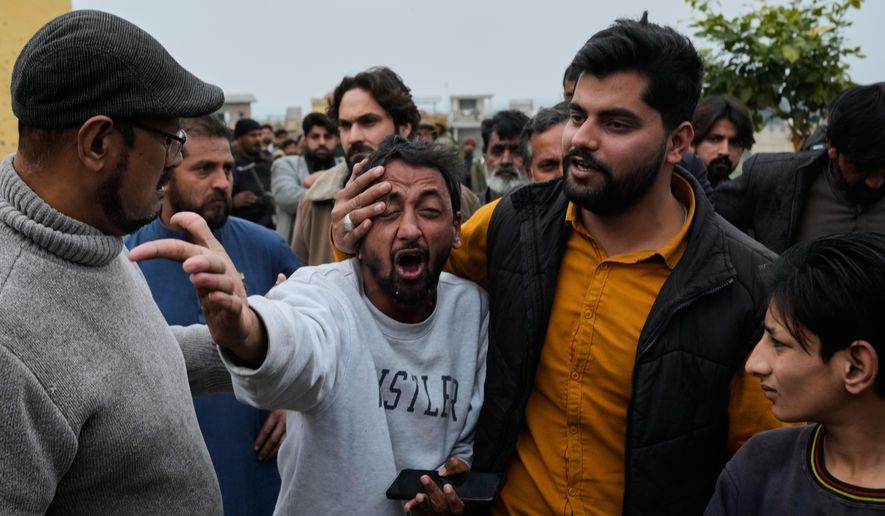
Thousands of mourners attended the funeral, turning the event into one of the largest public gatherings linked to figures of the former regime in recent years. Supporters of the ousted Qaddafi government were seen waving Libya’s former green flag, a symbol closely associated with the 42-year rule that ended in 2011.
Funeral Sparks Deep Political and Emotional Divisions
The killing of Saif al-Islam has reignited deep political and social tensions across Libya. In the days leading up to the funeral, supporters of the former regime openly spoke of honoring him as a martyr, raising concerns that the burial could be used as a political statement rather than a private act of mourning.
At the same time, many Libyans who endured decades of repression under Muammar Qaddafi expressed anger at the public display of nostalgia. For them, the funeral reopened painful memories of a period marked by fear, violence, and the silencing of dissent.
A Record of Systematic Repression Under Qaddafi’s Rule
Muammar Qaddafi’s government, which ruled Libya from 1969 to 2011, was widely known for its harsh suppression of political opposition. Public executions, forced confessions, and televised trials were regularly used as tools to intimidate and eliminate critics.
READ MORE: Muslim World League Demands Strong Action Over Gaza Ceasefire Violations
Beginning in 1977, the regime declared 7 April an annual day for public executions, often targeting students and military officers accused of opposing the state. These executions frequently took place in public squares, universities, and sports stadiums, with civilians compelled to attend.
State television broadcast hangings and so-called “revolutionary trials,” sometimes even during the holy month of Ramadan, reinforcing an atmosphere of fear.
One of the most widely remembered cases was the 1984 execution of student activist Sadiq Hamed Shwehdi, who was hanged in a basketball stadium before a forced audience.
Abu Salim Prison Massacre and Overseas Assassinations
Perhaps the darkest episode of the regime occurred in 1996, when more than 1,200 prisoners were killed in a single day at Abu Salim Prison in Tripoli. Most of the victims were political detainees, and the massacre remained officially denied for years.
Inside Libya and beyond its borders, the regime relied on “revolutionary committees” to track down and silence dissenters. Political opponents living abroad were branded “stray dogs,” with several assassinated outside the country during the 1970s and 1980s.
These practices continued in various forms until the uprising of 2011 brought the regime to an end.
Saif al-Islam and the 2011 Uprising
During the early years of the 2000s, Saif al-Islam attempted to present himself as a reform-minded figure, engaging with Western institutions and speaking of gradual political change. This image collapsed during the February 2011 uprising, when mass protests swept across Libya.
Instead of siding with protesters, Saif publicly aligned himself with his father and the ruling establishment.
The Speech That Defined His Legacy
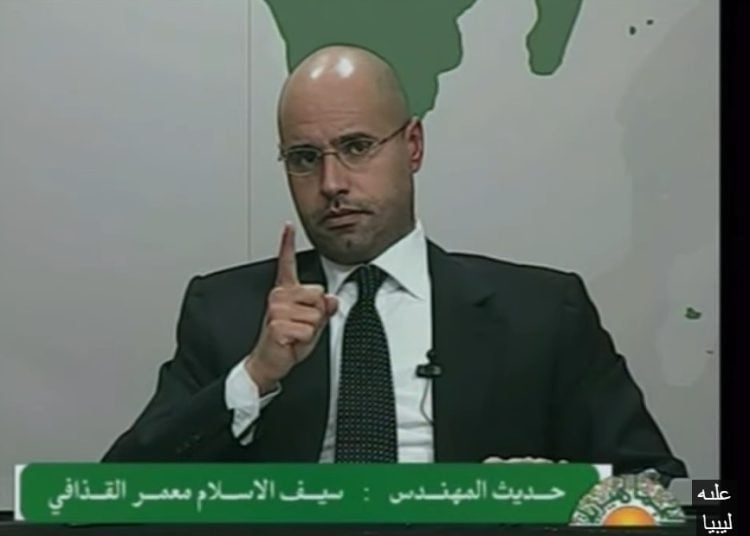
In a now-infamous televised address in February 2011, Saif al-Islam warned Libyans that their country was “not Tunisia or Egypt,” dismissing comparisons with other Arab Spring revolutions.
He accused foreign media of exaggerating violence and claimed that opposition groups were conspiring to divide Libya into smaller states. He warned that economic collapse would follow, insisting that only his father could manage Libya’s oil wealth and prevent chaos.
Most controversially, he cautioned that continued protests would lead to civil war, declaring that “rivers of blood will flow” and that the country would descend into instability and foreign domination.
A Turning Point for the Revolution
Many Libyans interpreted the speech as a direct threat rather than a warning. Any remaining hope that Saif might persuade his father to step aside or support political change quickly vanished.
Revolutionary leaders and ordinary citizens alike concluded that Saif had chosen loyalty to family and power over the nation. His promises of reform were widely seen as hollow after more than four decades of authoritarian rule.
The speech ultimately hardened public resolve, strengthening the uprising rather than suppressing it.
A Legacy Still Contested
The funeral in Bani Walid has once again highlighted Libya’s unresolved divisions over its past. For some, Saif al-Islam remains a symbol of a lost era; for others, he represents a regime defined by repression and fear.
More than a decade after the fall of Muammar Qaddafi, the debate over history, accountability, and national memory continues—underscoring how deeply the legacy of the former regime still shapes Libya’s present.