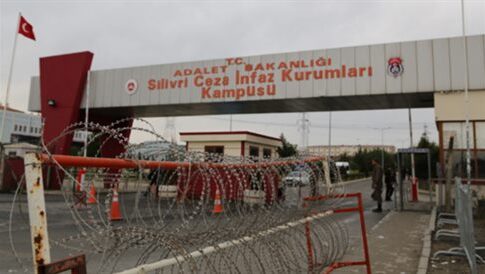

ISTANBUL — Authorities at Turkey’s Silivri No. 8 High-Security Prison have refused to deliver a set of Islamic books by revered scholar Said Nursi to inmates, according to a report by Turkish Minute. The move has been widely criticized by religious scholars and rights advocates as another instance of ideological censorship.
The two volumes of Risale-i Nur, a collection of spiritual and philosophical writings authored by Nursi in the early 20th century, were sent to prisoners by a group associated with the opposition-aligned Yeni Asya newspaper. Prison officials returned the books unopened, citing general “management rules” but offering no specific security rationale.
Kazım Güleçyüz, former editor-in-chief of Yeni Asya and a former inmate of Silivri Prison himself, condemned the rejection. “This is yet another example of arbitrary practices inside the prison system,” said Güleçyüz, who was jailed in 2024 after publicly offering condolences on the death of Fethullah Gülen, the exiled Turkish Islamic cleric and scholar who died in Pennsylvania in October 2023.
READ MORE: Council of Islamic Ideology Labels Pakistan’s Child Marriage Ban ‘Un-Islamic’
Gülen, known for his global network promoting education and interfaith dialogue, often praised Said Nursi’s teachings and urged his followers to study the Risale-i Nur. Although controversial due to his conflict with the Turkish government, Gülen consistently emphasized the importance of non-political religious education—a value central to the original Nur movement.
Said Nursi’s works, written as an interpretation of the Qur’an aimed at spiritual renewal and intellectual resistance to secularism, have been legally distributed in Turkey since the 1950s. Despite this, the refusal to deliver his texts to inmates has raised eyebrows.
While Turkish President Recep Tayyip Erdoğan has occasionally lauded Nursi’s contributions to Islamic thought, critics from within the Nur movement, particularly those affiliated with Yeni Asya, accuse his administration of using religion selectively to suppress independent religious voices.
Yeni Asya has consistently taken a firm stance against the post-2016 coup purges, diverging from other Nur factions that have supported or stayed silent on the government’s crackdowns. The newspaper and its religious community argue that today’s climate punishes ideological independence and fosters loyalty-based governance.
Observers warn that denying inmates access to well-known religious literature—especially material that promotes peace, education, and inner reform—may reflect a broader strategy of controlling religious discourse in Turkey. “This is not just about one group or one book,” noted one Yeni Asya representative. “It’s about whether freedom of religious expression still exists in Turkish prisons.”
Though there’s no legal ban on Risale-i Nur, the political filtering of religious texts and their associated communities has become increasingly evident. Rights organizations stress that such practices violate both Turkish law and international standards concerning freedom of belief, particularly for those imprisoned under terrorism-related charges with often-debated evidence.
The case has intensified concerns that Turkey’s current leadership is nurturing a selective and transactional relationship with faith-based groups—embracing those who align politically while marginalizing dissenters. The rejection of Said Nursi’s writings may well serve as a symbol of the growing divide between state-sanctioned religion and independent Islamic thought in the country.