
ISLAMABAD — At least 31 people were killed and more than 160 injured after a suicide bomber struck a Shiite mosque on the outskirts of Pakistan’s capital during Friday prayers, officials said, marking one of the deadliest attacks near Islamabad in recent years.
The explosion ripped through the Khadija Al-Kubra mosque as worshippers gathered for prayers, triggering panic and chaos inside the packed complex. Emergency responders and residents rushed the wounded to nearby hospitals, where doctors said several victims were in critical condition.
Scenes of Chaos Inside the Mosque
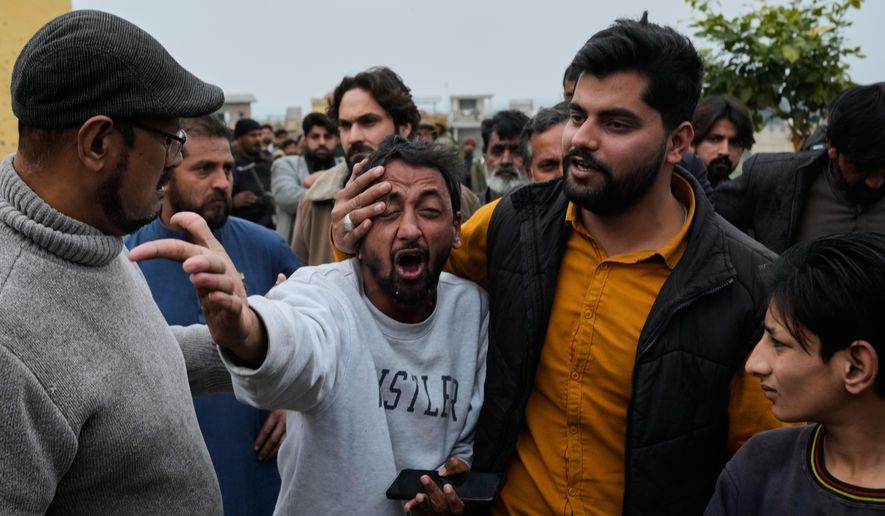
Footage aired on local television and shared on social media showed bloodstained prayer halls, shattered debris, and frantic rescue efforts. Survivors described terrifying moments following the blast.
Hussain Shah, who was praying in the mosque’s courtyard, said he heard a powerful explosion that shook the building.
“I knew instantly something terrible had happened,” he said. “When I ran inside, people were screaming, crying, and calling for help. Bodies were everywhere.”
He estimated seeing around 30 bodies inside the mosque, adding that the number of injured appeared far higher.
No Immediate Claim of Responsibility
No group immediately claimed responsibility for the attack. However, suspicion is expected to fall on militant organizations such as the Pakistani Taliban (TTP) or the regional branch of the Islamic State group, both of which have previously targeted Shiite communities, a religious minority in Pakistan.
Militant groups in the country frequently carry out attacks against civilians and security forces, though large-scale assaults in Islamabad remain relatively rare.
Officials Confirm Rising Toll
Initial casualty figures were lower, but Islamabad Deputy Commissioner Irfan Memon later confirmed the updated death and injury toll as hospitals continued to receive victims.
Pakistan’s Defense Minister Khawaja Mohammad Asif said early investigations suggested the attacker may have moved between Afghanistan and Pakistan. According to Asif, mosque security personnel attempted to stop the suspect, who reportedly opened fire before detonating explosives among worshippers.
The condition of the security guards was not immediately disclosed.
Pakistan has repeatedly accused Afghanistan’s Taliban-led government of allowing militant groups, including the TTP, to operate from its territory. Kabul has consistently denied the allegations.
Afghanistan and International Community Condemn Attack
Afghanistan’s Ministry of Foreign Affairs issued a statement condemning the bombing, calling it a violation of the sanctity of mosques and religious rituals.
The attack also drew strong condemnation from the United States, the European Union, and several foreign embassies in Islamabad, all expressing condolences to the victims’ families.
Leaders Express Grief and Condemnation
President Asif Ali Zardari and Prime Minister Shehbaz Sharif strongly condemned the attack and offered condolences in separate statements.
“Targeting innocent worshippers is a crime against humanity,” Zardari said, urging authorities to support the victims’ families.
Sharif called for swift justice, stating that those behind the attack “must be identified and punished.” Interior Minister Mohsin Naqvi also denounced the bombing.
The attack occurred while Uzbekistan President Shavkat Mirziyoyev was on an official visit to Islamabad, attending an event several miles away from the blast site.
Shiite Leaders Call for Accountability and Blood Donations
Senior Shiite leader Raja Nasir described the bombing as a grave failure of security in the federal capital and urged authorities to strengthen protection for religious sites.
He also appealed to citizens to donate blood, saying hospitals in Islamabad were facing urgent shortages due to the high number of injured victims.
Part of a Broader Wave of Violence
Pakistan has witnessed a sharp increase in militant attacks in recent months, particularly blamed on the TTP, Baloch separatist groups, and Islamic State affiliates.
The last major attack in Islamabad occurred in 2008, when a suicide bomber struck the Marriott Hotel, killing 63 people. More recently, a suicide blast outside a court in November killed 12.
The mosque bombing follows a series of deadly assaults in Balochistan province, where the banned Baloch Liberation Army carried out coordinated attacks that killed dozens. The military says security forces later killed more than 200 militants in counter-operations.