
Islamic history is a treasure trove of fascinating events, remarkable figures, and profound achievements that have left an indelible mark on the world. While it’s impossible to encapsulate the entirety of Islamic history in one article, we can delve into some amazing historical facts that shed light on the dynamic and influential nature of Islamic civilization.
Join us on a journey through time as we explore ten incredible facets of Islamic history that deserve recognition. [ READ: Unveiling the Fascinating Tapestry of Islamic History: 20 Remarkable Facts You Must Discover]
Exploring the Rich Tapestry of Islamic History
1. The House of Wisdom: A Center of Knowledge
During the Islamic Golden Age, which spanned from the 8th to the 13th century, the “House of Wisdom” in Baghdad emerged as one of the most prominent centers of learning in the world. Established by the Abbasid Caliph Al-Ma’mun, this institution played a pivotal role in preserving and advancing knowledge from various civilizations, including ancient Greece, Persia, and India. Scholars at the House of Wisdom made groundbreaking contributions to fields such as mathematics, astronomy, medicine, and philosophy, shaping the course of human understanding for centuries to come.
2. The Astrolabe: An Ingenious Navigational Instrument
The astrolabe, a sophisticated instrument for solving problems related to time and the position of celestial objects, was developed by Islamic astronomers in the 8th century. This remarkable device facilitated accurate navigation, astronomical observations, and the determination of prayer times. Its widespread use revolutionized navigation and astronomy, influencing the Age of Exploration and the Renaissance in Europe.
3. Ibn Battuta’s Epic Travels
Ibn Battuta, often referred to as the “Marco Polo of the Muslim World,” embarked on an incredible journey in the 14th century. Over three decades, he traveled an estimated 75,000 miles, visiting places as diverse as North Africa, the Middle East, India, China, and Southeast Asia. His writings provide invaluable insights into the societies, cultures, and political landscapes of the medieval Islamic world, making him one of history’s greatest travelers and chroniclers.
4. The Great Mosque of Djenne: An Architectural Marvel
Located in Mali, the Great Mosque of Djenne is not only a place of worship but also a stunning architectural masterpiece. Constructed entirely of mud bricks and coated with a mud-based plaster, this mosque is the largest of its kind in the world. Its unique design and construction techniques are a testament to the ingenuity of African architects and the enduring legacy of Islam in Sub-Saharan Africa.
5. Algebra’s Islamic Origins
The word “algebra” itself is derived from the Arabic term “al-jabr,” which was coined by the Persian mathematician and scholar Muhammad ibn Musa al-Khwarizmi in the 9th century. Al-Khwarizmi’s work on equations and mathematical principles laid the foundation for modern algebra, revolutionizing mathematics and science worldwide.
6. The Library of Cordoba: A Beacon of Learning
During the Islamic rule of Spain, the city of Cordoba was home to one of the most impressive libraries of its time. The library boasted a vast collection of manuscripts, making it a center for scholarly pursuits in the 10th century. Scholars from different backgrounds and cultures flocked to Cordoba to access its wealth of knowledge, fostering an environment of intellectual exchange and innovation.
7. The Trans-Saharan Trade Route: A Global Connection
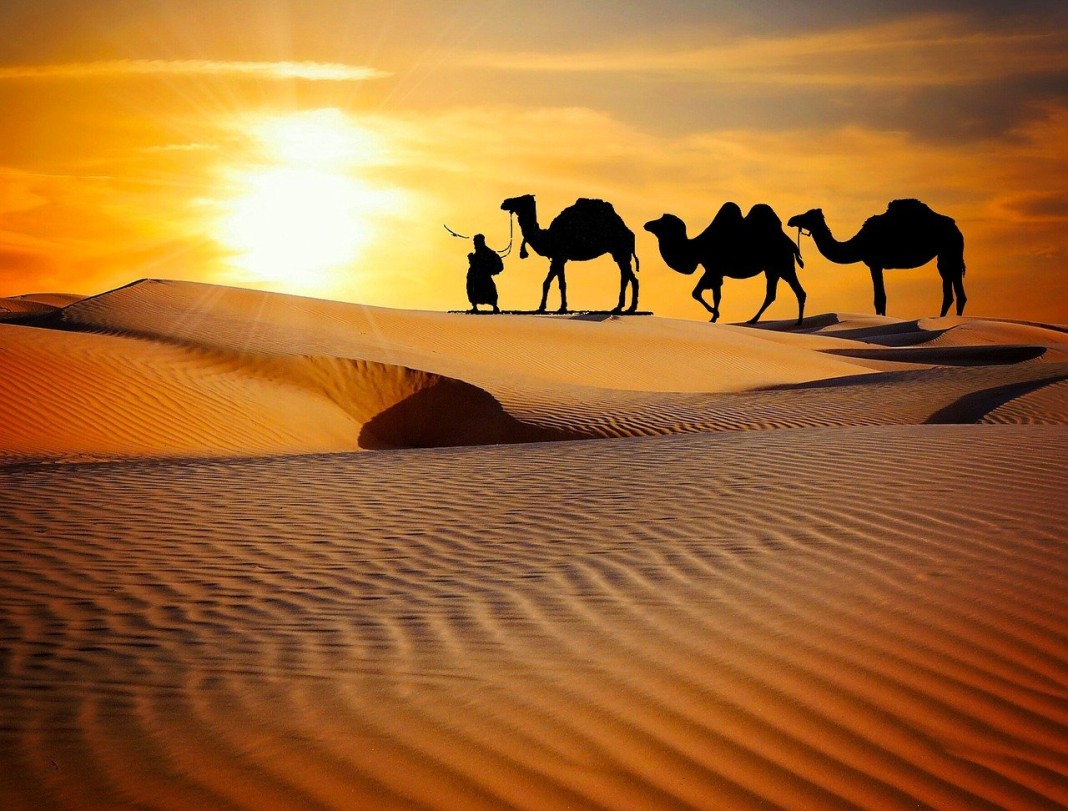
The trans-Saharan trade route, stretching across the vast Sahara Desert, facilitated the exchange of goods, ideas, and cultures between North and West Africa for centuries. Islamic merchants played a crucial role in this trade network, connecting sub-Saharan Africa with the Mediterranean world. This trade not only enriched economies but also promoted cultural exchange and the spread of Islam.
8. Ibn Sina’s Canon of Medicine: A Medical Milestone
Ibn Sina, known as Avicenna in the West, was a Persian polymath who made significant contributions to various fields, including medicine. His magnum opus, the “Canon of Medicine,” became the standard textbook in European medical schools for centuries. Ibn Sina’s systematic approach to medicine and his emphasis on empirical observation greatly advanced the field of healthcare.
9. The Hanging Gardens of Babylon Revisited
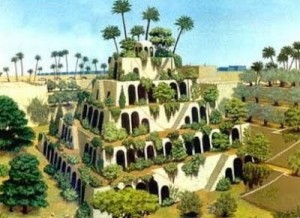
While the Hanging Gardens of Babylon are often associated with ancient Mesopotamia, some historical accounts suggest that they might have been a creation of the Islamic civilization during its rule in Baghdad. These lush and terraced gardens, believed to have been built by Caliph Al-Ma’mun, showcased the ingenuity of Islamic engineering and horticulture, captivating the imagination of generations.
10. Timbuktu: A Center of African Scholarship
Timbuktu, situated in present-day Mali, served as a vibrant center of Islamic scholarship and culture during the 14th and 15th centuries. Its numerous madrasas and libraries attracted scholars from across the Muslim world. The city’s manuscripts, some of which have survived to this day, contain invaluable knowledge on subjects ranging from astronomy and medicine to law and theology.
Conclusion
Islamic history is a tapestry woven with threads of innovation, discovery, and cultural exchange. The ten amazing facts discussed here offer just a glimpse into the rich and diverse heritage of Islam. From the House of Wisdom to the Timbuktu manuscripts, these historical gems remind us of the profound impact that Islamic civilization has had on the world throughout the ages. Exploring these facts not only fosters a deeper appreciation for history but also highlights the enduring legacy of Islamic contributions to human civilization.
READ MORE: 6 PLACES TO VISIT IF YOU LOVE ISLAMIC HISTORY
As we reflect on these remarkable aspects of Islamic history, let us remember that the story is far from over. The Islamic world continues to evolve, leaving its mark on the future as it has on the past.