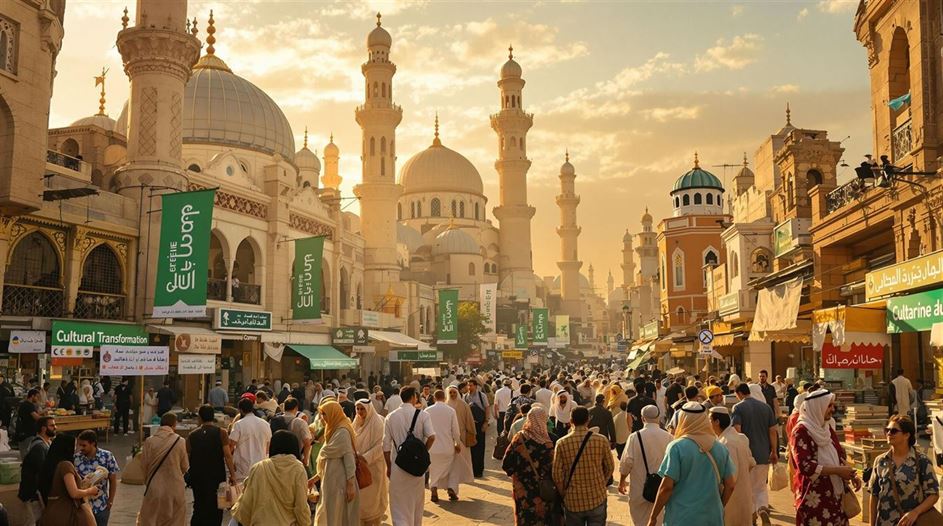

Islamic history often gets summed up as a series of empires and religious milestones, yet its real story stretches across continents and centuries. Think about this for a second. By the late 600s, Islam had already swept across more than 5 million square miles of territory—rivaling the size of the Roman Empire at its peak. What surprises many is that this explosive growth was not just about conquest or faith but came from unexpected alliances, cultural exchange, and innovations that still influence our world today.
Quick Summary
| Takeaway | Explanation |
|---|---|
| Islam began with Muhammad’s revelations. | The prophet Muhammad received divine messages around 610 CE, forming the basis of Islam through the Quran. |
| Islam expanded through trade and military. | After Muhammad’s death, Islam spread across different regions via strategic trades and military campaigns. |
| The Abbasid period fostered intellectual growth. | From the 8th to 13th centuries, the Abbasid Caliphate promoted advancements in science, philosophy, and culture. |
| Modern Muslims face diverse global challenges. | Today, Muslim communities navigate issues like misrepresentation and integration while advocating for their identities. |
| Digital tools enhance Islamic historical study. | Innovative platforms and resources make Islamic history accessible and interactive, fostering broader understanding. |
Early Beginnings of Islam and Its Expansion
The origins of Islam represent a profound transformation in human religious and social history, emerging from the Arabian Peninsula in the early 7th century. Discover the foundations of Islamic civilization through a journey that would reshape global cultural and political landscapes.

The Prophet Muhammad and the First Revelations
Islam began with the revelations received by Prophet Muhammad in the city of Mecca around 610 CE. According to Britannica, Muhammad, born in Mecca around 570 CE, was a merchant who received divine revelations that would form the core of the Islamic faith. These revelations, which came through the Angel Gabriel, were later compiled into the Quran, the holy book of Islam.
READ MORE: A Concise Account of Musa (AS) (Moses): His Story and Legacy
The early years of Muhammad’s prophetic mission were marked by significant challenges. In Mecca, he faced opposition from local tribal leaders who rejected his monotheistic message challenging the prevalent polytheistic practices. This resistance led to a critical moment in Islamic history known as the Hijra in 622 CE, when Muhammad and his followers migrated to Medina, marking the beginning of the Islamic calendar.
Expansion and Spread of Islamic Teachings
Following the Hijra, the Islamic community began to grow rapidly. History.com highlights that the spread of Islam occurred through a combination of military campaigns, trade networks, and the compelling nature of its spiritual message. The Rashidun Caliphate, which followed Muhammad’s death in 632 CE, saw unprecedented territorial expansion across the Arabian Peninsula, North Africa, and parts of the Byzantine and Persian empires.
The rapid spread of Islam was not merely a military conquest but a complex social and cultural phenomenon. Muslim leaders often practiced religious tolerance, allowing conquered populations to maintain their faith while offering them opportunities for social and economic integration. This approach facilitated the quick and relatively peaceful spread of Islamic civilization across diverse regions.
Establishment of Islamic Governance and Society
The early Islamic state developed a sophisticated system of governance that incorporated principles of social justice, equality, and community welfare. The concept of Shura (consultation) became a fundamental principle in decision-making, with leaders expected to consult with community members. This democratic element was revolutionary for its time, offering a model of leadership that emphasized collective wisdom and mutual respect.
READ MORE: Uthman Ibn Affan: The Generous Caliph and His Legacy of Piety
By the end of the 7th century, Islam had transformed from a local Arabian religious movement to a global civilization. Its intellectual and cultural achievements would go on to significantly influence science, philosophy, art, and literature for centuries to come. The foundations laid during these early years would establish Islam as one of the world’s major religious and cultural forces, creating a legacy that continues to shape global interactions and understanding today.
To provide a concise overview of Islam’s initial expansion and governance, the table below summarizes the key early milestones in Islamic history as outlined above.
| Year/Period | Event/Development | Significance |
|---|---|---|
| c. 570 CE | Birth of Muhammad | Founding figure of Islam |
| 610 CE | First revelations in Mecca | Beginning of Islamic faith, formation of Quran |
| 622 CE | Hijra: Migration to Medina | Start of Islamic calendar, formation of first Muslim community |
| 632 CE | Death of Muhammad | Leadership transitioned to first caliphs |
| 632-661 CE | Rashidun Caliphate expands across Middle East/North Africa | Unprecedented territorial and cultural expansion |
| Late 600s | Islam spreads across 5 million+ sq miles | Emergence as global civilization rivaling Roman Empire |
Major Dynasties and Turning Points in Islamic History
The Islamic world experienced profound transformations through several powerful dynasties that shaped its political, cultural, and intellectual landscape. Explore the rich tapestry of Islamic civilizations and witness how different ruling houses profoundly influenced global history.
The Umayyad Caliphate: Territorial Expansion and Cultural Integration
Following the Rashidun period, the Umayyad Caliphate emerged as a pivotal dynasty in Islamic history. According to the Metropolitan Museum of Art, the Umayyads ruled from 661 to 750 CE, rapidly expanding the Islamic empire across North Africa, the Iberian Peninsula, and parts of Central Asia. Their governance model emphasized Arab leadership while incorporating diverse cultural practices.
The Umayyad period witnessed significant administrative innovations. Arabic became the official language of governance, standardizing communication across the expanding territories. This linguistic uniformity facilitated trade, scholarship, and cultural exchange, creating a more interconnected Islamic world.
The Abbasid Revolution and Golden Age of Islamic Scholarship
The Abbasid Revolution marked a critical turning point in Islamic history. BBC Bitesize describes how the Abbasids overthrew the Umayyad Caliphate, shifting the political center from Damascus to Baghdad. This transition was more than a mere change of power it represented a fundamental transformation in Islamic governance and intellectual pursuits.
During the Abbasid period, particularly between the 8th and 13th centuries, Islamic civilization experienced an unprecedented intellectual renaissance. Scholars made groundbreaking contributions in mathematics, astronomy, medicine, philosophy, and literature. The House of Wisdom in Baghdad became a global center of learning, attracting intellectuals from various cultural backgrounds and preserving and translating classical Greek, Persian, and Indian scientific texts.
Fragmentation and Regional Dynasties
As the centralized Abbasid Caliphate weakened, various regional dynasties emerged, creating a complex and diverse Islamic political landscape. The Fatimids in Egypt, the Seljuks in Anatolia, and later the Ottomans demonstrated the adaptability and resilience of Islamic political structures. These dynasties maintained Islamic theological and cultural traditions while developing unique regional identities.
Each dynasty contributed distinctively to Islamic civilization. The Fatimids, for instance, promoted Ismaili Shia theology and established Cairo as a major cultural center. The Seljuks played a crucial role in defending Islamic territories during the Crusades and patronized significant architectural and educational developments.

By the 13th century, the Islamic world had transformed from a unified caliphate to a mosaic of powerful, interconnected kingdoms. This period of political fragmentation paradoxically facilitated cultural diversity and intellectual exchange, ensuring the continued vibrancy of Islamic civilization across different regions and contexts.
The following table presents a comparison of major Islamic dynasties discussed in this section, highlighting their timeframes, centers of power, and key contributions.
| Dynasty | Timeframe | Center of Power | Major Contributions |
|---|---|---|---|
| Umayyad | 661–750 CE | Damascus | Territorial expansion, Arabic as official language |
| Abbasid | 750–1258 CE | Baghdad | Golden Age, intellectual & scientific advancements |
| Fatimid | 909–1171 CE | Cairo | Ismaili theology, cultural/educational developments |
| Seljuk | 1037–1194 CE | Anatolia | Defense during Crusades, architecture, education |
| Ottoman | 1299–1922 CE | Istanbul | Long-lasting empire, preserved Islamic governance |
Modern Era: Islam’s Global Influence and Challenges
The modern era has presented Islam with unprecedented global challenges and opportunities, transforming its role in international politics, social dynamics, and cultural interactions. Understand the contemporary Islamic global narrative to appreciate the complex landscape of this influential religion.
Decolonization and Islamic Political Movements
The 20th century marked a critical period of transformation for Muslim societies worldwide. Following the collapse of colonial empires, many predominantly Muslim nations emerged as independent states, seeking to redefine their political and cultural identities. According to Pew Research Center, this period saw significant demographic shifts, with Muslim populations experiencing rapid growth and migration across different continents.
READ MORE: Omar ibn Al-Khattab: The Pillar of Justice and Strength in Islam
Independence movements in regions like the Middle East, North Africa, and South Asia were often characterized by complex interactions between traditional Islamic values and modern political ideologies. Countries like Indonesia, Pakistan, and Algeria developed unique models of governance that attempted to balance Islamic principles with contemporary democratic structures.
Globalization and Cultural Interactions
The late 20th and early 21st centuries witnessed unprecedented global interconnectedness, presenting both challenges and opportunities for Islamic communities. United Nations Population Division reports indicate significant Muslim diaspora communities have emerged in Western countries, creating new dynamics of cultural integration and dialogue.
These global migrations have led to complex cultural negotiations, with Muslim communities simultaneously preserving their religious traditions while adapting to diverse social environments. Islamic scholarship has increasingly engaged with global discourse on human rights, social justice, and interfaith understanding, challenging simplistic narratives about religious isolation.
Contemporary Challenges and Intellectual Responses
The modern era has also brought significant challenges, including misrepresentation, political conflicts, and the rise of extremist interpretations. Muslim intellectuals and community leaders have been actively working to counter radical narratives and promote nuanced understandings of Islamic teachings.
Modern Islamic scholarship has increasingly focused on reinterpreting religious texts through contemporary lenses, emphasizing principles of social justice, gender equality, and peaceful coexistence. Movements advocating for progressive Islamic thought have gained momentum, challenging both conservative traditional interpretations and external stereotypes.
Technological advancements have further transformed Islamic practice and communication. Social media and digital platforms have enabled global Muslim communities to connect, share knowledge, and develop transnational networks of solidarity. These technological tools have become crucial in promoting understanding, challenging misconceptions, and creating spaces for constructive dialogue about Islam’s role in the contemporary world.
By the early 21st century, Islam had emerged as a dynamic, diverse global religion continuously adapting to changing social landscapes while maintaining its core spiritual and ethical principles. The ongoing journey of Islamic civilization demonstrates remarkable resilience, intellectual depth, and capacity for meaningful engagement with global challenges.
Interactive Islamic History Timeline and Study Resources
Navigating the rich and complex landscape of Islamic history requires innovative and engaging learning tools that make knowledge accessible and interactive. Explore comprehensive Islamic history learning platforms to deepen your understanding of this remarkable civilization.
Digital Platforms and Interactive Timelines
The digital age has revolutionized how we study and engage with historical narratives. Archnet offers an extraordinary collection of resources that transform traditional historical learning into an immersive experience. Interactive digital timelines allow students, researchers, and enthusiasts to explore Islamic history through multimedia presentations, providing context, images, and detailed explanations of pivotal moments.
These digital platforms go beyond traditional text-based learning. They incorporate archaeological evidence, architectural insights, scholarly annotations, and visual reconstructions that help learners understand the nuanced evolution of Islamic civilization. By offering multiple perspectives and rich contextual information, these resources make historical study more engaging and accessible to diverse audiences.
Comprehensive Online Research Tools
The emergence of comprehensive online repositories has dramatically expanded access to Islamic historical research. Wikipedia’s Timeline of Islamic History represents a collaborative effort to document and chronologically organize key events, providing a structured overview that spans from the early days of Islam to contemporary times.
Modern research tools now integrate advanced features like cross-referencing, hyperlinked sources, and multilingual support. Scholars and students can seamlessly navigate between different historical periods, trace the development of Islamic thought, and explore interconnections between various cultural and political movements. These platforms democratize knowledge, making sophisticated historical research accessible beyond traditional academic boundaries.
Educational Resources and Learning Strategies
Beyond digital timelines, contemporary Islamic history education emphasizes critical thinking and contextual understanding. Online courses, webinars, and interactive modules now provide structured approaches to learning, encouraging learners to analyze historical events through multiple lenses cultural, political, social, and theological.
Educational platforms are developing innovative strategies to make Islamic history more engaging. They incorporate methods like comparative historical analysis, virtual reality experiences, and collaborative research projects. These approaches help learners develop a nuanced understanding of Islamic civilization, moving beyond simplistic narratives and encouraging deeper, more complex interpretations of historical developments.
The future of Islamic historical study lies in these interactive, technology-driven approaches. By combining rigorous scholarship with innovative digital tools, these resources are not just preserving historical knowledge but are actively making it more accessible, engaging, and relevant to contemporary audiences. They invite learners to become active participants in understanding the rich, complex narrative of Islamic civilization, bridging historical understanding with modern perspectives.
Frequently Asked Questions
What are the early beginnings of Islam?
Islam began in the early 7th century with the revelations received by the Prophet Muhammad in Mecca, forming the foundation of the faith through the Quran.
How did Islam expand after Muhammad’s death?
After Muhammad’s death, Islam expanded through a combination of military campaigns, trade networks, and the appealing nature of its spiritual teachings, leading to significant territorial growth across diverse regions.
What was the significance of the Abbasid period in Islamic history?
The Abbasid period, particularly from the 8th to 13th centuries, marked a golden age of Islamic scholarship, fostering advancements in science, philosophy, and culture, especially centered in Baghdad.
How has modern globalization affected Muslim communities?
Modern globalization has created new dynamics for Muslim communities worldwide, allowing for cultural integration and dialogue while also presenting challenges such as misrepresentation and the need for reform in understanding Islamic teachings.
Discover the Full Story of Islamic Heritage and Today’s Community
Are you searching for more than just a summary of Islamic history? If reading about key milestones, the growth of Islamic civilization, and the challenges faced by Muslim communities sparked your interest, you are not alone. Many readers struggle to find a trustworthy source that bridges the past with current events and delivers reliable updates on religious issues and cultural developments. Whether your goal is deeper educational insight or staying informed about today’s socio-political landscape, you need a resource that covers both.
Now is the perfect time to join a community dedicated to comprehensive, up-to-date information on Islam and Muslim life worldwide. Visit Islamreligionguardian.com to access breaking news, historical explorations, expert opinion, and community updates. Discover in-depth navigation, multimedia content, and user-friendly features built for lifelong learners and engaged Muslim audiences. Start exploring the conversation at Islamreligionguardian.com and experience the full picture of Islamic knowledge and community news today.