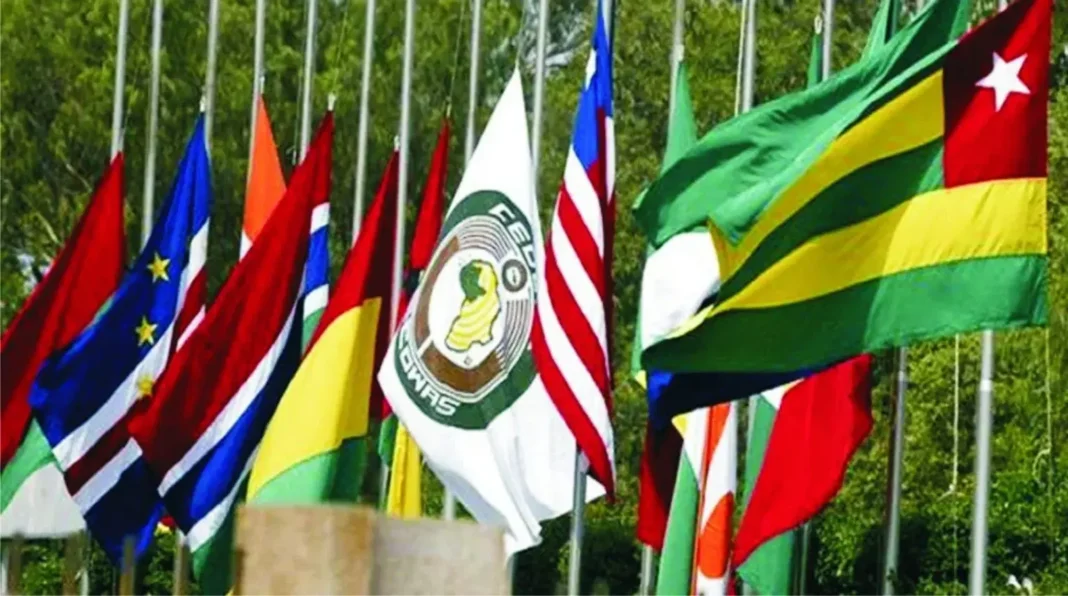

ABUJA, Nigeria — The Economic Community of West African States (ECOWAS) has renewed its call for the modernization of traditional Islamic schools as part of efforts to combat terrorism and violent extremism across the sub-region.
Speaking at the West African Islamic Conference on Security and Governance held in Abuja on Thursday, ECOWAS Commission President, Dr. Omar Touray, stressed that upgrading Islamic education systems could play a decisive role in preventing radicalisation among vulnerable youth.
READ MORE: Glasgow Central Mosque Defaced with “Scots First” Graffiti in Latest Islamophobic Attack
Themed “The Role of Islamic Organisations in Countering Terrorism and Violent Extremism in West Africa and the Sahel,” the conference drew participation from leaders across the region, including religious scholars, government officials, and international agencies.
Touray explained that modernising and safeguarding Islamic schools would help eliminate street begging, reduce child exploitation, and protect students from extremist recruitment.
“Improving the traditional Qur’anic school system and transforming them into formalised centres of learning and empowerment will strengthen our fight against radicalisation,” he said.
“These schools house millions of young people but are often neglected, leaving both students and teachers vulnerable to manipulation by criminal and terrorist groups,” Touray added.
He noted that the region continues to suffer from the devastating effects of terrorism, which has severely impacted its socio-economic stability. Citing the 2025 Global Terrorism Index (GTI), he pointed out that Africa has now become the epicentre of global terrorist activities.
Touray emphasized that ECOWAS is pursuing both preventive and reactive measures to address the crisis.
“Prevention remains the best approach, but we must also confront terrorism wherever it exists,” he stated. “With a youthful population, it’s essential that we channel their energy towards constructive pursuits.”
He further highlighted that the initiative aligns with the ECOWAS Action Plan Against Terrorism, a regional framework promoting collaboration between government institutions and civil society groups.
“We’re pleased that custodians of these traditional Qur’anic schools are leading their modernization across West Africa and the Sahel,” he said. “Supporting religious organisations complements the broader efforts of our national governments.”
Also speaking, the Emir of Kano, Alhaji Muhammadu Sanusi II, commended the conference as a step toward long-term cooperation in promoting peace and good governance in the region.
“This is not the end, but the beginning of a new chapter of unity and shared responsibility,” the Emir said. “Let’s work together to build a West Africa where everyone can live with peace, dignity, and security.”
In his remarks, Dr. Mohamed Ibn Chambas, African Union High Representative for Silencing the Guns, revealed that more than 40 million children in West and Central Africa remain out of school, warning that terrorist-related deaths in the region have surged by 10% in recent years.
Represented by Ambassador Abdel-Fatah Musah, ECOWAS Commissioner for Political Affairs, Peace and Security, Chambas emphasized the need to empower Islamic institutions to promote peace and tolerance through non-violent approaches.
“The goal is to create and implement an actionable framework that enhances the role of Islamic organisations in countering terrorism,” he said. “We must translate these discussions into concrete community initiatives.”
The conference, organised by the Jam’iyyatu Ansariddeen Attijjaniyya in partnership with ECOWAS, brought together delegates from the African Union, UNICEF, UNESCO, Interpol, and other regional and international bodies.