
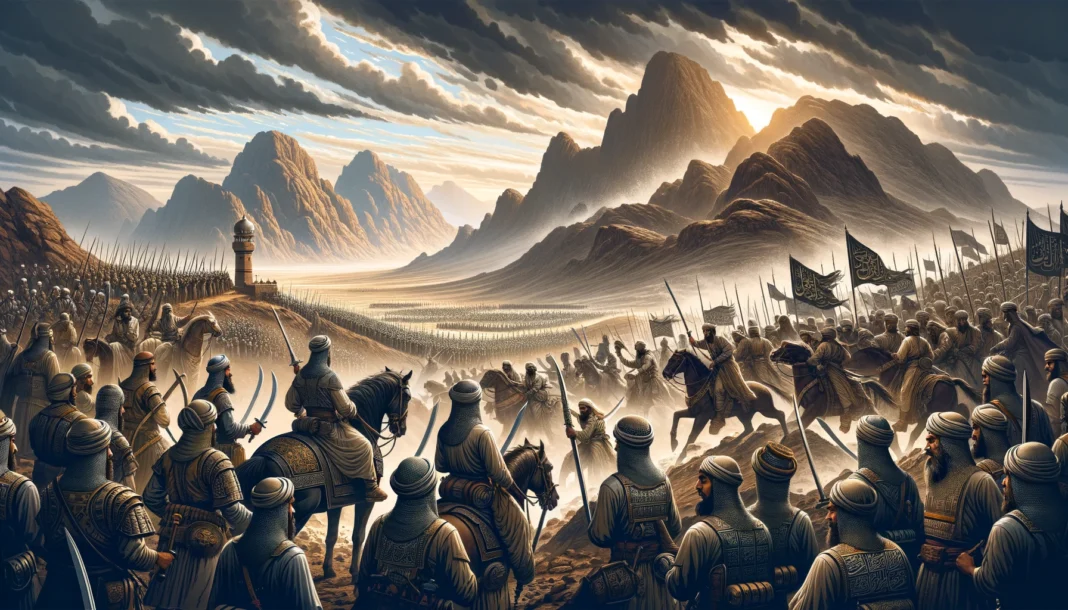


The image of Islam in contemporary discourse often grapples with misunderstandings, particularly when it comes to the Prophet Muhammad’s (SAW) participation in wars. Critics frequently question how a religion that advocates peace could justify its Prophet leading armies into battle.
This post delves into the historical context and theological underpinnings of these events, exploring the reasons behind these conflicts and the principles that guided them. The aim is to provide a nuanced understanding of the Prophet’s actions, demonstrating how they align with the broader teachings of Islam as a religion of peace and justice.
Historical Context: Pre-Islamic Arabia
Before the advent of Islam, Arabia was a region marked by tribal warfare, vengeance, and lawlessness. The concept of justice was often tied to tribal honor, with blood feuds perpetuating cycles of violence. It was in this context that the Prophet Muhammad (SAW) emerged, bringing a message that sought to unify these tribes under a single God and establish a new moral and social order based on justice, compassion, and the rule of law.
The Prophet’s Early Mission: A Call to Peace
The Prophet’s early mission in Mecca was primarily peaceful. For over a decade, he preached monotheism and moral reform, despite facing severe persecution from the Quraysh, the dominant tribe in Mecca. The Quraysh’s opposition was not just religious but also economic and political, as the new message threatened their social order and commercial interests.
The Prophet and his followers endured hardships, boycotts, and even assassination attempts. Yet, during these years, they did not resort to violence. Instead, they responded with patience, prayer, and perseverance, highlighting Islam’s emphasis on peaceful resolution and forbearance.
The Hijra: A Strategic Relocation
In 622 CE, the Prophet Muhammad (SAW) and his followers migrated to Medina, an event known as the Hijra. This migration was not just a flight from persecution but also a strategic move to establish a new community where they could freely practice their faith and implement Islamic principles. In Medina, the Prophet became not only a spiritual leader but also a political and military leader. The establishment of the Constitution of Medina, which granted rights and protections to all citizens, including non-Muslims, demonstrated the Prophet’s commitment to justice and coexistence.
The Justification for War: Defensive Jihad
The battles fought during the Prophet’s lifetime, such as Badr, Uhud, and the Trench, were primarily defensive. The Quraysh and other hostile tribes sought to annihilate the fledgling Muslim community. The Quran permits fighting in self-defense, stating:
أُذِنَ لِلَّذِينَ يُقَاتَلُونَ بِأَنَّهُمْ ظُلِمُوا وَإِنَّ اللَّهَ عَلَى نَصْرِهِمْ لَقَدِيرٌ
“Permission [to fight] has been given to those who are being fought, because they were wronged. And indeed, Allah is competent to give them victory.” (Quran 22:39)
This verse, revealed after the Prophet’s migration to Medina, marked the shift from a purely pacifist approach to a defensive stance. It’s essential to understand that these battles were not fought to force conversions or expand territory but to protect the Muslim community from extermination and to ensure the freedom to practice their religion.
The Ethics of War in Islam
Even in the conduct of war, the Prophet Muhammad (SAW) adhered to a strict code of ethics, which included:
- Prohibition of Harm to Non-Combatants: The Prophet explicitly forbade the killing of women, children, the elderly, and religious monks. He also prohibited the destruction of crops and livestock, showing a respect for life and property.
- Treatment of Prisoners: The prisoners of war were treated with dignity and kindness. The Prophet ordered his companions to treat them well, sometimes even before their own needs.
- Prohibition of Torture and Mutilation: Islam categorically rejects the use of torture and mutilation, even in times of war. The Prophet strongly condemned such acts, emphasizing the need for humane treatment of all beings.
- Peace Treaties and Negotiations: The Prophet always preferred peaceful resolutions and negotiations over conflict. The Treaty of Hudaybiyyah, a peace agreement between the Muslims and Quraysh, is a prime example of the Prophet’s willingness to seek peaceful solutions, even if it meant making concessions.
The Greater Jihad: The Struggle for Righteousness
The concept of jihad in Islam is often misunderstood. While it does include the idea of physical struggle, the greater jihad (Jihad al-Akbar) refers to the internal struggle against sin and the effort to live a righteous life. The Prophet Muhammad (SAW) emphasized that the true jihad is the struggle against one’s own desires and the effort to uphold justice and morality in all aspects of life.
The Legacy of the Prophet’s Battles

The Prophet’s battles were not acts of aggression but necessary measures to establish justice and protect the nascent Muslim community. They were fought with the objective of ending oppression and ensuring freedom of religion. The outcomes of these battles led to the establishment of a just society where rights were upheld, and people of all faiths could coexist peacefully.
Misinterpretations and Modern Context
In the modern era, the actions of the Prophet Muhammad (SAW) are sometimes misconstrued to portray Islam as a religion that condones violence. However, these interpretations often ignore the historical context and the strict ethical guidelines that governed the Prophet’s conduct in war. It is crucial to differentiate between the legitimate use of force in self-defense and unlawful aggression.
Furthermore, the misuse of religious texts by extremist groups does not reflect the true teachings of Islam. The actions of a few should not define a religion followed by over a billion people worldwide. The Quran clearly states:
“There is no compulsion in religion…” (Quran 2:256)
This verse underscores the importance of free will and choice in matters of faith, reinforcing the principle that Islam cannot and should not be spread by force.
Conclusion: A Religion of Peace and Justice
The Prophet Muhammad’s (SAW) involvement in wars was a response to the existential threats faced by the early Muslim community. These battles were fought under strict ethical guidelines and were aimed at establishing justice and protecting the oppressed. Islam, at its core, is a religion of peace, and the Prophet’s life exemplifies a balance between justice and mercy.
Understanding the historical and theological context of the Prophet’s actions helps to dispel misconceptions about Islam and highlights its commitment to peace and justice. The Prophet Muhammad’s (SAW) legacy is one of compassion, courage, and unwavering dedication to the principles of Islam—a religion that, despite the challenges and misconceptions, remains a profound source of guidance and peace for its followers.