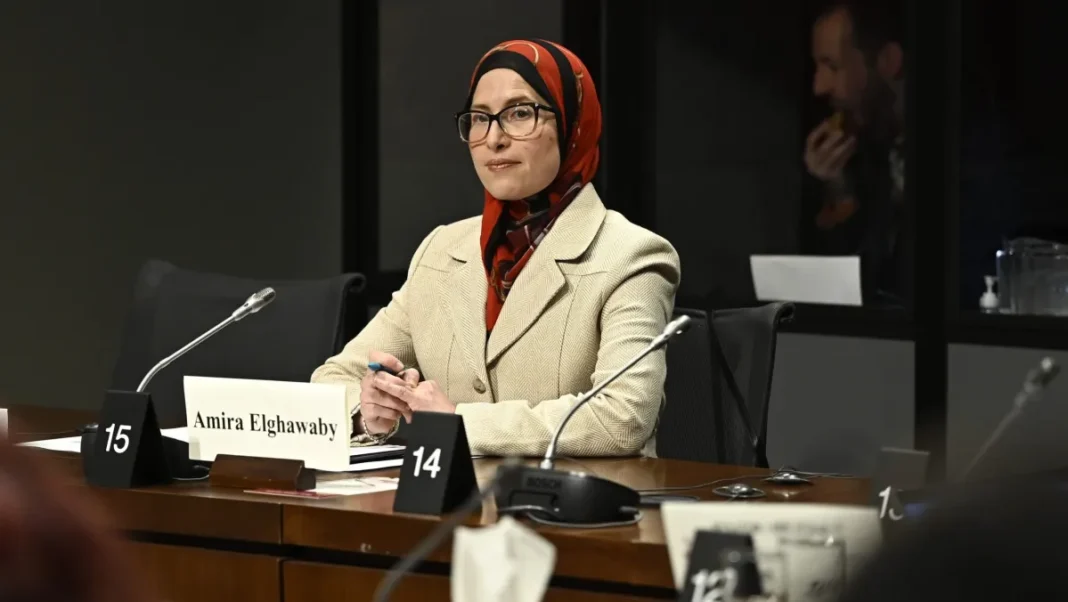

Canada’s approach to the ongoing humanitarian crisis in Gaza is deeply impacting the emotional well-being and national belonging of Muslim communities across the country, according to Amira Elghawaby, the federal government’s Special Representative on Combating Islamophobia.
In an exclusive interview with The Canadian Press, Elghawaby emphasized that Muslim-Canadians are feeling a growing sense of alienation due to Ottawa’s perceived lack of decisive action in addressing the devastation unfolding in the Gaza Strip.
“This continued and heartbreaking situation is seriously harming the sense of belonging felt by many in our community,” said Elghawaby. “It speaks to a broader issue of the dehumanization of Palestinian lives — and by extension, Muslim lives.”
Since her appointment in February 2023, Elghawaby has served as a key advisor to the federal government on how its policies — both domestic and international — affect Muslim populations in Canada.
The Canadian Muslim community, she noted, has been deeply disturbed by the military operations and humanitarian restrictions imposed on Gaza since the October 2023 attacks by Hamas, which resulted in the deaths of approximately 1,200 individuals in Israel.
In the months that followed, the health authorities in Gaza — governed by Hamas — have reported nearly 60,000 Palestinian deaths as a result of Israel’s military campaign, which has included bombings of hospitals, ambulances, and civilian aid centers.
READ MORE: Muslim Inmate Who Won Supreme Court Beard Case Says Arkansas Retaliated with Prison Transfer
The humanitarian situation continues to deteriorate. The UN’s World Food Program recently reported “shocking levels of desperation” in the region, with over 100,000 women and children suffering from severe acute malnutrition. A third of Gaza’s population reportedly goes days without access to food.
While Israel disputes these reports, claiming aid restrictions are necessary due to alleged theft by Hamas, international aid organizations argue there is no verifiable evidence supporting that claim.
Elghawaby acknowledged that Canada has issued formal statements on the crisis, but said that Muslim-Canadians feel those declarations fall short of the meaningful action required to uphold humanitarian principles.
“Many families here are grieving the suffering of their loved ones in Gaza. They feel abandoned by their own government,” she explained. “They are watching relatives endure starvation, displacement, and constant bombardment — all while waiting for the violence to stop.”
She further expressed concern on social media, noting that fear among Canadians with family in Gaza continues to escalate “with each day that passes without meaningful action towards upholding international humanitarian law.”
Although she clarified that her mandate does not grant her the authority to assess or direct foreign policy decisions, Elghawaby stressed that the voices of Muslim and Arab communities must not be ignored.
“There’s a profound sense of confusion and frustration,” she said. “People are asking — how can these violations of humanitarian law continue without substantial intervention? Are our lives considered expendable?”
Muslim communities are calling on Ottawa to employ all available measures — including sanctions and potential arms embargoes — to pressure Israel into compliance with international law.
Elghawaby reiterated that her role is not to set foreign policy but to provide insight into how communities are reacting to the government’s choices. “My job is to communicate how these policies are being perceived — and right now, that perception is one of profound disappointment.”
She also criticized the slow progress of a federal program intended to help Canadians bring their Gaza-based relatives to safety. While 5,000 applications have been submitted, fewer than 1,200 visas have been approved.
Beyond policy inaction, Elghawaby pointed to an alarming trend where advocates for Palestinian rights are increasingly mislabeled as anti-Semitic or supportive of terrorism — a pattern she says unfairly silences peaceful dissent.
“Many have faced job loss and public backlash simply for attending demonstrations or signing petitions,” she said. “This climate of fear is growing.”
She concluded by affirming that those speaking out are not undermining democratic values — they are upholding them. “These Canadians are demanding respect for international law and human rights. They want accountability — and that includes protecting Palestinian lives.”
Source: The Canadian Press | Rewritten for publication by IslamReligionGuardian.Com