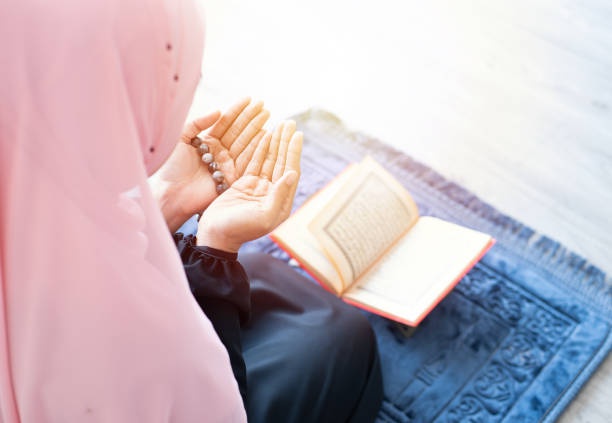

In Islam, remembrance of Allah (dhikr) is one of the most rewarding acts a believer can perform. Among the most powerful phrases of dhikr is the dua “La ilaha illallah wahdahu la sharika lahu, lahul mulku wa lahul hamdu, wa huwa ‘ala kulli shay’in qadeer.”
This profound statement carries immense spiritual value, as mentioned in multiple authentic hadiths of the Prophet Muhammad ﷺ. It is a declaration of pure monotheism, the foundation of Islamic faith, and a means of attaining countless rewards.
READ MORE: How To Make Dua: A Complete Guide to Connecting With Allah
In this article, we will explore the meaning, translation, hadith references, virtues, and benefits of this beautiful dua — and how Muslims can incorporate it into their daily routine.
Arabic Text of the Dua
اللَّهُ لا إِلٰهَ إِلَّا اللَّهُ وَحْدَهُ لَا شَرِيكَ لَهُ، لَهُ الْمُلْكُ وَلَهُ الْحَمْدُ، وَهُوَ عَلَى كُلِّ شَيْءٍ قَدِيرٌ
Transliteration:
La ilaha illallah wahdahu la sharika lahu, lahul mulku wa lahul hamdu, wa huwa ‘ala kulli shay’in qadeer.
Meaning in English
“There is no god but Allah, alone, without partner. His is the dominion and His is the praise, and He has power over all things.”
This simple yet comprehensive statement encapsulates Tawheed (the oneness of Allah) — the core belief that defines a Muslim’s faith and submission.
Hadith References and Sources
1. Virtue of Reciting It 100 Times Daily
Narrated by Abu Hurairah (RA):
The Messenger of Allah ﷺ said:
“Whoever says ‘La ilaha illallah wahdahu la sharika lahu, lahul mulku wa lahul hamdu, wa huwa ‘ala kulli shay’in qadeer’ a hundred times in a day will have a reward equivalent to that of freeing ten slaves, one hundred good deeds will be recorded for him, and one hundred bad deeds will be erased from him. It will be a protection for him from Shaytan that day until evening, and no one will come with anything better except someone who has done more than that.”
(Sahih al-Bukhari 3293, Sahih Muslim 2691)
2. Reward for Reciting It Ten Times After Fajr and Maghrib
Another hadith narrated by Abdullah ibn Amr (RA) states:
“Whoever recites ‘La ilaha illallah wahdahu la sharika lahu, lahul mulku wa lahul hamdu, wa huwa ‘ala kulli shay’in qadeer’ ten times after Fajr and ten times after Maghrib, will have the reward of freeing four slaves from among the children of Isma‘il.”
(Sunan Abu Dawood 5077, Musnad Ahmad 14783)
These hadiths emphasize that this dhikr is not only a remembrance of faith but also a spiritual shield and source of immense reward.
Breakdown of the Dua: Word-by-Word Meaning
| Arabic | Transliteration | Meaning |
|---|---|---|
| لا إله إلا الله | La ilaha illallah | There is no god but Allah |
| وحده | Wahdahu | Alone |
| لا شريك له | La sharika lahu | He has no partner |
| له الملك | Lahul mulku | His is the dominion (kingdom) |
| وله الحمد | Wa lahul hamdu | And to Him belongs all praise |
| وهو على كل شيء قدير | Wa huwa ‘ala kulli shay’in qadeer | And He has power over all things |
The Essence of Tawheed in This Dua
This dhikr is not just a statement of words — it is a declaration of pure monotheism (Tawheed).
It recognizes:
-
Allah’s exclusive right to be worshipped (La ilaha illallah).
-
Allah’s independence and uniqueness (Wahdahu la sharika lahu).
-
Allah’s complete sovereignty and dominion (Lahul mulku).
-
Allah’s worthiness of all praise (Wa lahul hamdu).
-
Allah’s absolute power and authority over all things (Wa huwa ‘ala kulli shay’in qadeer).
Thus, reciting it reaffirms one’s faith and deepens one’s connection to the Creator.
Virtues and Benefits of Reciting the Dua

1. Immense Reward and Forgiveness
According to authentic hadith, reciting this dhikr 100 times daily grants forgiveness of sins, spiritual protection, and multiplied rewards that no other deed equals except one who does more remembrance.
2. Protection from Shaytan
The Prophet ﷺ mentioned that the one who recites it 100 times in a day will be protected from Shaytan (Satan) until evening — a divine safeguard against evil whisperings and harm.
3. Freedom from the Slavery of the World
The reward of freeing slaves, as mentioned in the hadith, symbolizes freedom of the soul from worldly attachments and sins.
4. Strengthening of Faith (Iman)
Every repetition of “La ilaha illallah” reinforces the believer’s conviction in the oneness of Allah and strengthens the heart against doubt and temptation.
5. Brings Peace and Contentment
Constant remembrance of Allah brings tranquility to the heart, as Allah says in the Qur’an:
“Verily, in the remembrance of Allah do hearts find rest.”
(Surah Ar-Ra’d 13:28)
When to Recite This Dua
You can recite this dhikr anytime and anywhere, but the Prophet ﷺ encouraged specific times for greater rewards:
-
After Fajr (morning) – ten times.
-
After Maghrib (evening) – ten times.
-
Throughout the day – ideally 100 times for the full virtue mentioned in the hadith.
It’s also recommended to recite during moments of reflection, stress, or gratitude, as it uplifts the soul and renews one’s spiritual focus.
How to Incorporate It Into Daily Life
-
Morning and Evening Routine: Make it part of your adhkar (daily remembrance).
-
Use Tasbeeh or Fingers: Count each recitation mindfully to stay focused.
-
Teach Your Family: Encourage your children and family members to learn and recite it together.
-
During Idle Times: Recite it while walking, driving, or waiting — turning free time into worship.
-
Reflect on Its Meaning: Don’t just say it; think deeply about its message of faith and surrender.
Spiritual Reflection
Each time you recite “La ilaha illallah wahdahu la sharika lahu…”, remind yourself:
-
No matter what you own, Allah is the true Owner of all things.
-
No matter what praise you receive, all praise belongs to Allah.
-
No matter how strong you feel, only Allah has ultimate power.
This dhikr humbles the heart, purifies the soul, and brings serenity to the believer’s life.
Conclusion
The dua “La ilaha illallah wahdahu la sharika lahu, lahul mulku wa lahul hamdu, wa huwa ‘ala kulli shay’in qadeer” is more than a phrase — it’s a powerful proclamation of faith, a source of forgiveness, and a key to spiritual peace.
Through consistent remembrance, Muslims can strengthen their relationship with Allah, gain immense rewards, and attain inner tranquility.
Let this dhikr be on your tongue every morning and evening, in joy and hardship, for truly there is no god but Allah, alone, without partner.
Key Takeaways
-
Arabic: لا إله إلا الله وحده لا شريك له، له الملك وله الحمد، وهو على كل شيء قدير
-
Meaning: There is no god but Allah, alone, without partner. His is the dominion and His is the praise, and He has power over all things.
-
Reward: Equivalent to freeing slaves, protection from Shaytan, forgiveness, and blessings.
-
Source: Authentic Hadiths (Bukhari, Muslim, Abu Dawood).