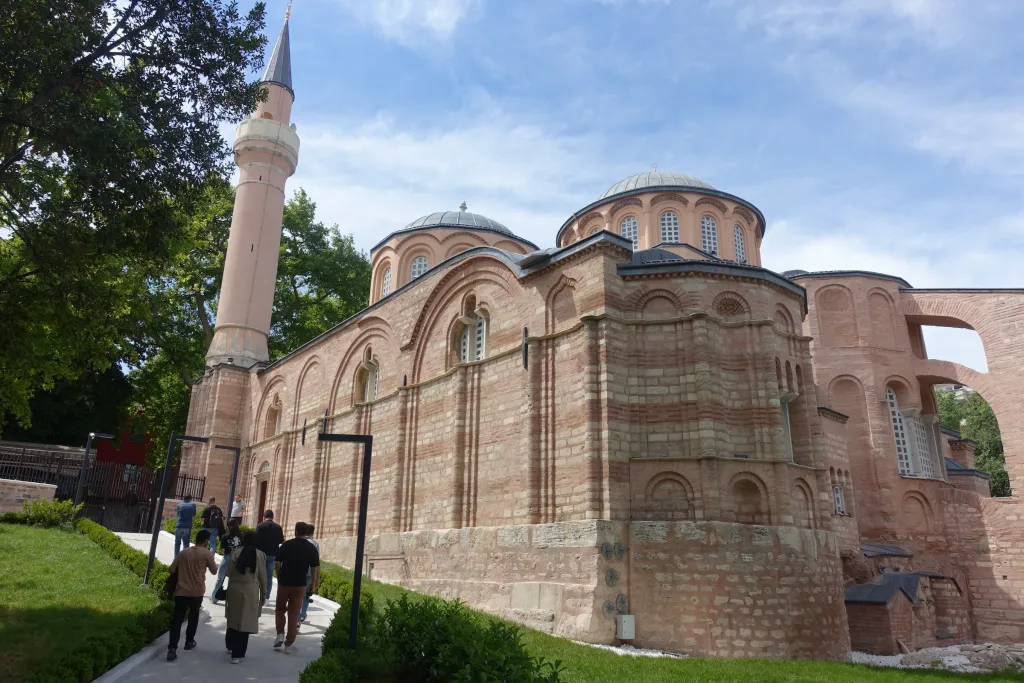

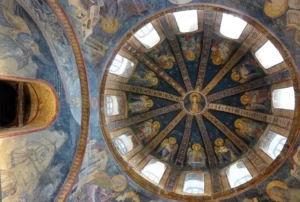
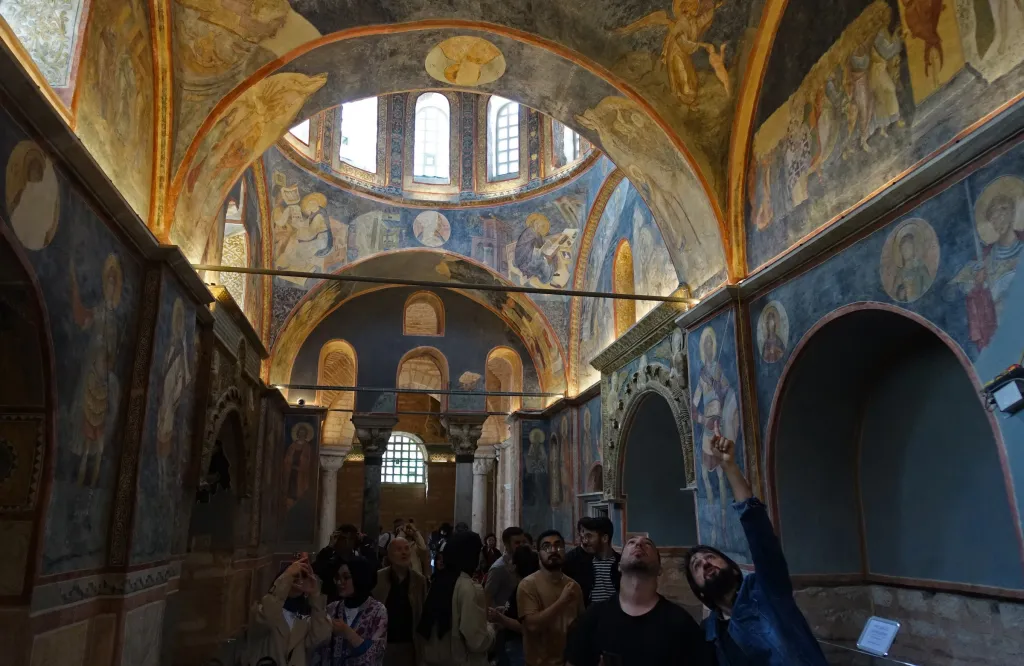
When the 11th-century Chora Church was ordered to be reconverted into a mosque in 2020, concerns arose about the fate of its richly decorated interior, renowned for some of the finest Late Byzantine-era mosaics and frescoes. After a tense four-year closure for restoration, the building reopened on May 6 as the Kariye Mosque, with its treasured works of Christian art—except for a few pieces in the small central nave, now the men’s prayer hall and off-limits to non-Muslims and women—again accessible to the public.
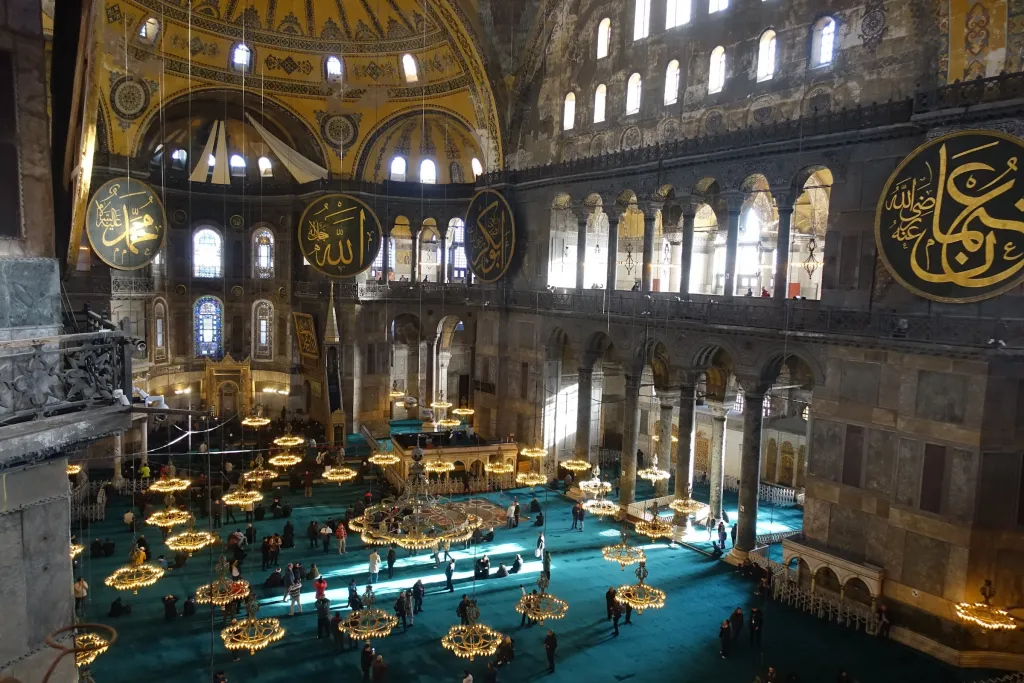
The transformation of both Chora and the world-famous Hagia Sophia into Islamic prayer sites after decades as museums was championed by Turkey’s President Recep Tayyip Erdoğan. He hailed these moves as victories for Muslims worldwide, often referencing the Byzantine Empire to criticize his political opponents. The Byzantines, a continuation of the Roman Empire, ruled from 330 to 1453, when their capital, Constantinople (now Istanbul), fell to the Ottomans.
“There’s a Byzantine layer under everything in Istanbul—you can’t understand the city without it—but Byzantium is not always seen as part of Istanbul’s story,” noted Sedat Bornovalı, an art historian and associate professor at Istanbul Nişantaşı University, and former head of the Istanbul Chamber of Tourist Guides, in an interview with Hyperallergic.
READ MORE: Melaka Reviews Mosque Loudspeaker Volume Following King’s Directive
Over centuries, visible traces of the Byzantine presence in Istanbul have largely been lost to time and urban development; others have been repurposed, forgotten, or worse. The formidable city walls endured a botched restoration in the 1980s, while a luxury hotel now stands over the remains of the Great Palace of Constantinople. Until recently, the ruins of the Church of St. Polyeuctus, once as grand as Hagia Sophia, were almost hidden by trash-strewn weeds.
Today, sites like St. Polyeuctus, the city walls, and the Valens Aqueduct are undergoing restoration, part of a wave of cultural heritage projects led by the opposition-run Istanbul Metropolitan Municipality since 2019, which promises a more inclusive approach to the city’s past. However, the municipality has no control over Istanbul’s numerous Byzantine churches-turned-Ottoman mosques, such as Chora and Hagia Sophia, which fall under the jurisdiction of either the Directorate of Religious Affairs if they are active mosques, or the Directorate General of Foundations if they are not.
The church of the fifth-century Stoudios Monastery, considered by some the most significant monastic foundation of the Byzantine era, is among the properties causing significant concern among heritage experts.
The plan of the Foundations Directorate is to ‘restore’ the building as a mosque, which means a very heavy restoration that will result in the loss of its original character,” warned Professor Engin Akyürek, director of the Sevgi Gönül Center for Byzantine Studies at Istanbul’s Koç University, in a conversation with Hyperallergic.
Informational signs around the site refer to the project almost exclusively as the İmrahor İlyas Bey Mosque, its name after the Ottoman conquest, with the monastery receiving only a brief mention.
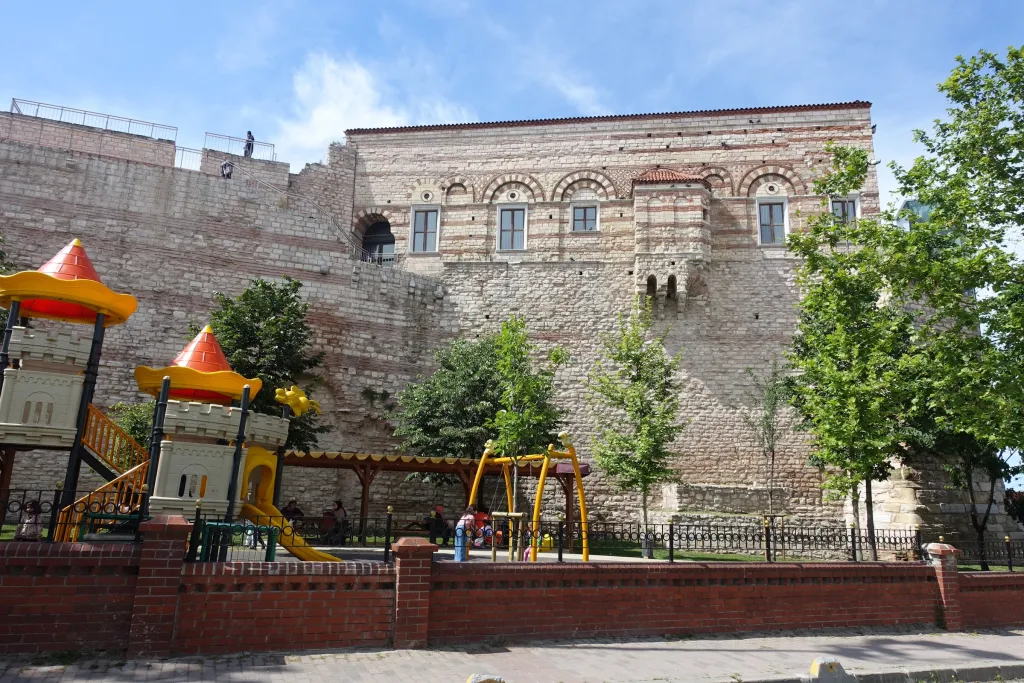
A similar simplification of layered history has occurred at many churches-turned-mosques, as well as at the Palace of the Porphyrogenitus (now Tekfur Palace), built into Istanbul’s land walls in the late 13th century. Its restoration by the previous Istanbul municipality administration resulted in “quite an ideological repurposing, as if it did not exist before the Ottomans,” said Bornovalı. “Turning it into a museum of [Ottoman] tiles, that are not even from there, was not a good choice.”
Ideological considerations have long influenced what gets excavated, researched, preserved, exhibited, and restored in Turkey. When the Turkish Republic was established in 1923, founding President Mustafa Kemal Atatürk and other leading figures promoted a “Turkish history thesis” that largely skipped over the history of Byzantium, explained Barış Altan, an architect specializing in cultural heritage, in an interview with Hyperallergic.
They were trying to find their roots in the Sumerians and the Hittites, and establish this idea that Turks had lived in Anatolia since ancient times,” said Altan, currently on the academic staff of the architectural conservation department at the Brandenburg University of Technology in Germany.
Research into Byzantium was mostly left to Western scholars during the early 20th century, while the focus in the Erdoğan era has been on reclaiming the glories of the Ottoman past. Nonetheless, Altan argues that the notion of systematic neglect of Byzantine heritage is overstated, pointing to numerous Byzantine excavations happening across Turkey and the growing number of young Turkish scholars in the field.
Outside highly politicized symbols like Hagia Sophia, Altan says issues related to Byzantine sites are more likely due to broader challenges affecting all cultural heritage in Turkey: limited funding, lack of strategic planning among multiple stakeholders, and a “touristic understanding of culture” that has often led to harmful interventions aimed at making historic sites more appealing to tourists.
National or local government authorities financing restoration projects also sometimes exert pressure to accelerate “work that actually requires time and patience,” added Akyürek. “They are always in a hurry to make their deeds visible to the public.”