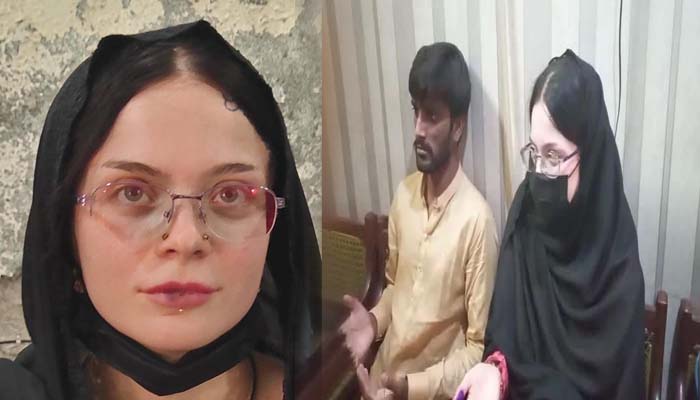

In a world where cultures often collide more than they connect, the story of Karensha Madison Grace stands as a reminder of how love, faith, and conviction can bridge even the widest divides. In June 2025, this 27-year-old American woman left her comfortable life in South Carolina, USA, and traveled thousands of miles to Jhang, Pakistan. What awaited her there was not just an adventure but a transformation.
Within weeks of her arrival, Karensha embraced Islam, adopting the name Kaneez Ayesha, and married her Pakistani friend, Naeem-ul-Hassan. Their relationship, born in the digital era through social media conversations, blossomed into a real-life union that captured the attention of people across continents.
This comprehensive article explores her journey — from her life in the United States to her decision to travel to Pakistan, her experience of embracing Islam, her intercultural marriage, and the broader lessons her story teaches about modern relationships, cultural integration, and spiritual discovery.
Who Is Karensha Madison Grace?
Karensha Madison Grace was an ordinary young woman by most measures, living in South Carolina, a state famous for its beaches, southern hospitality, and history. She grew up in an environment shaped by American values, modern comforts, and the fast-paced life of the digital world.
Like many of her generation, Karensha was active on social media platforms — Instagram, Threads, and X (formerly Twitter). What seemed like casual engagement with people online turned into something extraordinary when she connected with Naeem-ul-Hassan, a young man from Jhang, Pakistan.
Their connection was not instant romance; it was built through conversations, shared stories, and mutual respect. Over time, they realized they shared something deeper than friendship — a bond strong enough to make one of them take the boldest leap of her life.
How Love Blossomed Across Continents
Love stories today often begin in the unlikeliest of places: a comment under a post, a shared interest in a thread, or a friendly message that grows into daily conversations. Karensha and Naeem’s story is no different.

Despite living in two vastly different worlds — one in the southern United States and the other in rural Pakistan — their conversations flowed with ease. They talked about culture, traditions, family values, and faith. What started as curiosity turned into care, and what began as digital words transformed into an emotional connection.
READ MORE: American Woman Embraces Islam, Marries Man from Jhang, and Leaves US Behind for Love
For Karensha, the pull was not just toward Naeem as a person but toward the simplicity, spirituality, and depth of life in Pakistan. She was intrigued by the devotion and faith she saw in Naeem’s culture. Slowly, she began to feel that her life’s direction might lie in a different place, across oceans, among people she had never met in person.
Why Jhang, Pakistan Became Her Destination
When Karensha decided to meet Naeem in person, she didn’t choose Islamabad or Lahore, cities often associated with international arrivals. Instead, she went directly to Jhang, a smaller city in Punjab province.
Jhang, with its agricultural roots, rich cultural traditions, and strong community values, became the backdrop of this remarkable love story. Life here is slower, simpler, and deeply rooted in tradition — something entirely different from the modern, individualistic lifestyle of South Carolina.
For Karensha, Jhang represented authenticity. She didn’t come for luxury or sightseeing; she came for connection, family, and faith. In a town where community bonds are stronger than skyscrapers, her story began to unfold in ways no one could have predicted.
Her Embrace of Islam: Becoming Kaneez Ayesha
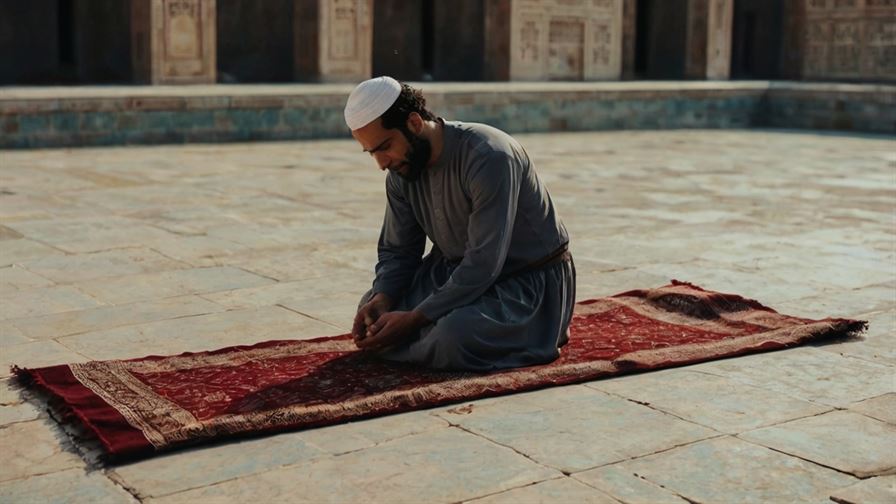
One of the most defining moments in Karensha’s journey was her decision to embrace Islam. Conversion is never a small step, especially when it means moving away from one’s upbringing, but for Karensha, it was a deeply personal and spiritual decision.
In Jhang, she formally accepted Islam, declaring the Shahada — the testimony of faith: “There is no God but Allah, and Muhammad (peace be upon him) is His messenger.”
She chose the name Kaneez Ayesha:
-
“Kaneez” translates to “servant” — symbolizing humility and devotion.
-
“Ayesha” is the name of one of the most beloved wives of Prophet Muhammad (peace be upon him), renowned for her wisdom and strength.
This wasn’t a symbolic change for her; it was an act of sincerity. She didn’t just adopt a name — she embraced a way of life, a set of values, and a faith that connected her not just to Naeem but to a billion Muslims around the world.
The Wedding: A Union Beyond Borders

Shortly after her conversion, Karensha married Naeem-ul-Hassan. Their wedding was more than just a celebration — it was a fusion of two cultures:
-
Western individualism and Pakistani collectivism.
-
A Christian-raised background blending with Islamic faith.
-
An American bride joining a traditional Pakistani family structure.
The wedding was not grand or flashy, but it was filled with meaning. Community members attended, local traditions were followed, and Karensha’s willingness to adapt impressed many.
For her, the wedding was not just about Naeem. It was about becoming part of a new family, a new culture, and a new way of life.
Life in Jhang: Adjusting to a New Culture
After the wedding, Karensha’s real journey began — learning to adjust to Pakistani culture. This meant:
-
Daily life: Waking up to the call of the Adhan (call to prayer), eating traditional meals, and experiencing life in a joint family system.
-
Language: English was her native tongue, but she slowly started picking up phrases in Urdu and Punjabi.
-
Clothing: She swapped Western outfits for shalwar kameez and modest Islamic attire.
-
Customs: From hospitality traditions to respecting elders, she learned how central family and community are to Pakistani society.
Of course, adjustments weren’t without challenges. The pace of life was slower, the environment more conservative, and expectations different. But Karensha approached everything with patience, respect, and curiosity.
The Role of Family and Community
One of the most heartwarming aspects of Karensha’s journey is how she was embraced by Naeem’s family and the Jhang community. In many intercultural marriages, acceptance becomes a challenge. But in her case, her conversion to Islam and genuine desire to adapt made her transition smoother.
-
In-laws’ acceptance: They welcomed her as a daughter, not just as a foreign bride.
-
Community curiosity: People were fascinated by her story — a woman leaving America for love in Jhang.
-
Her family’s reaction: Back in South Carolina, opinions were likely mixed. Some admired her courage; others may have struggled to understand her decision.
Yet, through it all, Karensha remained steadfast. She balanced love for her American roots with her new Pakistani identity.
The Broader Significance of Her Journey
Karensha Madison Grace’s story is bigger than one couple. It reflects:
-
The power of social media: How digital connections can lead to lifelong commitments.
-
The pull of faith: How Islam continues to inspire seekers across the world.
-
Intercultural marriage: The challenges and beauty of blending two traditions into one.
-
Global love stories: How relationships today transcend geography, language, and culture.
Her journey is a case study in courage, conviction, and adaptation.
Lessons From Her Story
There are several lessons readers can take away from Karensha’s experience:
-
Love Requires Courage — Crossing oceans for love is not easy.
-
Faith Can Transform Lives — Embracing a new religion changes identity and direction.
-
Cultural Flexibility Is Key — Success in intercultural relationships comes from humility and adaptability.
-
Family Matters — Acceptance and community support make transitions smoother.
-
Social Media Can Build Real Bonds — Despite criticism, online connections can be deeply authentic.
Conclusion
From South Carolina to Jhang, Karensha Madison Grace’s story is one of courage, love, and transformation. By embracing Islam, marrying Naeem-ul-Hassan, and adapting to life in Pakistan, she redefined herself as Kaneez Ayesha — a woman of faith, resilience, and love.
Her story isn’t just a romance; it’s a reminder of how the modern world allows people to build bridges across cultures, find faith in unexpected places, and pursue lives that defy convention.
As globalization brings us closer together, stories like Karensha’s will continue to inspire, challenge, and remind us that love truly knows no borders.