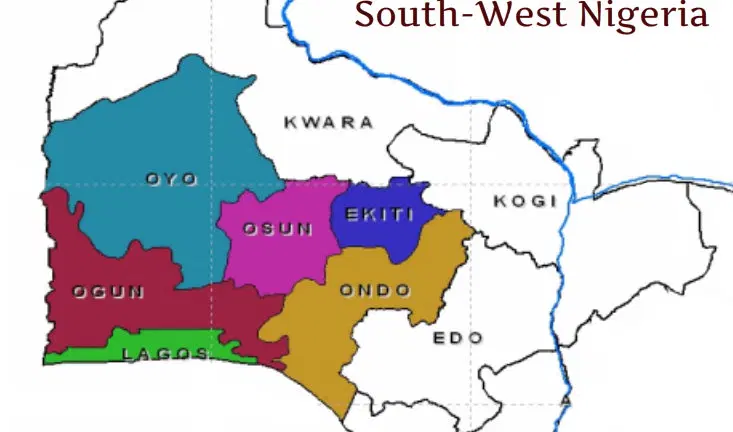

Traditional leaders in Nigeria’s South-West region have strongly opposed recent discussions about introducing Sharia law in the area. They warn that such an initiative could lead to chaos, division, and instability in the predominantly Yoruba region, which has a history of religious diversity and coexistence.
This development follows the circulation of a flier announcing the inauguration of a Sharia court scheduled for January 11, 2025, at the Muslim Community Islamic Centre in Oyo State. The event was set to feature prominent figures, including the Bashorun of Oyo Land, High Chief Yusuf Akinade Olayinka I, and other notable dignitaries. However, the announcement has triggered significant backlash, with critics arguing that Sharia law is incompatible with the socio-cultural fabric of Yorubaland.
Historical Resistance to Sharia Law
This is not the first time the idea of introducing Sharia law in the South-West has faced opposition. In 2021, Bishop Wale Oke, President of the Pentecostal Fellowship of Nigeria (PFN), raised concerns over attempts to incorporate Sharia provisions during a constitutional review. While the proposal was eventually shelved, it highlighted the region’s sensitivity to such initiatives.
READ MORE: Islamic Council to Launch Sharia Court in Oyo This January
In response to the latest controversy, Governor Seyi Makinde of Oyo State acknowledged the growing debate, emphasizing the need to adhere strictly to Nigeria’s constitutional framework. “I swore to uphold the laws and Constitution of Nigeria. If the proposed actions align with the law, that’s fine; otherwise, the rule of law will prevail,” the governor stated.
Voices of Concern
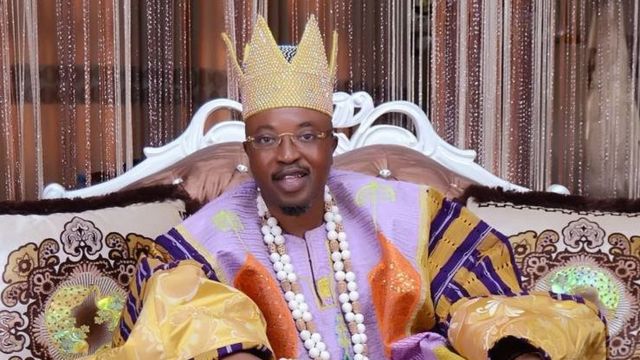
Prominent Yoruba leaders have expressed apprehension over the proposed Sharia court. Gani Adams, the Aare Ona Kakanfo of Yorubaland, warned that implementing Sharia law in the region would disrupt the existing harmony among religious groups. “Yorubaland thrives on its multicultural and multi-religious nature. Sharia law may work in the North but would cause unnecessary divisions here,” he explained.
Similarly, Oba Francis Alao, the Olugbon of Orile-Igbon, emphasized that the cultural practices in the South-West, such as social gatherings and the consumption of alcohol, conflict with Sharia principles. “Introducing Sharia law here would undermine the region’s unique way of life and foster instability,” he noted.
Other traditional rulers, including the Eselu of Iselu, Oba Akintunde Akinyemi, have also rejected the proposal, arguing that Nigeria’s secular Constitution should take precedence. “We must avoid actions that could ignite religious tensions and destabilize our region,” he cautioned.
Clarification from Organizers
In the wake of public outcry, the organizers of the proposed event have postponed the inauguration indefinitely. According to the Sharia Committee of Oyo Land, the event was not meant to establish a court but an independent arbitration panel to resolve family disputes among Muslims.
“This is not a Sharia court with judicial enforcement powers. It is simply an arbitration panel to mediate issues like inheritance, divorce, and custody among willing Muslims,” explained Rafiu Bello, Chairman of the Sharia Committee.
Dr. Sidiq Uthman, an Islamic Studies lecturer at Lagos State University, echoed this sentiment, clarifying that the initiative is not aimed at imposing Sharia law on non-Muslims. “This is about providing Muslims with a platform to settle disputes within their religious framework. It’s being misunderstood,” he said.
Balancing Religious Diversity
The debate underscores the delicate balance required to maintain harmony in a diverse society like Nigeria. Critics argue that any perceived imposition of religious law could jeopardize the unity and peace that define the South-West.
As the conversation evolves, traditional and religious leaders across the region continue to call for dialogue, urging all stakeholders to prioritize the values of tolerance, coexistence, and respect for the Constitution.