
U.S. President Donald Trump has reignited debate over religious freedom in Nigeria after announcing that the West African nation would be placed on the U.S. State Department’s “Countries of Particular Concern” watchlist for alleged violations of religious liberty.
Trump made the declaration on Truth Social, claiming that Christianity in Nigeria faces an “existential threat.” He alleged that “radical Islamists” were behind widespread killings of Christians and said he had instructed U.S. lawmakers to investigate the issue.
“Thousands of Christians are being killed. Radical Islamists are responsible for this mass slaughter,” Trump wrote. “We stand ready, willing, and able to save our great Christian population around the world!”
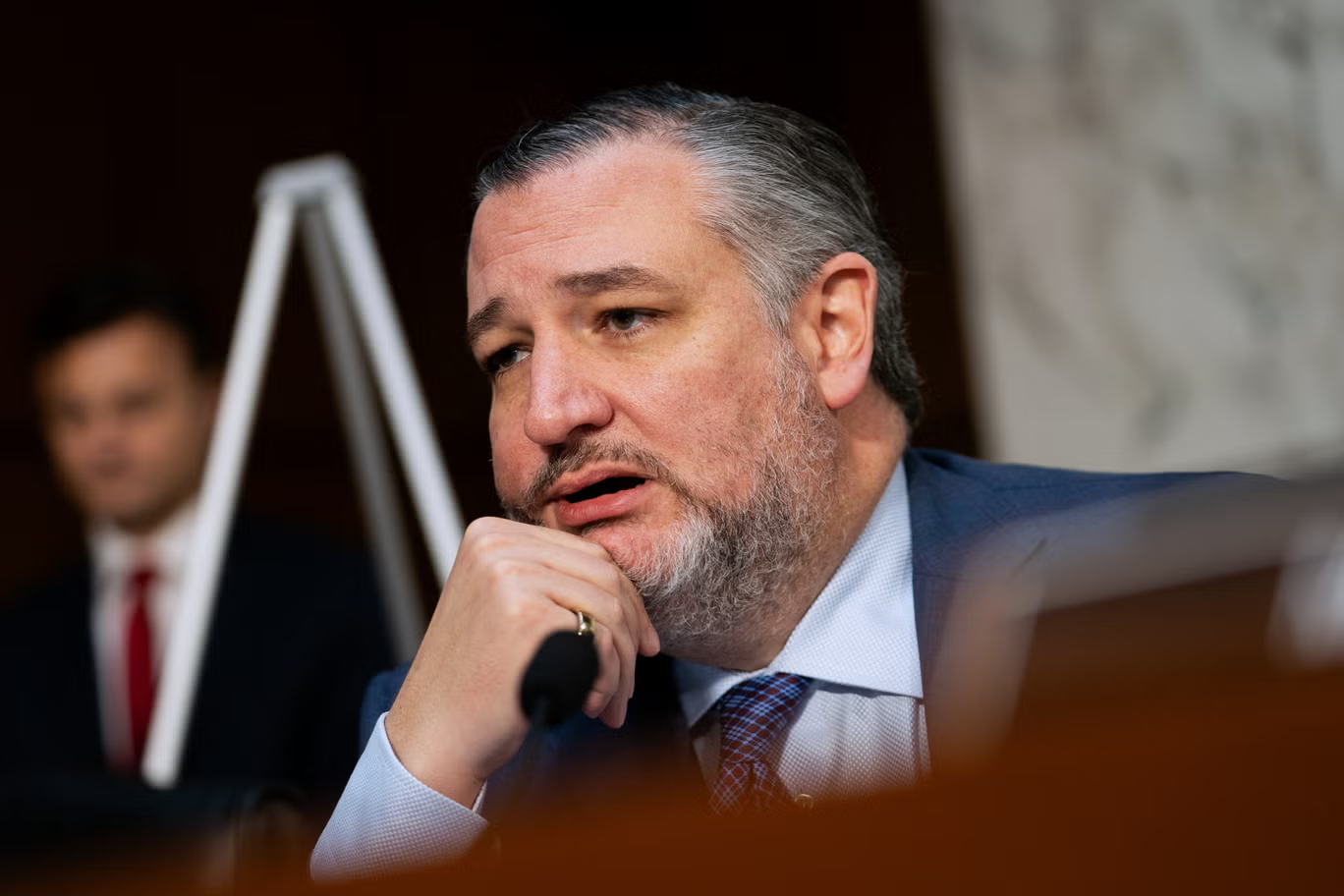
The move aligns with a push led by Senator Ted Cruz, who has repeatedly accused Nigeria of failing to protect its Christian population. Cruz’s proposed bill, currently before the Senate, seeks to formally label Nigeria as a violator of religious freedom—an action that could pave the way for U.S. sanctions.
READ MORE: Muslims Protest in Colombo Over Blocked Tamil Qur’an Shipment
However, Nigerian officials and several international analysts have strongly disputed these claims, calling them exaggerated and misleading.
A Complex Picture: Violence Affects Both Christians and Muslims
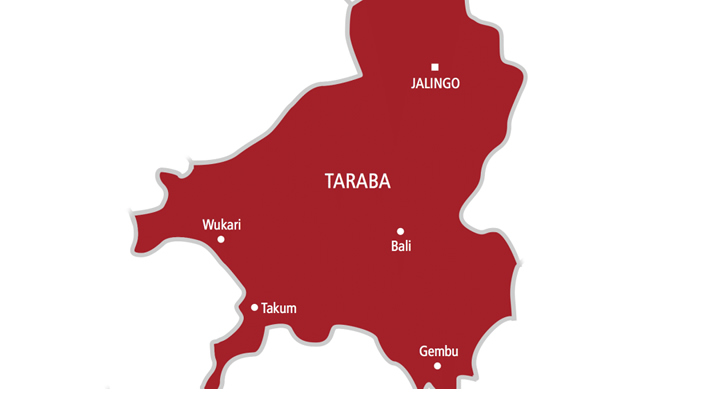
Nigeria, home to more than 220 million people, is almost evenly split between Christians and Muslims. The country’s security challenges—ranging from Boko Haram’s Islamist insurgency to banditry, ethnic clashes, and farmer-herder conflicts—have claimed thousands of lives on both sides of the religious divide.
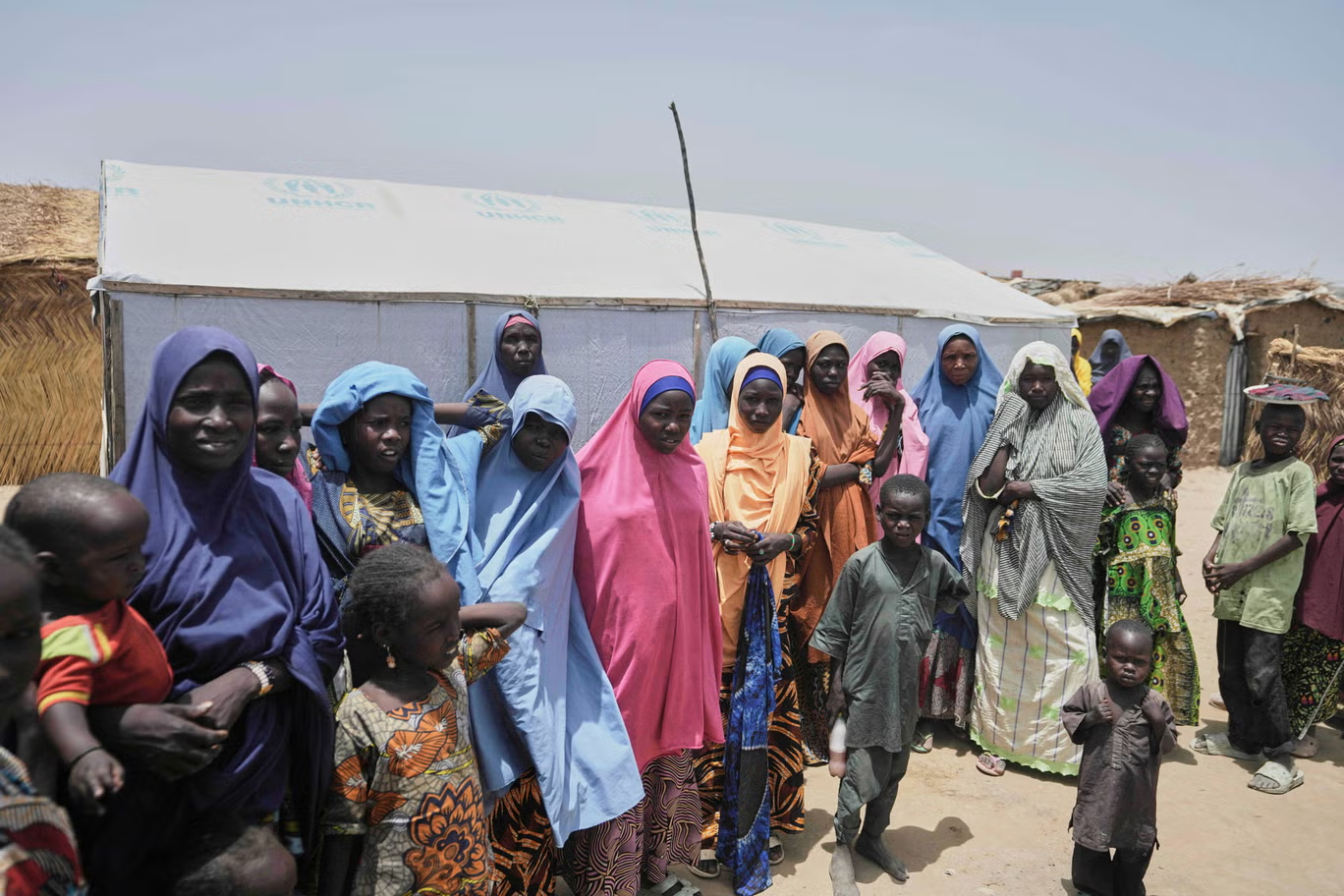
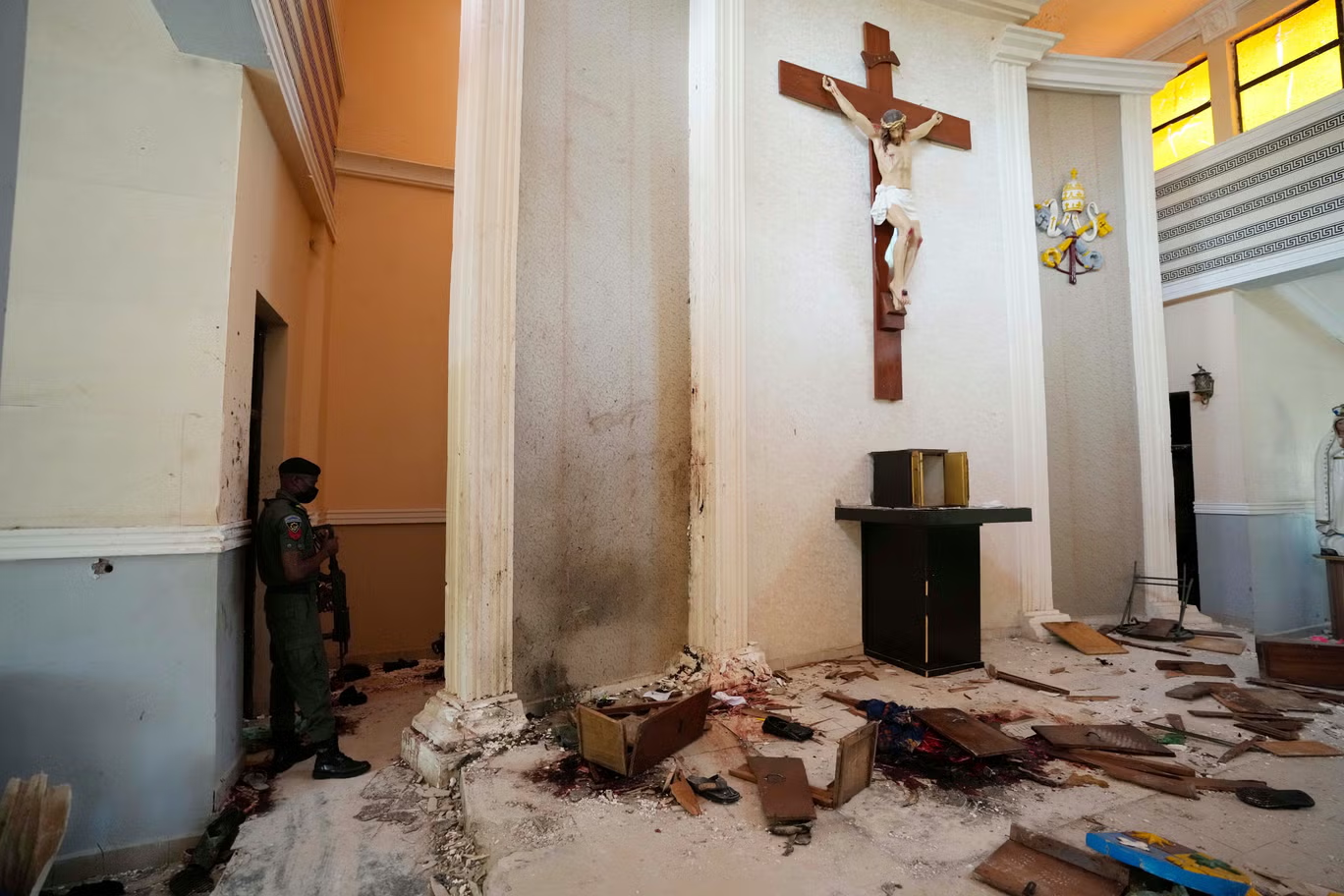
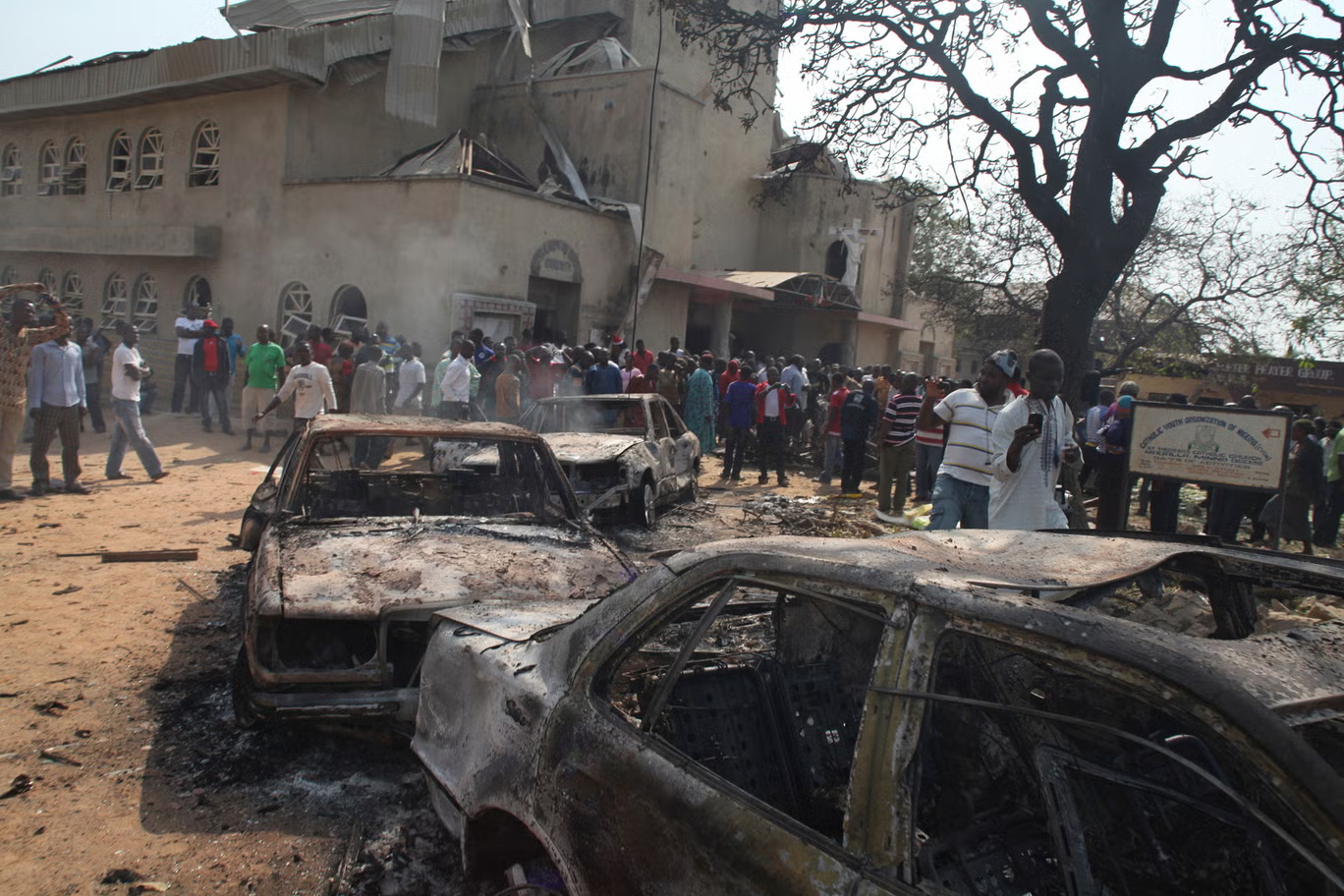
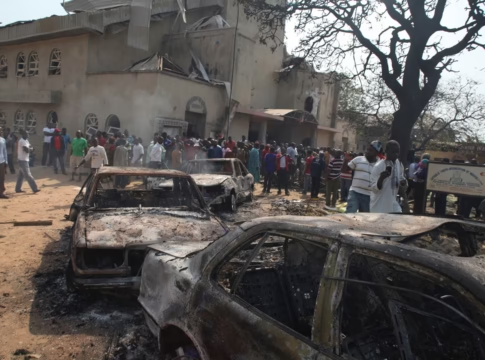
Experts say it is inaccurate to describe the violence as one-sided or religiously motivated in every case. While Christian communities have suffered tragic attacks, many of the victims are Muslims, particularly in the country’s northern regions where extremist violence is most frequent.
“There is no systematic or intentional attempt by the Nigerian government or any serious group to target a particular religion,” Nigeria’s Information Minister Idris Muhammed told the Associated Press.
Even religious leaders have cautioned against framing the crisis as a “Christian genocide.”
Joseph Hayab, former chairman of the Christian Association of Nigeria (CAN) in Kaduna State, said that while many Christians have lost their lives, “the situation is not as catastrophic as portrayed,” adding that every death—regardless of faith—remains condemnable.
Data and Reports Tell a Broader Story
According to data from the U.S.-based Armed Conflict Location and Event Data (ACLED) program, between January 2020 and September 2024, Nigeria recorded:
-
11,862 attacks against civilians
-
20,409 deaths from these incidents
-
385 attacks specifically targeting Christians (317 deaths)
-
196 attacks against Muslims (417 deaths)
These figures indicate that while religion is sometimes a factor, Nigeria’s violence is primarily multifaceted—rooted in political instability, poverty, and territorial conflicts rather than pure religious persecution.
The U.S. Commission on International Religious Freedom (USCIRF) echoed this view in its 2024 report, noting that both Christians and Muslims experience violence “in several states across Nigeria,” describing it as part of a broader pattern of insecurity.
Analysts Reject ‘Genocide’ Label
Security experts and scholars caution against labeling the ongoing violence as genocide, which under United Nations law requires intent to destroy a religious or ethnic group.
“If anything, what we are witnessing are mass killings not directed at one particular group,” said Olajumoke Ayandele, Assistant Professor at New York University’s Center for Global Affairs. “Calling it genocide could inflame tensions and make peacebuilding harder.”
Similarly, Chidi Odinkalu, a former head of Nigeria’s National Human Rights Commission, emphasized that while the government must do more to curb violence, the “genocide narrative” distorts the true nature of Nigeria’s conflicts.
Background on the Watchlist Designation
The U.S. first added Nigeria to its “Countries of Particular Concern” list in 2020, citing widespread violations of religious freedom. The designation did not specifically single out Christian persecution. It was later removed in 2023, which analysts interpreted as a diplomatic move to strengthen U.S.–Nigeria relations before then-Secretary of State Antony Blinken’s visit.
Now, with Trump and Cruz reviving the issue, Washington faces renewed debate about how best to approach Nigeria’s security and human rights challenges without deepening religious divisions.
Conclusion
While Donald Trump’s comments have reignited global attention on Nigeria’s religious tensions, available evidence suggests that the country’s violence is rooted in complex socio-political issues, not a targeted campaign against Christians. Both Christian and Muslim communities continue to bear the brunt of Nigeria’s long-running insecurity — a crisis driven more by instability and inequality than by faith alone.