


As tensions between Israel and Iran continue to escalate, Israel has shifted focus beyond conventional military targets. In a calculated move, Israeli operations have struck at the heart of Iran’s oppressive state infrastructure—institutions used to control, surveil, and manipulate its own population.
Recent airstrikes and cyberattacks have disrupted the functioning of five core bodies of the Islamic Republic—those responsible not only for Iran’s foreign military ambitions but also for the domestic repression that sustains the regime’s grip on power.
Below are the five main institutions Israel has targeted:
1. Law Enforcement Command (NAJA): The Regime’s Internal Stronghold
On June 18, Israeli Defense Minister Yoav Gallant announced the destruction of Iran’s central internal security facility. Known in Persian as NAJA, the Law Enforcement Command is the Islamic Republic’s primary tool for suppressing dissent and enforcing social control.
NAJA has a long record of brutality. Following the 2009 Green Movement protests, the U.S. sanctioned the organization under Executive Order 13553 for serious human rights abuses. Detainees suffered physical assault, were denied medical attention, and some even died while in custody—violations attributed directly to NAJA’s operations.
READ MORE: Russian Authorities Target Independent Muslim Community in Occupied Crimea
This strike sends a clear signal: Israel is not only countering military threats but also targeting the regime’s tools of domestic repression.
2. IRIB: The Voice of State-Controlled Propaganda
The Islamic Republic of Iran Broadcasting (IRIB), a state-run media monopoly, has long served as the regime’s mouthpiece. Entirely controlled by Supreme Leader Ayatollah Ali Khamenei, IRIB produces heavily censored news and broadcasts forced confessions extracted under duress, often from political prisoners.
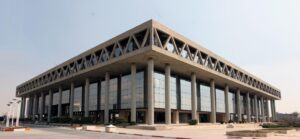
On June 16, Israel launched a missile strike on an IRIB building during a wartime broadcast. Just two days later, hackers aired a message encouraging Iranians to rise against the regime—an unprecedented breach of IRIB’s tightly guarded control.
IRIB’s role in psychological manipulation and propaganda has led to international sanctions. The U.S. sanctioned six IRIB staff members in 2022, while the EU blacklisted senior personnel at its English-language outlet, Press TV.
3. IRGC Commander Hossein Salami: Architect of Violent Crackdowns
Former commander of the Islamic Revolutionary Guard Corps (IRGC), Hossein Salami, was killed by Israel on June 13. Salami’s leadership epitomized the militarized suppression of civilian uprisings. During the 2022 Women, Life, Freedom protests, he openly threatened demonstrators with retribution, stating ominously: “We will take revenge.”
His role in violent crackdowns didn’t go unnoticed. Canada sanctioned Salami in 2022 for systemic persecution of women. The European Union had already sanctioned him in 2021 over the 2019 nationwide protests, during which IRGC forces killed hundreds of unarmed demonstrators.
4. IRGC Intelligence Heads: Surveillance and Torture Enforcers
On June 16, Israeli strikes eliminated two key figures in Iran’s intelligence machinery—Mohammad Kazemi, head of the IRGC Intelligence Organization (IRGC-IO), and his deputy, Mohammad Hassan Mohaghegh.
The IRGC-IO is notorious for orchestrating mass surveillance, arbitrarily detaining activists, and operating black sites such as the infamous Ward 2A in Tehran’s Evin Prison. The U.S. has described Kazemi’s agency as among Iran’s “most brutal security services.”
Mohaghegh has also been sanctioned internationally for orchestrating systemic abuse and political repression. New Zealand issued travel bans against him, citing his role in widespread rights violations.
5. IRGC Aerospace Chief Amir Ali Hajizadeh: Orchestrator of Tragedy
Amir Ali Hajizadeh, commander of the IRGC’s Aerospace Force, was killed in a June 13 strike. While his unit is known for launching missiles at Israel, it is also responsible for one of the regime’s gravest acts of deception.
On January 8, 2020, Hajizadeh’s unit fired two missiles at Ukrainian International Airlines Flight PS752, killing all 176 passengers and crew—including 29 children. Initially covered up, the regime later admitted to the act, blaming heightened alert after the U.S. assassination of Qassem Soleimani.
Instead of striking military targets, Hajizadeh’s forces brought down a civilian airliner—an event that triggered global outrage and revealed the regime’s disregard for human life.
Conclusion: A Strategic Shift Toward Undermining Oppression
Israel’s recent actions indicate a broader objective: not only to degrade Iran’s offensive capabilities, but to support the people of Iran by weakening the institutions that silence them. By targeting these pillars of repression, Israel appears to be aligning its military strategy with moral and political symbolism—offering a rare sign of solidarity with the millions of Iranians living under authoritarian rule.
The consequences of these strikes may unfold over time, but one thing is clear: the power structures responsible for some of Iran’s darkest chapters are now under direct and deliberate attack.


